
KINGSTON, Jamaica, Mar. 8, CMC – Finance Minister Dr Nigel Clarke on Tuesday announced that no new taxes will be imposed on Jamaicans during this fiscal year. Clarke, made the announcement as he opened the 2022/23 Budget Debate which he tabled in the House on February 10. The budget for the new fiscal year has been placed at J$912-billion dollars (One Jamaica dollar=US$0.008 cents).
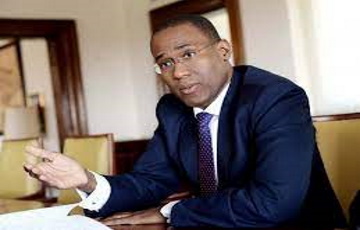 In a wide ranging presentation, the Finance Minister pointed to the conflict between Russia and Ukraine, stating that Jamaica has started to feel the impact of the unrest and the Government is closely monitoring the developments and the reaction of the market.
“Jamaica has joined with most countries around the world in condemning Russia for violating the sovereignty of Ukraine….the Ukraine war represents the largest exodus of people since World War II. I would like to commend the Prime Minister and Minister of Foreign Affairs, Kamina Johnson-Smith in assuring that the Jamaicans in Ukraine were safely evacuated out of the country. We are all grateful that they made it out safely.”
The Finance Minister noted that the war, which is now two weeks old, represents “the most significant conflict and the largest exodus of people in Europe since World War Two”.
“The outcome of both the military assault and the subsequent economic sanctions are uncertain. However, the negative effects on the world, including Jamaica, are already beginning to manifest themselves and could get worse.”
He said there are three economic channels through which the crisis can impact Jamaica, including an increase in prices for energy and other commodities, including wheat and other grains. Clarke noted that higher commodity prices mean that inflation for the upcoming fiscal year could be higher than previously anticipated.
He said inflationary pressures could exacerbate recent supply chain disruptions, potentially negatively impacting the COVID-19 rebound by reducing the prospect for global economic growth that could slow because of the Ukraine crisis.
The other potential source of impact is the adverse financial flows that is likely as global investors seek safer assets.
“We are closely monitoring the developments – Jamaica has the wherewithal to withstand this and we will weather this storm.”
The Finance Minister also noted that Jamaica marked 60 years of independence and this year, the Government will be revamping the country’s bank notes, and in doing so, restore all the images of the seven National Heroes and four deceased Prime Ministers to the notes.
In addition to the existing six bank notes, a new $2,000 note will be added.
Because there will be only seven notes and 11 images however, six of the notes will carry two images each, the lone exception being that of National Hero Marcus Garvey, whose image will appear by itself on the $50 note.
The Finance minister added that the quality of the paper with which the monetary notes are made will also be upgrade so they last longer.
“The colour of each denomination will be more distinct in order to avoid confusion, and features more amenable to recognition by the blind will be added,” he said.
Clarke also announced that the Government has allocated $200 million which is to be made available during the month of March to assist the most vulnerable Jamaicans cushion the effects of rising inflation which in turn has pushed up commodity prices.
“Even in challenging times we have to maintain prudency but resolve to act and protect the most vulnerable and those at risk,” said Clarke said.
Concerning the Programme of Advancement Through Health and Education (PATH) grant, he said that during this month, the Ministry of Labour and Social Security plans to expand its reach to include needy families who are not in receipt of the grant/
He said that through the labour ministry, the government is partnering with the Jamaica Red Cross, Food for the Poor, the Council of Voluntary Social Services, Adventist Relief Association and several other non-governmental organisations to identify persons in need who are not on the PATH programme.
“We’re putting $200 million behind that initiative, in the month of March, to be spent over the next three weeks, in response to what is being experienced,” said Clarke. He said qualified families are set to receive a one-off grant of $10,000 to assist in covering food expenses.
The intervention will continue in April with a further $250 million in support for care packages to the most vulnerable Jamaicans.
“This amount will be distributed through the Constituency Development Fund which will see the 63 Members of Parliament being allocated $3 million each. The remainder will be distributed by the Ministry of Local Government through the municipal corporations.”
“We have made provisions to be in a position to follow up with another $250 million later in the year, depending on how the situation evolves,” Clarke said.
In pointing to the impact of COVID-19, Clarke said Jamaica’s debt ratio is almost back down to pre COVID-19 levels after shooting up during the pandemic.
Before the pandemic in 2020, Jamaica had managed to get the debt to gross domestic product (GDP) ratio below 100 per cent, down from 145 per cent in 2013.
However, it again rose above 100 per cent during the pandemic.
According to the Finance Minister, the debt to GDP ratio is projected to hit 96 per cent this month.
“And with God’s help, barring any major surprises and massive exogenous setbacks, by the end of the upcoming fiscal year, we could see this ratio below 90%, which would be the first time in 23 years – an entire generation.”
The Finance Minister also announced that the government is working towards getting more Jamaicans within the formal banking system and is offering to deposit $2,500 into the accounts of people who open certain bank accounts.
He said an amendment to the Proceeds of Crime Act allows the Bank of Jamaica to permit the creation of accounts with low risk and less stringent requirements for opening them.
The accounts are free of bank fees.
Clarke said the money will be paid to as many as 100,000 people who open these accounts by April 1.
He acknowledged that the government has played a role in the high fees by maintaining the asset tax, and promised that the tax would be revised as soon as the government is able to afford it.
He also said the government would be looking to issue more retail banking licences and to spread its business across institutions to encourage competition.
But the minister made it clear the government would not seek to regulate banking fees.
“We do not believe in telling banks what they must charge for a package of services. It doesn’t solve the problem; it would only make matters worse. We don’t believe in telling the market vendor what she should charge for mangoes or the sky juice vendor what he should charge for bag juice.”
“There’s a lot of history of failure with policies of price fixing. History has taught us that when you fix prices, the quantity inevitably declines and the quality suffers. The reason is simple: If you fix a price and it is unprofitable to provide the service at the fixed price, the provider will simply choose not to provide the service, and then we have a real problem,” he insisted.
During his presentation, the Finance Minister also demonstrated the country’s new digital currency – called the Jamaica Digital Exchange (JamDEX).
The Finance Minister took time out to electronically transferred to his barber $500 – this marked the first public JamDEX transfer.
The Budget Debate will end on March 22.
During the debate, selected members of the Government and the Opposition will make presentations.
The opposition People’s National Party’s (PNP) spokesman on Finance and the Public Service, Julian Robinson, is expected to make his presentation on Thursday, while Opposition Leader, Mark Golding, will speak next Tuesday, March 15 and Prime Minister Andrew Holness, will make his presentation on Thursday, March 17.
CMC/ad/kb/2022