
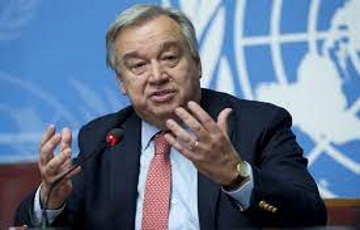
BRIDGETOWN, Barbados, November 22, CMC – United Nations Secretary-General António Guterres on Sunday expressed deep disappointment at the failure of the COP31 climate conference to reach an overarching agreement, warning that small island developing states (SIDS), including those in the Caribbean, continue to bear the greatest burden of a crisis they did little to create.
Speaking at a joint press encounter with Barbados Prime Minister Mia Mottley, Guterres said governments had failed to demonstrate the ambition required to confront the worsening climate emergency.
“I am deeply disappointed that COP31 has ended without agreement on an overarching outcome,” he said, referring to the United Nations Climate Change Conference in Antalya, Türkiye.
“At a moment when the climate crisis is accelerating, governments failed to rise to the level of ambition this crisis demands.”
Guterres said the failure was particularly troubling for Caribbean countries, which face increasingly powerful storms, rising sea levels, economic losses and escalating costs to protect their populations.
“Small island developing states have contributed little to the climate crisis. Yet they are paying among the highest prices – through stronger storms, rising seas, damaged economies and mounting costs to protect their people,” he said.
The UN chief warned that global temperatures were breaking records and climate extremes were intensifying, with scientific projections indicating that the world was on course to exceed the 1.5 degrees Celsius warming threshold.
He said urgent action was needed to limit the extent and duration of any overshoot and return global temperatures below the threshold before the end of the century.
Guterres identified continued dependence on fossil fuels as a major obstacle to achieving international climate goals, calling for an accelerated transition to renewable energy.
“The continued addiction to coal, oil and gas is fueling climate chaos, exposing economies like Barbados to price shocks, and undermining energy security,” he said.
“We can’t put out the fire while pouring fuel on it.”
He urged major emitters to lead efforts to reduce greenhouse gas emissions, including methane, while calling on developed countries to fulfil their climate financing commitments, particularly for adaptation.
The Secretary-General stressed that countries least responsible for global warming should not be left to shoulder its most devastating consequences without international assistance.
Turning to the wider challenges facing the Caribbean, Guterres said the region was confronting a series of overlapping geopolitical, economic, climate and security shocks.
He cited instability in the Middle East, which has increased fuel and energy costs and disrupted trade routes, as well as rising debt, high interest rates and the cost-of-living crisis.
The region, he said, was also grappling with organised crime, violence and the trafficking of weapons and drugs.
Guterres criticised the continued exclusion of developing countries from meaningful participation in major international institutions, describing the situation as one of the enduring consequences of colonialism.
He praised Mottley for championing reforms aimed at addressing those inequalities, particularly through the Bridgetown Initiative, which calls for changes to the international financial system.
The UN chief said the initiative reflected the United Nations’ longstanding advocacy for greater representation of developing countries, more affordable financing and effective solutions to unsustainable debt.
“Justice demands far greater support for adaptation, loss and damage, and a just transition to renewable energy,” he said.
Guterres also used the occasion to renew his appeal for international support for Haiti, where gang violence, weakened state institutions and prolonged political instability continue to undermine efforts to restore security and democracy.
He called for the full deployment of the Gang Suppression Force and sustained assistance to Haitian security institutions, stressing that all operations must comply with international law and human rights obligations.
However, he warned that security measures alone would not resolve the country’s crisis.
“Haiti needs a Haitian-owned political process that restores democratic institutions through elections, rebuilds the authority of the state, and offers young people hope beyond the grip of the gangs,” he said.
Meanwhile, the UN Secretary-General welcomed Barbados’ leadership in addressing emerging global challenges, including the potential dangers associated with artificial intelligence (AI).
The Government of Barbados and the United Nations will co-host the Bridgetown Special Summit on AI Safety on Monday, November 23, bringing together political leaders, technology companies, independent experts and civil society representatives to examine the risks posed by increasingly powerful AI systems.
The summit will be attended by Mottley and Guterres.
According to the United Nations Office for Digital and Emerging Technologies, participants will include political leaders from various regions, heads of AI companies, representatives of AI Safety Institutes, independent safety experts, members of the UN Independent International Scientific Panel on AI and civil society organisations.
The meeting is expected to provide a platform for direct dialogue among those developing AI technologies, experts examining their potential risks and policymakers responsible for regulating their deployment.
It comes amid growing concerns over the ability of governments and international institutions to manage the risks associated with increasingly capable and autonomous AI systems.
Guterres described Barbados as a champion of multilateralism and a source of solutions to pressing international challenges.
“On issue after issue, Barbados is punching above its weight – bringing new ideas to the global debate and helping shape the international agenda,” he said.
The Secretary-General also reaffirmed the United Nations’ long-term commitment to Barbados and the wider Caribbean, announcing the signing of a new five-year Sustainable Development Cooperation Framework to promote inclusive, resilient and sustainable development.
He welcomed a new 25-year lease for UN House, saying the arrangements demonstrated the organisation’s enduring presence in the region.
“The United Nations is here for the long haul,” he said.
Guterres also recognised Barbados’ 60 years of membership in the United Nations and acknowledged the contribution of Barbadian Selwin Hart to the organisation’s climate work.
He praised Mottley’s international advocacy, saying the island’s influence demonstrated that a country’s size did not determine its importance on the world stage.
“You have consistently reminded the international community that size does not determine significance,” he said.
“The world needs that leadership and moral voice now more than ever.”
Guterres pledged continued solidarity with Barbados and other Caribbean countries in their pursuit of greater international justice, peace and equitable representation in global decision-making.
CMC