
PORT OF SPAIN, Trinidad, Nov 24, CMC -The Trinidad and Tobago government Tuesday said that the balance on the Heritage and Stabilisation Fund (HSF)as of September 1, 2026 was US $6.5 billion and twhat two withdrawals have been made during the fiscal year.
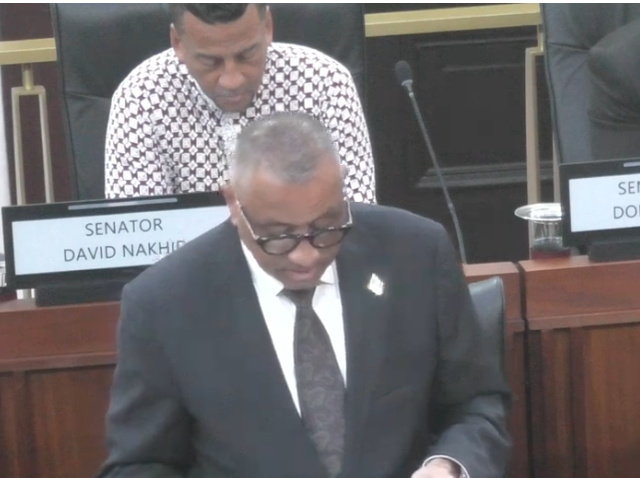
Minister of Planning, Economic Affairs and Development Dr. Kennedy Swaratsingh told the Senate that the two withdrawals were made on November 20, last year and in August this year, totalling US$379,631,490.
The HSF is the country’s sovereign wealth fund, established in March 2007 and cushions government revenue during periods of falling energy prices and builds long-term savings for future generations.
Opposition legislator and former finance minister Vishnu Dhanpaul asked a series of questions based on the country’s finances, including the foreign exchange situation, the level of domestic and external public debt and the unemployment figures.
Swaratsingh said he wanted to first clarify that commercial banks source their daily supply of foreign currency from energy firms and the public, and not from the Central Bank of Trinidad and Tobago.
“The central bank intervenes in the foreign exchange market to supplement these supplies, to stabilise the foreign exchange market,” he said, noting that “this is currently conducted on a bimonthly basis, or more often depending on market conditions.
Swaratsingh said that as part of this process, the bank analyses the authorised dealers’ market reports, which detail their sales, purchases and unsatisfied demand of foreign currency, to determine the size and timing of its market interventions.
“For the 12 months to September 30, 2026, the net sales of foreign currency to the public, the difference between total purchases and total sales by commercial banks, was approximately US$1,493,000,000. Over the same period, the bank’s market interventions, foreign currency sales to commercial banks, totalled US$1,275,600,000,” the minister said.
He said that the Central Bank continues to closely monitor developments in the domestic foreign exchange market, and to collaborate with the Ministry of Finance on measures aimed at narrowing the gap between foreign exchange supply and demand.
“To help alleviate demand pressures, the bank conducts regular bimonthly interventions in the foreign exchange market,” he said, noting that in June this year, the bank reintroduced US dollar cash interventions of US$10,000,000 per month to support the availability of foreign currency cash for travel purposes.
“These interventions are conducted alongside the regular bimonthly interventions as an additional amount to meet heightened cash demand during the holiday peak period. In addition, a special foreign exchange sale with authorised dealers of US$30,000,000 was conducted in August 2026 alongside the bimonthly intervention for that month to bolster market supply and further ease demand pressures.”
Swaratsingh said that the Central Bank continues to administer the foreign exchange facilities established by the Ministry of Finance, which provides the US dollars to various state entities and the Ex-Im Bank.
Regarding the level of the country’s domestic and external public debt, Swaratsingh said he had been authorised by Cabinet to disclose that the level of domestic and external public debt, the audited general government debt is estimated at TT$149,546.2 million or 83.3 per cent of the gross domestic product (GDP) as of the end of fiscal 2026.
He said this comprises domestic debt of TT$108,450.7 million, equivalent to 60.4 per cent of GDP and external debt of TT41,095.5 million, equivalent of 22.9 per cent of GDP.
Swaratsingh told legislators that the domestic debt comprises central government domestic debt of TT$83.671.7 million and non-self-service government guaranteed debt of TT$24,779 million.
He said external debt is reflected of the central government external debt portfolio of TT$41,095.5 million and that the projected fiscal deficit for fiscal 2026 is TT$7,000 million, which is currently the revised estimate.
He said that over the last fiscal period 2026, the government implemented a series of fiscal and structural reforms aimed at strengthening revenue mobilisation, improving expenditure management and restoring fiscal stability while maintaining its commitment to economic growth and social protection.
He said that as articulated in the budget statement of 2027, central to the government’s fiscal consolidation strategy was the implementation of targeted revenue enhancing measures designed to broaden the tax base, strengthen non-energy revenue collection and promote greater equity in taxation.
“These measures include the introduction of an asset levy on banks and insurance companies, the landlord registration fee and business electricity surcharge on industrial and commercial consumers,” Swaratsingh said, noting that additional revenue collections were realised from increases in customs and excise duties on alcohol and cigarettes, adjustments to the club gaming tax and introduction of motor vehicle tax, value added tax ( VAT) and custom duties on luxury electric vehicles and the single-use plastic tax.
He said complementing these revenue-enhancing measures, government has advanced institutional reforms aimed at strengthening tax administration, improving compliance and reducing revenue leakages.
The minister said particular emphasis has been placed on rebuilding the operational capacity of the Inland Revenue Division and the Customs and Excise Division through targeted recruitment, enhanced audit and enforcement capabilities and modernisation of critical information and communication technology systems.
“Progress has also been made…towards the establishment of a transfer pricing regime to address base erosion and profits shifting by multilateral enterprises, multinational enterprises, while the comprehensive review of the VAT system is intended to improve administrative efficiency, strengthen compliance and address long-standing deficiencies in the processing of VAT refunds. “
Swaratsingh said that these reforms are expected to support higher and more sustainable revenue collection over the medium term.
He said on the expenditure side, efforts have been focused on strengthening public financial management, improving institutional accountability and ensuring greater efficiency to the utilisation of government resources.
He said these include reforms to strengthen oversight of state enterprises, improve financial monitoring and promote greater transparency and value for money in public expenditure. “These initiatives are being undertaken alongside efforts to revitalise the energy sector, accelerate private investment and expand productive activity n agriculture, manufacturing and tourism, with a view to stimulating economic growth and strengthening the revenue base.
“Collectively, these reforms represent an important component of the government’s medium-term strategy to narrow the fiscal deficit and strengthen fiscal sustainability.”
Swaratsingh said with regards to unemployment situation, the latest official unemployment rate as measured by the Central Statistical Office (CSO), the current official unemployment rate first quarter 2026 as measured by the CSO is 5.4 per cent.
He said the unemployment rate for each of the preceding four quarters, quarter two 2025, 3.8 per cent, third quarter 2025, 4.8 per cent, fourth quarter 2025, 4.3 per cent, and first quarter of 2026, 5.4 per cent.
CMCgd/ir/2026