
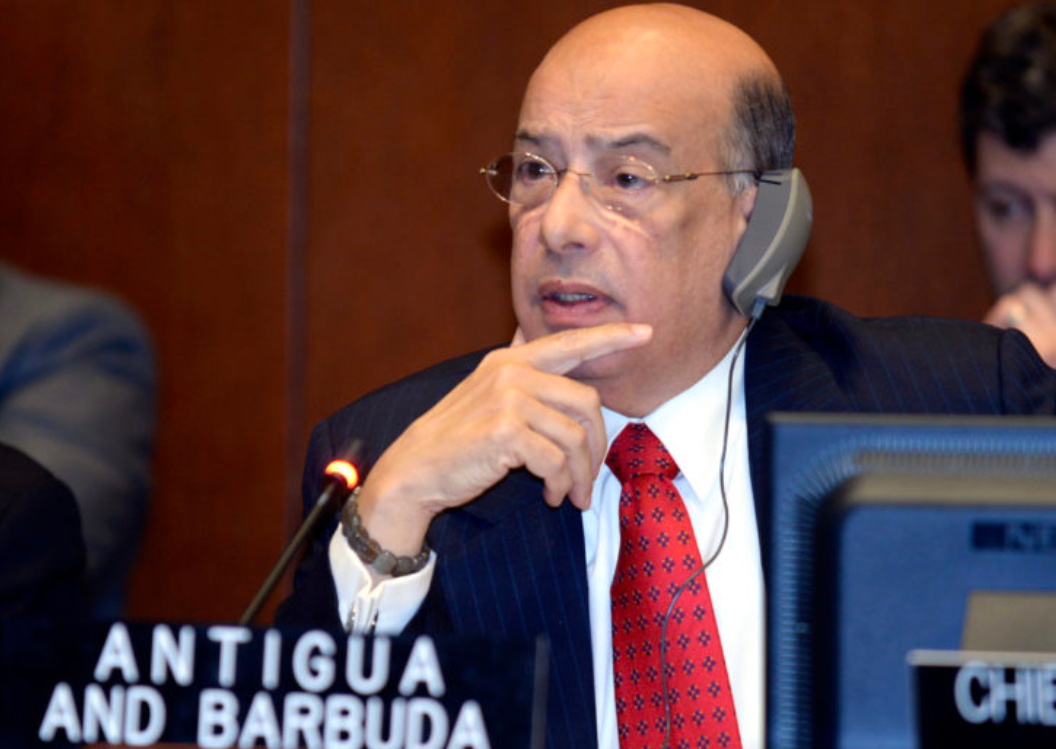
By Sir Ronald Sanders
WASHINGTON, Nov 19, CMC – What are small states to do when the very system of international cooperation in which they have placed their faith cannot deliver the measures necessary for their survival?
That question arises yet again at the 31st United Nations Climate Change Conference (COP31) in Antalya, Türkiye, where governments have spent much of the past two weeks negotiating over issues whose urgency has long been established by science.
As negotiations entered their final days, divisions persisted over adaptation financing, the transition away from fossil fuels and measures to contain global warming.
By 18 November, announced pledges to the Adaptation Fund amounted to approximately US$50 million, compared with US$135 million at last year’s conference. These pledges represent only part of international adaptation financing, but the shortfall sends a troubling signal.
Nearly three years after governments agreed in Dubai to contribute to transitioning away from fossil fuels in energy systems, a revised negotiating text issued in Antalya on 19 November omitted references to fossil fuels. The text remains subject to negotiation, but the omission illustrates how even agreed progress can come under pressure.
For small island states, even the benchmark against which action is judged must be defended. Antigua and Barbuda’s Minister Michael Joseph explained why his country opposed weakening the 1.5°C target: “we can’t move the benchmark, because it means that it opens that doorway for even greater overshoot”. He also called for a science-guided approach to minimise the duration of any overshoot and bring temperatures back down as quickly as possible.
Whatever emerges from Antalya, small states must confront a fundamental weakness in climate negotiations: the prevailing practice of decision-making by consensus.
Consensus offers small states considerable protection. It gives them a voice that their economic size, military strength and political influence would not otherwise afford them. But it can also protect those determined to delay, allowing governments defending their economic interests to dilute collective action, even when the consequences for others are grave.
Because governments have never agreed on the general voting rule, climate decisions ordinarily depend on consensus, generally understood as agreement without formal objection. This does not confer an unqualified legal veto on every country, but when countries have vastly unequal capacities to withstand delay, they negotiate from vastly unequal positions.
Wealthy industrialised countries can leave a climate conference dissatisfied and still command substantial resources to protect their populations and economies. Small island states have fewer options.
For Caribbean countries, another devastating hurricane could destroy much of their economic infrastructure, displace thousands of people and accumulate debt that burdens generations.
Nonetheless, the concerns of fossil-fuel-producing countries cannot be dismissed. Their revenues, employment and development programmes depend, in varying degrees, on those resources. With powerful political interests behind them, they remain a formidable force in negotiations.
But why should those interests be protected at the expense of other countries’ survival and development? Developing countries ought not to be denied legitimate opportunities to industrialise, reduce poverty and improve living standards. Yet their ability to secure support is constrained by the imbalance of political power.
The financing gap exposes that imbalance most strikingly. UNEP’s 2026 Adaptation Gap Report estimates developing countries’ adaptation needs at US$305 billion annually by 2035. International public adaptation finance from developed to developing countries reached only US$28.2 billion to US$31.7 billion in 2024.
The report also finds that flows to small island developing states and least developed countries, while higher than in 2019, had declined from their 2022 peak. Vulnerable countries face immense costs to protect themselves against a problem to which they contributed little.
Where, then, do small states go?
They should certainly not abandon UN climate negotiations. The process remains indispensable for making their case, mobilising support and holding governments to their commitments. But participation cannot be their only recourse.
One avenue they have already pursued is international law. In May 2024, the International Tribunal for the Law of the Sea determined that greenhouse gas emissions resulting from human activity constitute pollution of the marine environment under the UN Convention on the Law of the Sea. It clarified states’ obligations to prevent, reduce and control that pollution.
In July 2025, the International Court of Justice clarified states’ obligations to protect the climate system. It confirmed that breaches can entail legal responsibility, including reparation where the necessary conditions are established. Compensation requires a sufficiently direct and certain causal connection between wrongful conduct and injury.
These advisory opinions do not themselves award compensation or compel emissions reductions, but they strengthen the legal foundation on which small states can pursue accountability.
A second avenue is stronger cooperation with countries willing to act without waiting for universal agreement. Governments prepared to cut emissions more deeply, accelerate renewable energy or provide accessible climate financing can advance those efforts together. Cooperation with multilateral development banks, regional financial institutions and private investors could help reduce financing costs for resilience and renewable energy projects.
Caribbean countries should also strengthen their collective action by pooling demand for renewable energy equipment, reducing dependence on imported fossil fuels and improving regional disaster insurance arrangements.
They would also benefit from speaking consistently with a unified voice in every relevant international forum. One is the Organization of American States, where Caribbean countries should build a common cause with Latin American countries. They should not accept that COP is the only forum for defending and advancing their interests.
Together, they should insist that major emitters meet their obligations, including compensation where legal responsibility for damage is established.
Confidence in multilateralism is already weakened among many vulnerable states, but they should not be tempted to walk away from it. That would play into the hands of those who firmly believe their unilateral power should dictate outcomes.
Small states have an especially strong interest in preserving multilateralism and international law because they have fewer alternatives to both. That is precisely why they must insist that the system works.
Consensus should remain a means of securing collective action, but it should not become a permanent justification for accepting whatever the most powerful will permit. Nor should reform discard the protections that consensus affords small countries. The task is to preserve their voice while preventing delay from defeating the purpose of negotiation.
The Antigua and Barbuda Minister’s insistence on defending 1.5°C identifies what is at stake. Negotiating language cannot make a higher temperature safer.
For small island states, another year of inadequate action may be measured in lost lives, lost livelihoods and lost territory.
They cannot negotiate with rising seas, hotter temperatures and their devastating impacts.
(The writer is Antigua and Barbuda’s Ambassador to the United States and the OAS. He is also Chancellor of the University of Guyana. The views expressed are his own.)
CMC/rs/ed/2026