
By Joseph Cox*
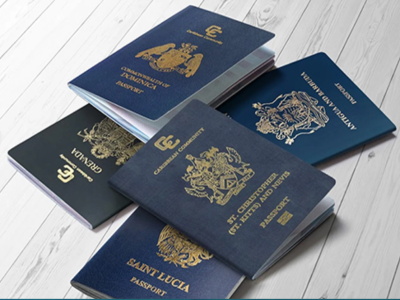
KINGSTON, Jamaica, Oct 31, CMC – Five Caribbean Community Member States reportedly face a November 12, 2026 deadline to commit to suspending their Citizenship by Investment (CBI) programmes or risk losing visa-free access to Europe’s Schengen Area.
According to Antigua and Barbuda’s Prime Minister Gaston Browne, the ultimatum applies to Antigua and Barbuda, Dominica, Grenada, St Kitts and Nevis, and Saint Lucia. The deadline concerns a commitment to suspension; the phase-out timetable remains critical to the economic consequences.
In Dominica, CBI inflows reached 34.8 per cent of GDP in 2023, with an estimated 19.5 per cent in 2025. In St Kitts and Nevis, CBI fees represented 22.2 per cent of GDP in 2023, declining to approximately 6 per cent in 2025.
Across the Eastern Caribbean Currency Union, CBI receipts equalled 4.3 per cent of GDP and 14.5 per cent of government revenue in 2025. The potential disruption to public finances, investment, construction, employment and domestic demand is substantial. Replacing these resources requires revenue mobilisation, productive investment and expenditure restructuring—adjustments that cannot be completed within months.
The November ultimatum did not arise without warning. On June 25, European Commissioner for Internal Affairs and Migration Magnus Brunner communicated the European Commission’s request that the five countries phase out CBI programmes by June 2028, citing security concerns.
On July 10, OECS leaders announced a high-level mission to Brussels to engage the presidents of the European Commission and European Council and the EU’s High Representative for Foreign Affairs and Security Policy.
That mission never took place.
By September 10, Dominica’s Prime Minister Roosevelt Skerrit was still hoping it could occur that month, acknowledging that no date had been agreed. Seventy-seven days had elapsed since the Commission’s communication.
On September 24, Prime Ministers Philip J. Pierre and Gaston Browne met Commissioner Brunner during the United Nations General Assembly in New York, accompanied by Eastern Caribbean Central Bank Governor Timothy Antoine and OECS Director General Didacus Jules. This was not the announced Brussels mission, and no change to the Commission’s position was publicly announced. Why was the diplomatic initiative identified by the affected governments as necessary never executed?
An earlier mission would not necessarily have reversed European policy. The EU has repeatedly stated its longstanding concerns about investor citizenship as a commercial product that can facilitate access for high-risk individuals, undermine the integrity of visa-free regimes, and create externalities for Schengen partners. Nonetheless, diplomacy can influence implementation timetables, transitional financing and measures to reduce economic disruption.
A further development raises questions about regulatory consistency. On October 2, Argentina announced plans for a CBI programme during the fourth quarter of 2026, offering citizenship through a US$350,000 Treasury contribution or a US$800,000 government bond. Argentina also enjoys Schengen visa-free access.
Regulation (EU) 2025/2441 identifies investor-citizenship programmes involving predetermined payments or investments without a genuine connection to the issuing country as grounds for suspending visa-free access. No comparable public ultimatum has emerged concerning Argentina. Although its programme has not yet commenced operations, the announcement warrants clarification of how the EU intends to apply its regulatory framework consistently.
The institutional record raises deeper concerns about CARICOM’s response. Following the Commission’s June 25 communication, CARICOM Heads of Government met in July, yet CBI was absent from their publicly identified agenda. On September 21, the Council for Foreign and Community Relations held its 26th Special Meeting in New York. Its published account addressed UN reform, Haiti and other multilateral matters, but again omitted CBI. Neither meeting produced a publicly documented collective diplomatic initiative concerning the threat to five Member States.
CARICOM Secretary-General Dr Carla Barnett led the Secretariat’s delegation to the UN General Assembly, while CARICOM Foreign Ministers were scheduled for an EU–CELAC ministerial engagement. Yet CARICOM’s senior diplomatic leadership was not among the identified participants in the September 24 meeting with Commissioner Brunner. The July Heads of Government meeting, September COFCOR deliberations and UNGA engagements were identifiable opportunities for coordinated intervention, without a publicly documented CARICOM-led response.
CARICOM’s principal strategic advantage lies in its collective diplomatic leverage. Its predominantly small economies cannot match major powers through market size or financial resources. Their influence depends on coordinating sovereign voices and translating collective representation into effective engagement. The European Union exercises common regulatory authority, while five Caribbean states confront its consequences without comparable mobilisation of their wider Community’s diplomatic resources. If a common economic threat to five Member States cannot mobilise CARICOM’s collective diplomatic leverage, what will?
The affected governments also bear responsibility. Dependence on CBI financing reflects policy choices that exposed public finances to decisions beyond national control. Diversification should have proceeded more urgently, but those vulnerabilities made coordinated diplomacy more necessary, not less. When Member States perceive diminishing returns from collective action, they invest less political capital in regional cooperation, accelerating the erosion of confidence in integration.
There is still time to act. First, CARICOM should lead a Heads-level delegation to Brussels on a confirmed date before November 12, rather than leaving the mission to the affected states.
Second, it should seek an extended transition timetable backed by EU-supported adjustment financing to cushion the fiscal and economic disruption.
Third, it should request a public explanation of how the Commission will treat comparable programmes elsewhere, including Argentina’s. These steps cannot guarantee a policy reversal, but would test whether collective representation delivers practical results.
For the five economies, structural transformation cannot be achieved within the remaining adjustment window. The distinction between an unavoidable external decision and a poorly managed transition could prove economically decisive. Diplomatic dithering may result in lost revenue, curtailed investment and painful fiscal adjustment; for CARICOM, the cost may be declining confidence in regional integration. CARICOM’s credibility will be measured not by the frequency of its meetings or the breadth of its declarations, but by its ability to convert collective representation into effective leverage.
CMC/jc/ed/2026
* Joseph Cox is a Caribbean economist, former Assistant Secretary-General for Trade and Economic Integration at the CARICOM Secretariat, and publisher of the Caribbean Financial Dispatch. The views expressed in this article are his own.