
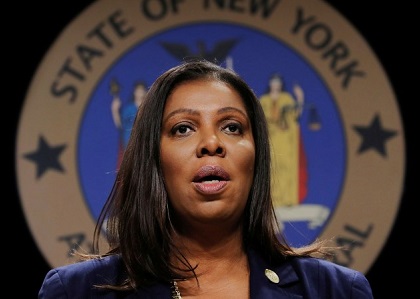
NEW YORK, Oct 31, CMC – New York Attorney General Letitia James is reminding Caribbean and other voters in the state that military troops and armed federal officers, including agents of US immigration and border enforcement agencies, are not permitted at polling places under federal and state law.
With early voting underway ahead of Tuesday’s November 3 mid-term elections, James is urging voters to cast their ballots without fear and to report any intimidation or interference to her office.
“No eligible New Yorker should stay home on election day because of fear,” James said in a statement issued on October 27.
“Armed federal agents are not allowed at polling places, and no one can use a badge, a weapon, or a threat to stop you from voting,” she added.
Early voting in New York runs until Sunday, November 1.
James said federal law makes it a crime to order, bring or keep military troops or armed federal officers, including agents of US Immigration and Customs Enforcement (ICE), US Customs and Border Protection (CBP) and the Federal Bureau of Investigation (FBI), at a polling site.
She said members of the US Armed Forces are prohibited from using force, threats or intimidation to prevent anyone from voting, while government officials may not use their authority to interfere with or influence a federal election.
James also warned that spreading false claims that voting could lead to arrest or immigration enforcement may constitute voter intimidation and violate state and federal law.
Under New York law, local governments and their employees are prohibited from granting immigration enforcement officers access to polling locations for immigration enforcement purposes unless the officers present a valid judicial warrant or court order.
The attorney general also reminded voters that they are not required to show photo identification to vote in New York. However, first-time voters who did not provide identification when registering may be asked to present an acceptable document, such as a utility bill, bank statement, paycheck or government document showing their name and address.
Those without the required documents may still cast an affidavit ballot and follow up with their local Board of Elections.
James said voters who need assistance because of a disability or difficulty reading or writing English may bring someone to help them through the voting process, including inside the voting booth. The person assisting cannot be the voter’s employer or union officer, or their agents.
She also reminded voters that ballots are private and that firearms are prohibited at polling places. Campaigning, displaying political signs and urging voters to support a particular candidate are also prohibited within 100 feet of a polling place entrance.
James said poll watchers may observe proceedings and report problems but cannot interfere with voters, follow them to voting equipment or engage in repeated, pretextual challenges to their eligibility.
The US Department of Justice has announced plans to send election monitors to polling places during the November election and may deploy monitors in New York.
James said the monitors may not demand identification, challenge voters, direct or interfere with poll workers, or engage in political activity. Poll workers who encounter someone identifying as a Justice Department monitor without prior notice should contact their county election officials.
Early voting ends on November 1, with Election Day scheduled for November 3.
CMC/nk/ed/2026