
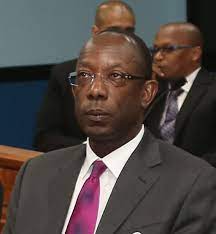
PORT OF SPAIN, Trinidad, Sept 9, CMC – The Jamaican-born British King’s Counsel, Vincent Nelson, has has been granted an expedited hearing, after he challenged a High Court’s ruling that he had not proven any resulting losses from a now-controversial indemnity agreement he signed with the government in 2017 to turn whistleblower in a legal fees kickback conspiracy matter involving a former attorney general.
Justice Jacqueline Wilson had in June this year dismissed the TT$96 million (One TT dollar=US$0.16 cents) indemnity claim against the state and Nelson has now asked the Court of Appeal to overturn the dismissal of his claim.
In the appeal, the lawyers for Nelson said that although a written summary of the ruling had been delivered, a full judgment and the perfected order had not yet been issued.
They have outlined 11 grounds, alleging multiple errors of law and fact by Justice Wilson, including her failure to grant their client a remedy despite finding there was a breach of clause 2 of the agreement.
The lawyers for the Jamaican attorney contend that the High Court erred in finding a breach but awarding no relief, even failing to issue a declaration against the state.
Nelson pleaded guilty in June 2019 to conspiring to commit money laundering and corruption in a legal fees-for-kickbacks scheme. He was placed on a three-year bond and agreed to become a witness against former attorney general Anand Ramlogan, SC, and Gerald Ramdeen, a former senator of the now ruling United National Congress (UNC).
Director of Public Prosecutions, Roger Gaspard, SC, had discontinued the charges in October 2022 after Nelson refused to testify until the resolution of his civil claim. But Gaspard also indicated that he reserved the right to reinstitute the proceedings.
However, Nelson later claimed he had been promised a presidential pardon and protection from prosecution, which he said were never honoured. In his civil lawsuit, he claimed TT$96 million in damages for loss of earnings, insurance benefits, a TT$2.5 million fine, and potential tax liabilities stemming from his conviction.
Nelson’s claim accused the then-attorney general, Faris Al-Rawi, of exceeding his legal authority by inducing him to provide a statement under false pretences. He alleged the deal was politically motivated, intended to benefit the then-ruling People’s National Movement (PNM).
Nelson argued that these actions amounted to misfeasance in public office and caused him significant reputational and financial harm. He said also that Al-Rawi failed to recommend to the DPP that he not be charged, and former minister Stuart Young’s disclosure of Nelson’s notarised statement to the United Kingdom’s National Crime Agency (NCA).
But Justice Wilson ruled that Al-Rawi had, in fact, met with the DPP, provided a copy of the notarised statement and the agreement, and drew attention to the clause requiring a recommendation against prosecution.
She noted that while the recommendation was not given in writing, any such recommendation would have had no binding effect because of the DPP’s constitutional independence.
“I am satisfied that Mr Al-Rawi did in fact meet with the DPP and that he provided him with a copy of the notarised statement and agreement, so that the DPP could be made aware of their provisions, including the provision that required Mr Al-Rawi to make a recommendation to not prosecute Mr Nelson.
“The fact that the DPP proceeded in the way that he did suggests that he was fully aware of the objective of the agreement and had sought to take appropriate steps to achieve its goals while remaining true to the proper exercise of his constitutional function,” the judge said.
But she found that Young breached the agreement by sending the statement to the NCA without a formal request under the Mutual Assistance in Criminal Matters Act (MACMA) or any other legislation.
“There is no dispute that Mr Young disclosed the notarised statement to the NCA. There is a dispute as to whether the National Crime Agency (NCA) was aware of the notarised statement before it had been disclosed and whether the disclosure was in keeping with the law.
“The defendant accepts that no formal request for disclosure had been made by the NCA or any other authority under the Mutual Assistance in Criminal Matters Act or any other legislation, and asserts that the disclosure was made by Minister Young pursuant to an informal request and in the exercise of a ministerial discretion and that the disclosure was permitted under the terms of clause 2(2) of the agreement.
“I do not accept the defendant’s submission.”
The judge noted that the law that governed the exchange of information to foreign regulatory and law enforcement authorities to assist in the exercise of their functions contained an elaborate framework intended to preserve the confidentiality of the requested information and to ensure that disclosures are made only for legitimate purposes.
“Under the terms of the agreement, these requirements were to be upheld, and the failure to do so was in breach of its terms,” said Justice Wilson also rejecting the government’s argument that enforcement of the agreement would contravene public policy.
She said that upholding freely negotiated agreements was a fundamental principle and that the purpose of the 2017 agreement was to facilitate prosecutions for wrongdoing.
“The public policy argument that was advanced by the defendant by way of defence to the breaches that have been alleged must similarly be rejected, as to do otherwise would be to subvert the fundamental principle that contractual obligations freely entered into should be upheld.
“On the facts of this case, it cannot be said that allowing the enforcement of the agreement would be harmful to the integrity of the legal system when its aim and purpose was to facilitate the prosecution of wrongdoing – a process in which it was anticipated that Mr Nelson would be a willing participant.”
She dismissed Nelson’s damages claim, holding that his losses stemmed from his corruption conviction and not the disclosure to the NCA.
But in his appeal, the lawyers for Nelson maintained that while the “learned judge found that there was a breach of clause 2 by reason of the disclosure of the notarised statement to the NCA,” however, the judge fell into error by holding that the appellant was not entitled to recover any damages for breach of the agreement, whether it be nominal or substantial and/or failing to grant a declaration that the state breached clause 2 by the disclosure of the notarised statement to the National Crime Agency in or about June 2018”.
They are also arguing that the judge’s failure to properly consider the evidence an that she had dismissed their clients’ written submissions without properly reviewing them and wrongly refused to allow the DPP and his former attorney, Roger Kawalsingh, to be called as witnesses.
They are also contending that the judge adopted her own interpretation of the indemnity’s indemnity clause, rather than either party’s, rendering the agreement “uncommercial” and unenforceable.
The lawyers for Nelson also argue that the High Court wrongly concluded their client’s exposure to UK tax authorities was unrelated to the state’s disclosure of his notarised statement to the NCA, and that the judge failed to apply principles of informer privilege, despite acknowledging the agreement’s purpose was to facilitate prosecutions of wrongdoing. The Attorney General’s office has filed a cross-appeal on the rejection of its public policy defence, disputing several findings of law made by the judge, including the conclusion that Young breached an agreement executed in November 2017 between the government and the appellant.
According to the notice of appeal, the state argues that the judge misinterpreted clause 2 of the agreement, which prohibited disclosure of the notarised statement to foreign criminal or regulatory authorities. The cross-appeal maintained that this clause was subject to a proviso requiring compliance with all laws and statutory enactments.
“The learned judge ought to have found that the proviso, which left untouched the ‘duty to comply with all laws,’ permitted Mr Young to consider the informal request in the exercise of his ministerial/prerogative powers outside of the MACMA regime; and to comply with the obligation imposed by MACMA to consider informal requests for assistance.”
In July, the Court of Appeal denied Nelson denied permission to challenge his 2019 conviction ruling that he failed to prove misconduct by state officials and waited too long to file his appeal.
CMC/aj/or/2025