
PORT OF SPAIN, Trinidad, Nov 3, CMC – Former Trinidad and Tobago foreign affairs minister Dr. Amery Browne Tuesday called on the government of Prime Minister Kamla Persad-Bissessar to explain why it abstained in the vote on the International Criminal Court (ICC).
Browne in a statement posted on his Facebook page said both Prime Minister Persad-Bissessar and CARICOM and Foreign Affairs Minister Sean Sobers “have now turned their unprincipled and destructive hands” toward the ICC.
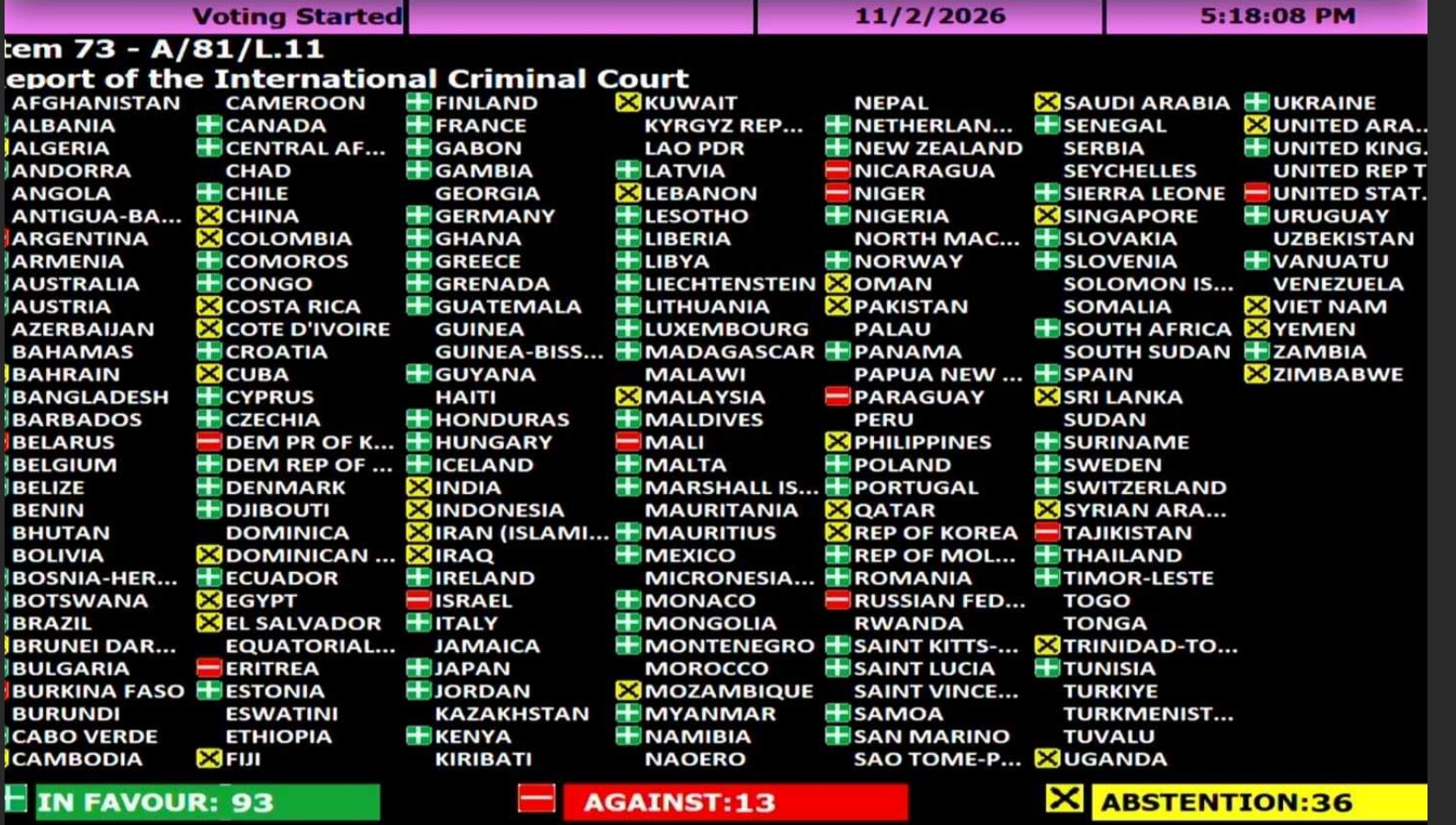
Port of Spain has made no public statement as yet regarding the vote at the United Nations on Monday, but Browne said that by abstaining “Trinidad and Tobago has gone from a longstanding position of co-sponsoring such Resolutions in the past to now turning its back on the ICC”.
The resolution, A/81/L.11, was adopted on Monday with 93 countries voting in favour, 13 against and 36 abstaining, according to the voting record.
The United States, Russia, Israel and Argentina were among the countries voting against. The others included Belarus, North Korea, Nicaragua and Paraguay.
According to the UN General Assembly president’s statement, the latest annual report covers August 1, 2025, to July 31, 2026. It outlines the court’s judicial, prosecutorial, administrative and institutional activities, alongside its cooperation with the UN, governments and other partners.
The report allows member states to examine the court’s work and cooperation needs.
In his statement, Browne said that the current administration continues “to disgrace our foreign service and our national sovereignty with every decision that they make in the international and regional arena, without exception.
“In their usual posture of furtive subservience to a foreign agenda, they have failed to support the United Nations General Assembly Resolution on the latest ICC Report, thus abandoning Trinidad and Tobago’s comprehensive support for the International Criminal Court since its inception,” he said.
Browne said that the vote “is yet another example of the Prime Minister’s new-found discipleship in fascism leading to a national position that conflicts with international law and the UN Charter.
“It is a devaluation of the legacy and work of (former Trinidad and Tobago prime minister) ANR Robinson who was a primary inspiration for the formation of the ICC to bring to justice individual perpetrators of Crimes Against Humanity and other terrible atrocities.”
Browne said that the abstention in the vote on Monday “is a marker of the unprincipled cowardice of the current UNC (United National Congress) Cabinet, which brings shame to Trinidad and Tobago and embarrassment to the diplomacy and standards for which this nation was well regarded and respected”.
UN historical accounts credit Robinson’s 1989 General Assembly intervention with reviving the proposal for an international criminal court, helping initiate negotiations that culminated in the adoption of the Rome Statute in 1998.
CMC/gh/I/2026