
by Peter Richards
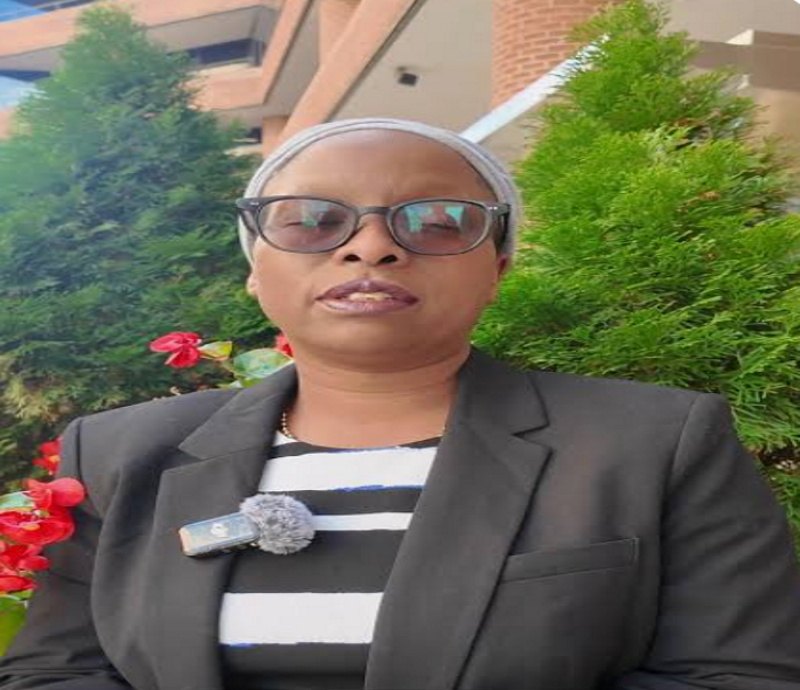
BRIDGETOWN, Barbados, Nov 2, CMC – The head of Washington-based Resilience at the Climate Investment Fund (CIF), Chitembo Kawimbe Chunga, says while Caribbean countries have the same message after a devastating hurricane, the challenge is turning those priorities into “investable opportunities that can attract financing at scale”.
In an interview with the Caribbean Media Corporation (CMC), Chunga was asked whether she shared the view that the world has broken the 1.5°C promise it made to its most vulnerable countries and as a result Small Island Developing States, particularly in the Caribbean will continue to suffer in many ways including the impact of climate change, more hurricanes and most importantly lack of financial resources needed annually to deal with the outcome.
“Recent warnings about a potential overshoot of the 1.5°C pathway underscore what many Caribbean countries already know from experience: climate change is not only an environmental challenge, but also an economic one. They reinforce the urgency of stepping up both mitigation and resilience.
“I have listened to Caribbean ministers describe rebuilding after a devastating hurricane, and the same message comes up each time. They know what needs to be done, and they want to do it before the next storm arrives. The challenge is turning those priorities into investable opportunities that can attract financing at scale,” she said.
The Climate Investment Funds, established in 2008 as a multilateral climate fund in order to finance pilot projects in developing countries at the request of the G8 and G 20 and Chunga said it has spent nearly two decades helping countries, including in the Caribbean, attracting financing at scale.
Chunga said CIF’s next-generation resilience programme, ARISE, builds on those lessons by helping countries embed resilience into the core sectors of their economies.
“With Ministries of Finance and national planning authorities in the lead, ARISE is designed to support country-driven investment plans that bring together the right partners, policies, and financing.
“It will provide flexible, predictable, low-cost and grant finance while helping build the pipelines, institutions, and investment conditions needed to attract private capital and scale resilience over the long term,” she added.
She said Caribbean countries have in the past benefitted significantly from the Climate Investment Funds, noting that CIF has invested in19 countries across Latin America and the Caribbean.
“Across eight Caribbean countries we invested more than US$440 million in total, including US276.5 million in co-financing to deliver 19 projects.
“Since 2009, CIF has helped six Caribbean Small Island Developing States strengthen their resilience to climate shocks through investments in climate data, early warning systems, resilient infrastructure, and national planning. These often first-of-their-kind investments reached more than half the population in most participating countries, and in some cases the entire population.”
Chunga said in Jamaica, for example, CIF invested nearly US$30 million in early-warning systems, including a new third-generation Doppler radar and over 400 pieces of monitoring infrastructure, along with climate change modeling and emergency communication networks. He said when Hurricane Melissa approached, those investments helped authorities track the storm, improve preparedness, and support decisions on emergency response and evacuations.
“CIF also helped Jamaican financial institutions provide low-cost loans to small businesses and farmers, for climate-smart investments. Another important outcome has been in the Eastern Caribbean, where countries have strengthened their ownership of climate and hazard-risk data.
“Investments in climate information systems, geospatial platforms, and institutional capacity have given governments better tools to understand and manage climate risks before disasters strike,” Chunga said.
CIF said that the Caribbean stands to benefit from the recently launched investment platform, ARISE, which is also designed to transform climate risks into investment opportunities and help protect the economies of these countries against fiscal shocks.
”ARISE is being launched at an opportune moment. We have reached a point where governments and businesses now recognize that resilience is not simply a climate issue, but an economic imperative,” Chunga said, adding that significant investment is needed to protect infrastructure, supply chains, jobs, and growth, before disasters strike.
“Still, the investment needed is significant, far greater than governments alone can commit. Public finance—like that provided by CIF—remains essential, and the private sector must be an increasingly significant part of the solution.
“We saw this reflected in the response to our resilience programme, ARISE, when we opened up for expressions of interest in April. More than 70 countries applied for support, including 17 Small Island Developing States. “
Chunga said in these applications, countries are not asking for CIF to be the primary financer of resilience.
“They are asking us for catalytic, low-cost finance that can reduce risk, build investment pipelines, and unlock much larger flows of public and private capital—whether that is for power systems that can better withstand a hurricane or new job opportunities in sectors that are less vulnerable to climate shocks.
“We know that these investments are urgent. In a few weeks, we will announce the first group of selected countries.”
Dominica’s Prime Minister Roosevelt Skerrit has historically condemned developed countries for their role in driving global climate change while leaving vulnerable, developing nations to bear the catastrophic damages.
Simultaneously, global mechanisms like the CIF, alongside related entities like the Green Climate Fund (GCF) face sharp criticism regarding whether they are truly meeting their core objectives of protecting developing states.
But Chunga, a national of Zambia, told CMC prior to CIF, developing countries were setting their priorities.
“CIF’s role is to help them deliver. Country leadership is central to everything we do. The investment plans we finance are developed by countries who choose priorities to reflect their own development objectives. Our board is also comprised of an equal number of developed and developing countries.
“Our resilience support to date has helped make over 65 million people in 31 countries more resilient to climate impacts, from more drought-resistant farming methods to roads that stay passable after heavy storms.“
The Caribbean Community (CARICOM) Climate Envoy Dr. James Fletcher, who played a significant role in the 1.5 to Stay Alive campaign ahead of the Paris Declaration has in recent times spoken of the challenges such as the need to unlocking fair and accessible climate finance and addressing the barriers that keep resources out of countries that need it the most. He has been calling for the establishment of new global funds.
Chunga said there are currently five major multilateral climate funds, including the recently operationalised Fund for Responding to Loss and Damage.
“Each of these funds have distinct mandates – two funds may support different aspects of the same country plan, for example, or one fund might continue and expand solutions that another fund has already helped pilot.
“At CIF, our focus is on making sure our finance is and remains accessible to countries. We have learned that creating additional institutions or processes is not always the answer. CIF works through the six largest multilateral development banks in the world, including the Inter-American Development Bank and the World Bank, all of whom have long-standing relationships with individual countries. “
Chunga said that by building on these established systems, countries can access support through channels they already know and trust, rather than having to navigate entirely new processes.
“And as I mentioned before, all our investments are designed and led by countries themselves,” she told CMC, adding “we understand the pressure that debt burdens and high financing costs place on governments.
“CIF was established to help with that: provide low-cost, long-term finance, and in the case of the most vulnerable countries, often grants. To give you an idea, of the US$148 million in CIF funding channeled into resilience programming in the Caribbean, over US$100 million was as a grant.
“Added to that, we use our financing strategically, directing it where it has the greatest chance to bring in even larger flows of capital from other sources. As of this year, our investments are expected to attract over US$96 billion in additional finance, including over US$30 billion from the private sector.”
Chunga said this is money that was committed to a county’s plan because CIF went first and absorbed the highest risks associated with a new solution or technology.
“Ultimately, we provide climate vulnerable countries with affordable capital to strengthen resilience—of their water supplies, energy systems, agriculture, fisheries, roads, and health and education centers—before disasters strike, so the whole economy can be better protected and recover more swiftly,” Chunga told CMC.
CMC/pr/ir/2026