
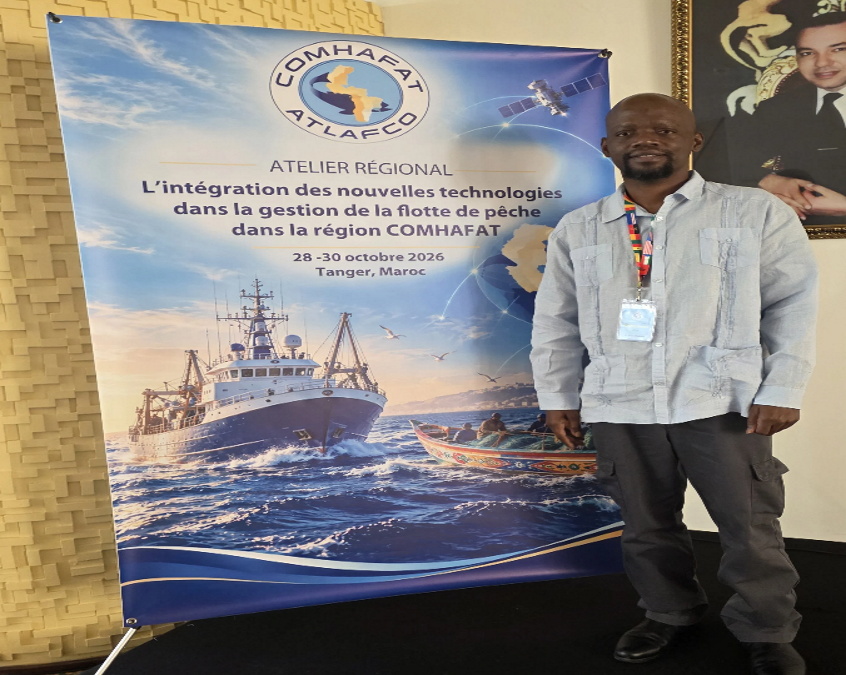
TANGIER, Morocco, Oct 30, CMC -The executive director of the Belize-based Caribbean Regional Fisheries Mechanism (CRFM), Dr. Marc Williams, is proposing Africa and the Caribbean pursue closer collaboration in the area of digital fisheries and blue economy.
Addressing a regional workshop on the Integration of New Technologies into Fishing Fleet Management in the ATLAFCO region organised by the Ministerial Conference on Fisheries Cooperation among African States Bordering the Atlantic (ATLAFCO/COMHAFAT), he said affordable digital tools, stronger institutions, and meaningful participation by fisherfolk are central for modern fisheries management.
The workshop ends later on Friday.
Williams, in his presentation titled “Digital Transformation of Fisheries Management in the Caribbean,” deacribed how enhanced vessel information, electronic catch reporting, and seafood traceability can support responsible fishing, coastal livelihoods, and food security.
It also highlights opportunities for practical cooperation between Africa and the Caribbean, drawing on the experience and priorities of both regions.
“Assess their value by whether they improve decisions, support compliance, and serve fishing communities,” Williams said, as fisheries administrations globally confront climate pressures, illegal, unreported, and unregulated (IUU) fishing, limited surveillance resources, and growing demands for evidence of seafood origin and legality.
Williams proposes exploring a CRFM–ATLAFCO digital fisheries and blue economy cooperation programme, indicating that the proposal is offered for discussion and does not constitute an agreed undertaking or a commitment of resources.
He said its scope would depend on participating countries’ interests, institutional capacity, and the appropriate decision-making processes.
Eight areas have been identified for dialogue, namely digital fisheries information systems, fleet monitoring and surveillance, electronic reporting, digital traceability, IUU fishing detection and enforcement, capacity development, technology transfer including data standards and interoperability, and innovation and knowledge exchange.
The CRFM said that possible initial activities include joint training, technical exchanges, and a limited number of demonstrations with willing national partners. Electronic reporting for small-scale fisheries and interoperable traceability are potential pilot areas. Shared technical guidance and an Africa–Caribbean fisheries innovation network could help retain and disseminate lessons learned from this work.
For development partners, the presentation outlines practical opportunities to support locally sustainable systems, accessible training, and carefully evaluated pilots. Joint financing approaches could be considered once priorities, responsibilities, and a credible program of work are established through the appropriate channels.
Longer-term cooperation could extend to sustainable aquaculture, climate resilience, and ocean governance.
The CRFM said that its central ambition is to support fisheries management with timely, reliable information, make vessels more visible to competent authorities, make catches more accountable, and make seafood origins easier to establish.
“Achieving this will require capable institutions and fishers who can participate without unreasonable difficulty or cost, supported by partnerships that remain useful beyond the initial project period.”
CMC/kj/ir/2026