
KINGSTON, Jamaica, Oct 29, CMC – Jamaica says repeated calls at the United Nations for an end to the United States’ economic embargo against Cuba are insufficient to address the island’s worsening humanitarian crisis, arguing that greater emphasis must be placed on domestic reforms, economic integration and dialogue between Washington and Havana.
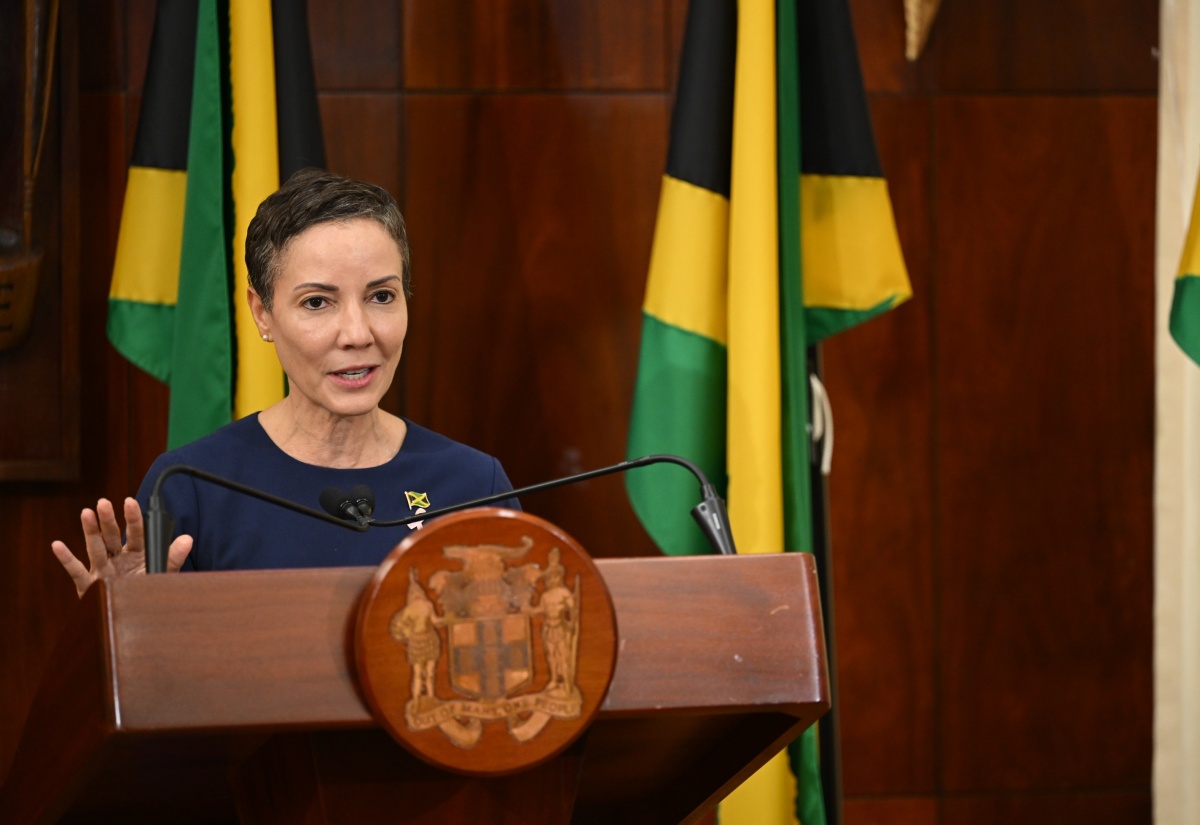
Foreign Affairs and Foreign Trade Minister Kamina Johnson Smith said this was among the considerations behind Jamaica’s decision to abstain from Wednesday’s United Nations General Assembly resolution condemning the US embargo.
“The suffering of the Cuban people is of deep concern to Jamaica. We encourage domestic reform and greater integration of Cuba into the international economic system, supported by policies that create pathways for progress and eliminating the dire humanitarian crisis, rather than perpetuating isolation under the blockade,” she said.
Addressing Wednesday’s post-Cabinet press briefing at Jamaica House, Johnson Smith said the government did not support unilateral actions contrary to the United Nations Charter but also believed that repeatedly endorsing the resolution without changes to its approach was not benefiting the Cuban people.
“We did not vote against, because we do not support the unilateral actions in accordance with the UN Charter, and we did not vote for, because it is clear that continuing to do the same thing each year to support the resolution simpliciter, with not only no improvement in the circumstances, but in fact, a deepening of the humanitarian crisis and suffering, does not serve the benefit of the Cuban people,” she said.
Johnson Smith said Jamaica’s position had been under consideration for some time and was consistent with concerns previously expressed by Prime Minister Andrew Holness about the humanitarian situation in Cuba and its implications for the wider Caribbean.
Holness raised the issue during the opening ceremony of the CARICOM Conference of Heads of Government in St Kitts and Nevis earlier this year, reaffirming Jamaica’s solidarity with Cuba and calling for dialogue between Havana and Washington to promote stability and improve conditions for the Cuban people.
He also suggested that CARICOM member states could play a constructive role through engagement and cooperation, Johnson Smith said.
The minister said Jamaica had reiterated its position in its national policy statement at the 81st United Nations General Assembly in New York last month, calling for reforms to multilateral institutions and approaches to ensure they remain effective in a changing global environment.
“The position taken is also consistent with our broader perspective on multilateralism. As stated in our national policy statement, we cannot simply continue to defend it and do the same things and believe that in a changing world, it will somehow magically manifest Agenda 2030 and the systems deemed to be fully effective,” she said.
“We believe that the systems need reform and this requires us to act differently,” she added.
The Jamaican government also moved a motion on the economic and humanitarian situation in Cuba in the House of Representatives on Tuesday.
Johnson Smith said the motion takes a broader approach than simply calling for an end to the embargo. It asks Parliament to express deep concern about the economic and humanitarian challenges facing the Cuban people and affirm that their welfare and aspirations must remain central to efforts to address them.
It also recognises the importance of intensified economic and institutional reforms, respect for fundamental human rights and freedoms, and other essential elements of sustainable development.
The motion further supports constructive engagement between Cuba and the United States, grounded in mutual respect and peaceful dialogue, to reduce economic restrictions and other barriers to trade, finance and investment while facilitating Cuba’s progressive integration into the international economic system.
Johnson Smith said these broader considerations were absent from the resolution before the UN General Assembly, and there was no opportunity to amend its language.
“These broader contexts are not included in the resolution before the UN, and there is no scope to adjust the language of the resolution; we, therefore, abstained,” she said.
CMC/ed/2026