
PANAMA CITY, Panama, Oct 20, CMC -The Belize-based Caribbean Regional Fisheries Mechanism (CRFM) wants renewable energy investments in the region’s fisheries and aquaculture sectors must do more than install equipment.
The CRFM told the Caribbean Renewable Energy Forum (CREF) 2026 that they must deliver reliable, affordable services that protect livelihoods and strengthen businesses.
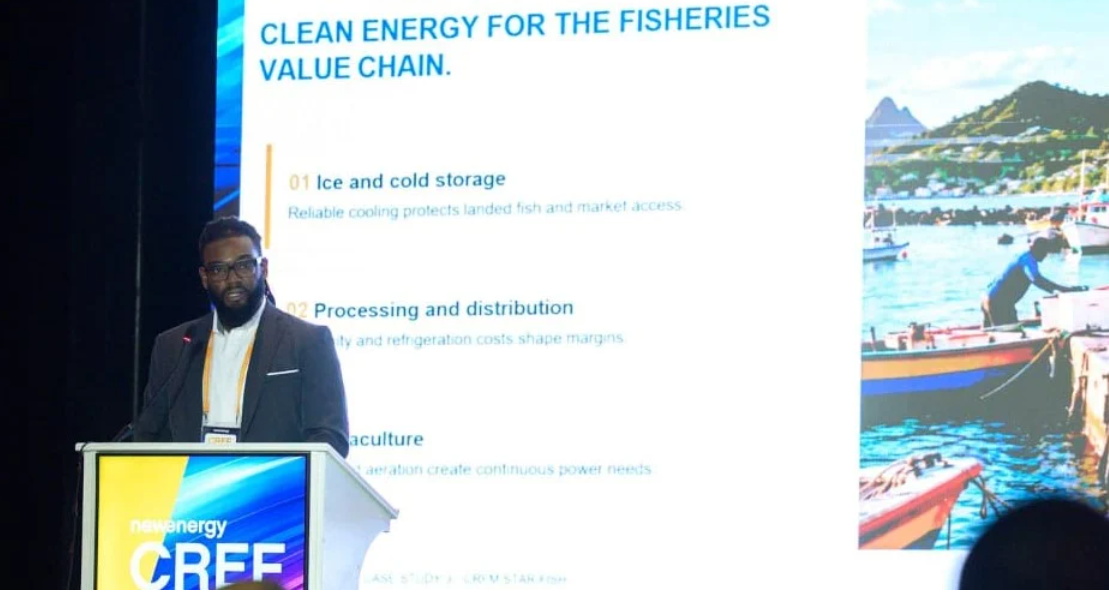
Presenting one of three case studies in a session on renewable energy investment in Caribbean industry and productive sectors, Sherron Barker, the regional project coordinator of the CRFM’s STAR-Fish Project, outlined how ice plants, cold storage, fish processing, aquaculture and other fisheries operations can benefit from cleaner energy.
His case study titled, “Smaller Productive Users: Renewable Energy Across the Fisheries Value Chain,” examined how demand spread across smaller operators can be brought together to create viable investment opportunities.
“The point is the services that clean energy enables. We also need arrangements that keep these services affordable, maintained and accessible to the people who use them,” Barker said, explaining that energy costs and reliability affect livelihoods at each stage of the value chain-from fuel used on fishing trips and ice at landing sites to refrigeration, processing, and pumping and aeration in aquaculture.
He said decisions about renewable energy must therefore consider fish losses avoided, product quality maintained, savings achieved and whether operators can afford the service over time.
“The opportunity therefore extends beyond replacing grid electricity with solar panels. The question is whether a dependable energy service can protect production and income at a cost users can sustain. The business case must capture reliable ice and cooling, losses avoided and energy savings,” Barker added.
He highlighted three ongoing STAR-Fish workstreams that can help turn these needs into investable projects.
These include an assessment of renewable energy and energy efficiency needs and the selection of at least four fisheries value chains; the development of business models for renewable energy options and fish-processing operations; and work on financing models and investment opportunities.
Together, these activities examine technical feasibility, operating costs, maintenance responsibilities, users’ ability to pay, and investment readiness.
“STAR-Fish can work with countries to prepare the site evidence and test business cases. What we need is a sharper understanding of market requirements,” Barker said, encouraging encouraged dialogue among developers, service providers, financiers and country partners. Developers can help identify the scale and common specifications needed to serve multiple sites; service providers can define maintenance and service requirements; financiers can clarify revenue, security and risk-sharing arrangements; and country partners can shape ownership and user-fee models that keep shared assets operating while preserving fair access for fishers, vendors and processors.
“The immediate opportunity is to bring these requirements into the STAR-Fish assessments while they are underway.That way, the eventual business cases can answer the questions investors ask and serve the fisheries users who depend on the facilities,” Barker added.
CMC/kj/ir/2026