
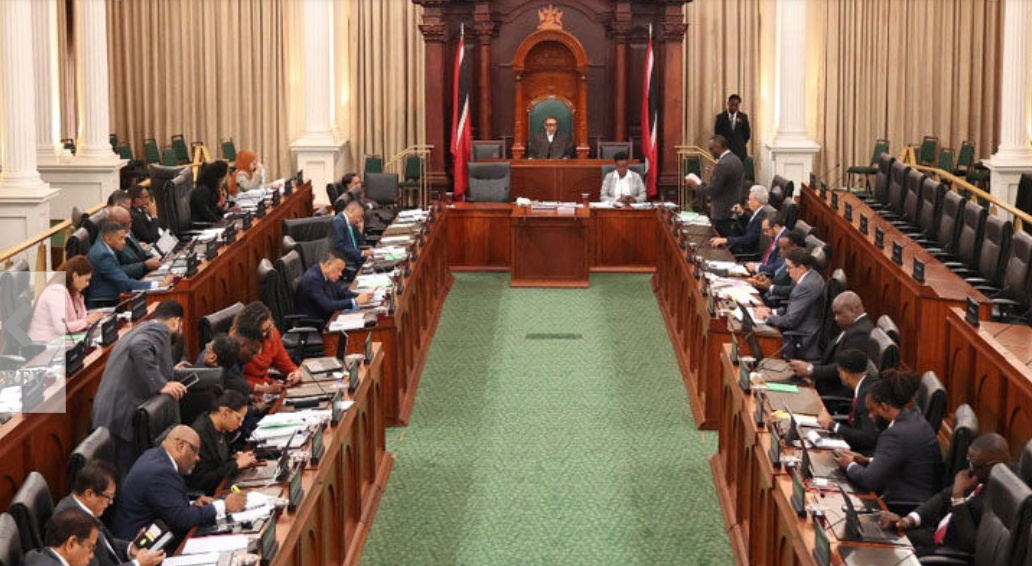
PORT OF SPAIN, Trinidad, Oct 20, CMC – The Women Parliamentarians of Trinidad and Tobago (WPTT) Tuesday “strongly” condemned remarks made during the budget debate in Parliament saying it “introduced inappropriate sexual references and innuendo” targeting women legislators.
“Women parliamentarians must be recognised and respected for their competence, contributions and service to the nation, not judged by their physical appearance, presumed sexual conduct or alleged personal relationships,” the WPTT said in a statement, adding that “sexism does not become acceptable because it is directed at a political opponent, nor does it become harmless when presented as humour or political banter.”
The WPTT said that women make up approximately half the population of Trinidad and Tobago and its mandate is to “empower, mentor and encourage more women to participate in parliamentary life, recognising that greater representation of women strengthens our nation”.
But it noted that when one woman is subjected to “gender-based verbal attacks, the impact extends beyond the individual, undermining the dignity and respect that all women deserve.”
While the statement did not identify any particcuar legislattor during the debate, it nonetheless follows the criticism of Youth Affairs Minister Phillip Watts, who during his contrbution to the TT$63.3 billion (One TT dollar=US$0.16 cents) fiscal package, commented on the appearance and sexual morality of female legislator .
He said that the women legislators on the gobernment side were “good-looking” and had “a lot of moral values.
“I feel very comfortable on this side, Mr Speaker. Especially with the women, they have a lot of moral values,” he said, adding “I’ve never come across any of these ladies sleeping with the colleagues. I’ve never come across that on this side.”
Opposition legislator Kareem Marcelle objected to the remarks, questioning their relevance to parliamentary proceedings and asking the Speaker Jagdeo Singh “what is the relevance of talking about persons’ personal appearance in this House, Mr Speaker”.
In its statement, the WPTT said as an organisation comprising women parliamentarians across political affiliations, it is particularly concerned about the message such statements send to women and girls who aspire to leadership.
“When a woman in public office is subjected to gender-based verbal attacks, the consequences extend beyond the individual. Such conduct undermines the dignity of women in public life and risks discouraging others from offering themselves for national service.
“The Parliament of Trinidad and Tobago should be a place where women can participate in national decision-making without fear that their appearance, sexuality or private lives will become the subject of public ridicule.
“We recognise that parliamentary debate can be robust, adversarial and passionate. However, disagreement over policy and political conduct must never be used to justify language that demeans women or undermines their dignity.”
The WPTT said it calls upon all parliamentarians, regardless of political affiliation, to exercise greater responsibility in their contributions and to refrain from “inappropriate remarks that fall beneath the dignity of our Parliament.
“The WPTT remains committed to fostering a political culture in which women are encouraged to lead, respected when they do, and judged by the quality of their contributions rather than by gender-based stereotypes or insinuations.”
CMC/jh/ir/2026