
PORT OF SPAIN, Trinidad, Jun 21, CMC -The Court of Appeal, Friday, upheld an appeal by the Auditor General, Jaiwantie Ramdass, who is seeking to challenge an investigation over an ongoing probe into a recent impasse between her office and the Ministry of Finance.
The Appeal Court ruled that High Court Judge Westmin James was wrong to have refused her leave to pursue the case on the basis that she had not raised arguable grounds with a realistic prospect of success at an eventual trial.
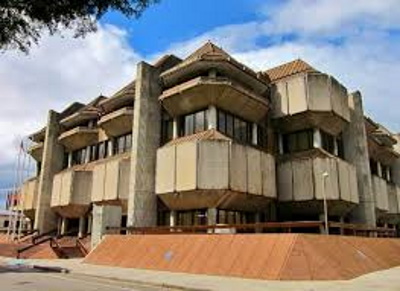 Delivering an oral ruling, judges Mark Mohammed, Peter Rajkumar, and James Aboud upheld Ramdass’ appeal over the premature dismissal of her judicial review lawsuit.
“Leave will therefore be granted because as a matter of law, the low arguability threshold has been attained. The matter will be remitted to proceed on that basis before a judge of the High Court to be allocated by the Registrar of the Supreme Court in consultation with the Calendaring Committee,” Justice Rajkumar said.
But the Court said nothing in the judgment should be construed as it expressing any concluded view on the outcome of the issues identified.
The ruling means that Ramdass’ substantive case over the legality of the probe will now have to be heard and determined by another judge, who is yet to be assigned.
On Monday, the three-member Appeal Court reserved its ruling in Ramdass’s appeal of Justice James refusal to grant her leave to challenge the ministry and the Cabinet over the decision to appoint an investigation team.
The dispute arose in April after the Ministry of Finance sought to deliver amended public accounts to explain and rectify the error. Ramdass initially refused receipt, as she claimed she needed legal advice on whether she could accept them after the statutory deadline for submission. She eventually accepted the records and dispatched audit staff to verify them.
She then submitted her original annual report, which was based on the original records, to Parliament.
Finance Minister, Colm Imbert, had last month announced that Justice David Harris had been appointed chair of a team that will investigate the understatement of Trinidad and Tobago government revenue for the financial year 2023.
The statement from the Ministry of Finance said Cabinet had given the green light for the probe and that the investigation team will also include David C. Benjamin, a former Audit Director at the Auditor General’s Department, and specialists in Information Technology.
The team will be requested to report to the Minister of Finance within two months.
Justice Westmin James in his ruling earlier this month said in this case, the finance minister “used a discretionary power for the purposes of the recommending an investigation”.
He noted that it could be agreed between the parties “that there was a serious matter of public importance that required investigation and that choice fell within the discretion assigned to him by the Constitution”.
The Court of Appeal noted that the Harris team can still pursue aspects of the probe on the TT$2.6 billion (One TT dollar=US$0.16 cents) understatement in the Auditor General’s report on the 2023 public accounts that do not involve Ramdass and her office.
Following the Appeal Court ruling, Senior Counsel Douglas Mendes, who led the legal team for the Cabinet, said that Imbert would inform the investigative committee led by retired judge David Harris that the aspects of the probe dealing with Ramdass and her office had to be put on hold pending the final determination of the case.
Ramdass attorneys headed by former attorney general, Anand Ramlogan said that a stay of the probe, which their client sought, was no longer required.
In their appeal, the lawyers for Ramdass, listed 14 grounds for the appeal, including that the judge erred in finding that the investigation was permissible and that the “biased investigation” should not be permitted.
“A biased investigation cannot be permitted in law. This is not about a statutory duty to investigate. The Minister of Finance has no such power. I am not concerned about him investigating the ministry or himself, but the investigation of the Auditor General,” Ramlogan said.
“The judge should have looked at the totality of the issue to determine if she was treated fairly. This is not an investigation by an independent body. The political directorate has no statutory mandate to look into the conduct of the Auditor General.”
“The Minister of Finance has irrevocably compromised this investigation,” Ramlogan said, adding that the Cabinet’s sanction of the probe could not legalise it.
But Mendes said the finance minister did not decide to appoint an investigative team, but only made a recommendation.
“The decision is that of the Cabinet which is under challenge. This case is not about the fairness of the investigation,” he said, noting also that there was also no bias claim against the Harris team.
“It is the decision to appoint the team that is under challenge,” Mendes said, urging the Appeal Court to not only determine whether Ramdass should be granted leave but also to make a declaration on the law and whether the Constitution allows such types of investigation, rather than send it back to the judge.
CMC/af/ir/2024