
KINGSTON, Jamaica, Oct 28, CMC -The extremely dangerous category 5 Hurricane Melissa has made landfall in Jamaica on Tuesday, with officials warning about the catastrophic winds, flash flooding and storm surge associated with the storm, already blamed for three lives.
As the storm inches closer to the island, a representative of the International Federation of Red Cross and Red Crescent Societies (IFRC) said that the category 5 system “will be the strongest on the planet this year” putting a million people at direct risk, “including families which are still recovering from Hurricane Beryl” which hit Jamaica 16 months ago.
“Roofs will be tested. Flood water will rise. Isolation will become a harsh reality for many,” said Necephor Mghendi, the Trinidad-based IFRC’s head of Delegation for the English and Dutch-speaking Caribbean.
The tropical cyclone specialist with the World Meteorological Organization (WMO), Anne-Claire Fontan, quoting the Miami based National Hurricane Center (NHC), said ‘total structural failure is likely.
“I have never seen this sentence before… it’s a massive impact that is expected to be in Jamaica,” she said.
The NHC in its latest bulleting said that the storm is about 40 miles south east of Negril in Jamaica and has maximum sustained winds of 185 miles per hour.
Melissa is moving toward the north-northeast near nine mph and a turn towards the northeast with an increase in forward speed is expected later today, followed by a faster northeastward motion on Wednesday and Thursday.
“On the forecast track, the core of Melissa is expected to make landfall on Jamaica during the next couple of hours, move across southeastern Cuba early Wednesday morning, and move across the southeastern or central Bahamas later on Wednesday,” the NHC said.
It said that little change in strength is expected before Melissa makes landfall on Jamaica.
“Melissa is expected to reach Jamaica and southeastern Cuba as an extremely dangerous major hurricane, and it will still be a strong hurricane when it moves across the southeastern Bahamas.”
Fontan said that the system will bring three times the normal amount of precipitation for a rainy month in Jamaica, or up to 27.5 inches.
“It means that there will be a catastrophic flash floodings and numerous landslides. In addition to the rain and to the destructive wind, you will have storm surge that is expected as well on the southern coast of Jamaica with a three to four meters high in addition to destructive waves,” she said.
Mghendi said that while Melissa is moving as a very slow speed , the “extreme” rainfall and winds are expected to cause “extensive infrastructure damage, isolating communities and cutting off essential services for days if not weeks.
“The humanitarian threat is severe and it’s immediate,” he said.
Many families are currently still rebuilding from the impacts of Beryl last year and restoring their livelihoods.
“Melissa now threatens the same communities and maybe all the activities will be wiped out,” he warned.
”This is an example of how… extreme climate weather events can actually provide shocks to communities and stretch the capacities to withstand them,” Mghendi said, adding that coastal communities remain financially strained, and informal settlements are at risk from intense winds as well as soils that are already saturated by the rainy season, with an “increased likelihood of landslides”.
The spokesperson for UN Office for the Coordination of Humanitarian Affairs (OCHA), Jens Laerke said the first order of business is to save as many lives as possible in the event” explaining that this is “why we’re seeing evacuations going on, shelters being built… advice is going out.”
Mghendi said that in Jamaica the authorities have prepared some 800 shelters and that volunteers are supporting evacuations, helping distribute relief items and reinforcing early warning messages.
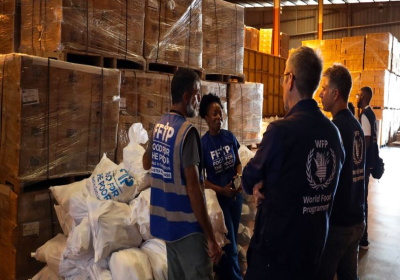
Laerke added that an anticipatory mechanism facilitated by the UN has been activated in Cuba and Haiti which lie on the hurricane’s path, triggering a four million US dollar million allocation from the UN Central Emergency Response Fund (CERF) to pre-position food, water, hygiene items and health supplies.
“What are going to be people’s basic survival needs? Food, clean water… shelter and of course medical care,” he said, explaining that when massive flooding hits, clean water is in short supply, driving a surge in health and epidemic risks.
Asked about the availability of relief items the IFRC’s Mghendi said that within Jamaica itself enough supplies had been prepositioned to provide immediate assistance to some 800 households. Beyond this, supplies for 60,000 households can be delivered to Jamaica and other countries like the Bahamas “within four hours,” he said.
“After we release them, there will be a need to replenish and that’s where we’re hoping for global solidarity.
“In events like this, the world comes together and we anticipate this will be the case. This is one of the storms of the century and I believe the global community will come together to respond collectively,” he added.
CMC/ah/ir/2025