
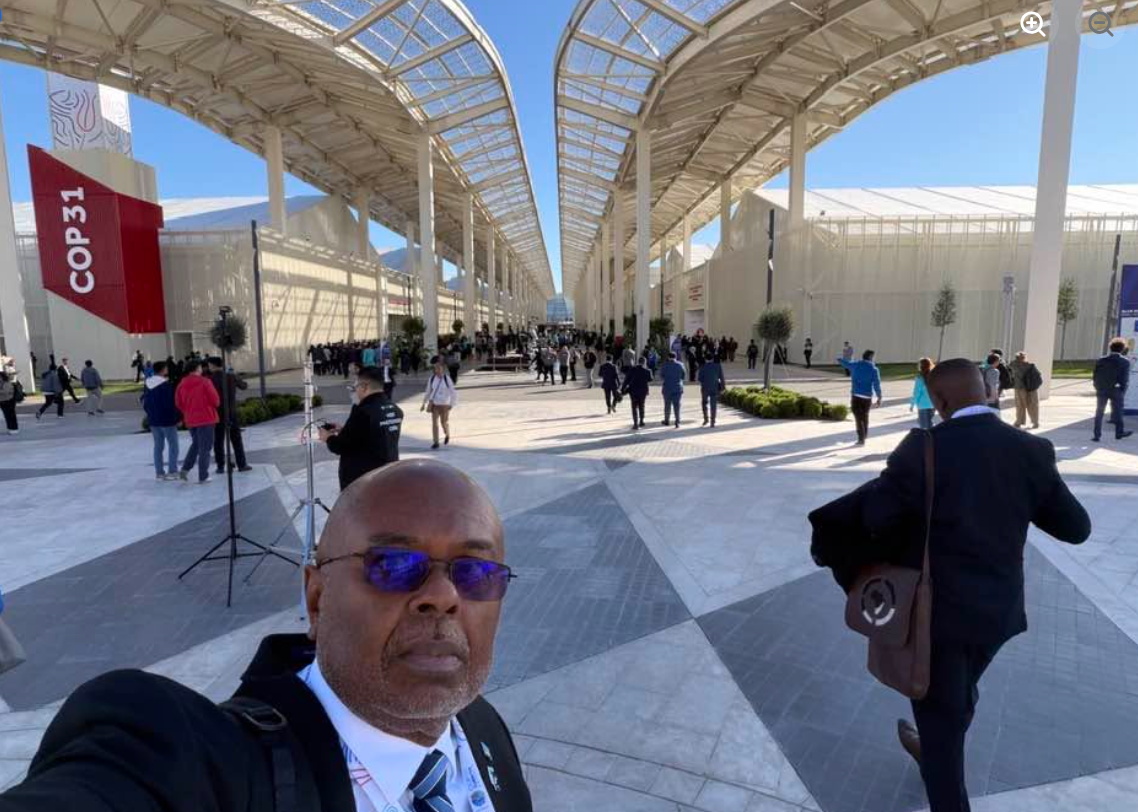
ANTALYA, Turkiye, Nov 9, CMC – The annual climate change meeting under the authority of the United Nations Framework Convention on Climate Change (UNFCCC) got underway here on Monday with the Caribbean Community (CARICOM) climate envoy, Dr. James Fletcher, noting that “progress has been too slow and insufficient” since the adoption of the Paris agreement in 2015.
Fletcher, who is among several Caribbean delegates attending the Conference of the Parties (COP 31) which ends on November 20, said “it is that time of year again” with reference to the annual event, adding there are over 65,000 registered participants.
“Over the next two weeks, the delegates from the countries of the UN system, minus the USA, will debate issues related to climate finance, mitigation, adaptation, loss and damage, just transition, markets, science and technology, and other critical subject,” Fletcher wrote on his Facebook page.
“There has been some progress since the adoption of the Paris Agreement in 2015 – back then we were facing the prospect of global heating of 4 degrees Celsius, and now the long term temperature projection is roughly 2.7 degrees Celsius.
“However, progress has been too slow and insufficient. We must restrict the long term temperature increase to no more than 1.5 degrees Celsius,” Fletcher wrote, adding ”we need access to affordable and predictable, largely grant-based and concessional finance to allow us to build resilience and to respond to the impacts of climate change, which are being felt across all sectors.
“Antalya is a little cool (in temperature), but the conference facilities are good. Here’s hoping for a progressive and successful COP,” the former senior St. Lucia government minister wrote.
“Progress is nowhere near far enough or fair enough,” UN Climate Change chief Simon Stiell told the opening plenary on Monday, urging countries to move beyond setting targets and “supercharge solutions” that can make a difference on the ground.
“No COP is a silver bullet. No single conference can bridge the chasm between the science and reality,” said the former Grenada government minister.
Meanwhile, UN Secretary General Antonio Guterres is urging global leaders to “get serious” about tackling the crisis after a year of devastating weather extremes.
“We have entered a new age of climate extremes,” Guterres said in a statement, urging the leaders to “get serious by cutting emissions faster, accelerating a just transition from fossil fuels and delivering the finance and protection vulnerable countries need”.
Negotiators had been locked in discussions late Sunday over demands by developing nations to include items on climate finance in the official agenda.
Under UN climate agreements, developed countries, which are historically responsible for most greenhouse gas emissions, have provided financial support to help developing nations adapt to climate impacts and transition to cleaner energy. But poorer countries say the sums remain insufficient.
Observers expect few major breakthroughs at COP31 as countries grapple with an oil price shock and geopolitical tensions fuelled by the US war with Iran and Russia’s conflict in Ukraine.
The long-term climate outlook is bleak: the United Nations warned in September that global temperatures were on course to exceed 1.5C above pre-industrial levels, breaching the most ambitious threshold set by the Paris Agreement.
The European Union has called for “clean” electrification, a term that could spark debate over the role of oil, gas and coal in the Turkish proposal.
Countries committed to transition away from fossil fuels in a landmark pact at COP28 in Dubai in 2023 but have struggled to agree on how to turn that pledge into action. COP30 ended with a deal that made no explicit mention of fossil fuels after oil-producing countries opposed the language.
Instead, Brazil produced a voluntary “roadmap” with proposals for phasing out fossil fuels that each country can tailor to their circumstances.
President Luiz Inacio Lula da Silva, who will be among leaders addressing COP31 later this week, was due to attend the talks, fresh from a re-election win that activists hailed as a victory for climate change.
But climate diplomacy is still missing a major player as climate-sceptic US President Donald Trump has not sent officials to COP31.
Health is one of the 10 priority areas of COP31’s Action Agenda, and countries are being urged to put into practice the Belém Health Action Plan agreed at COP30. A new Antalya Initiative for Health Resilience is also being launched.
CMC/jh/ir/2026