
By Nelson A. King
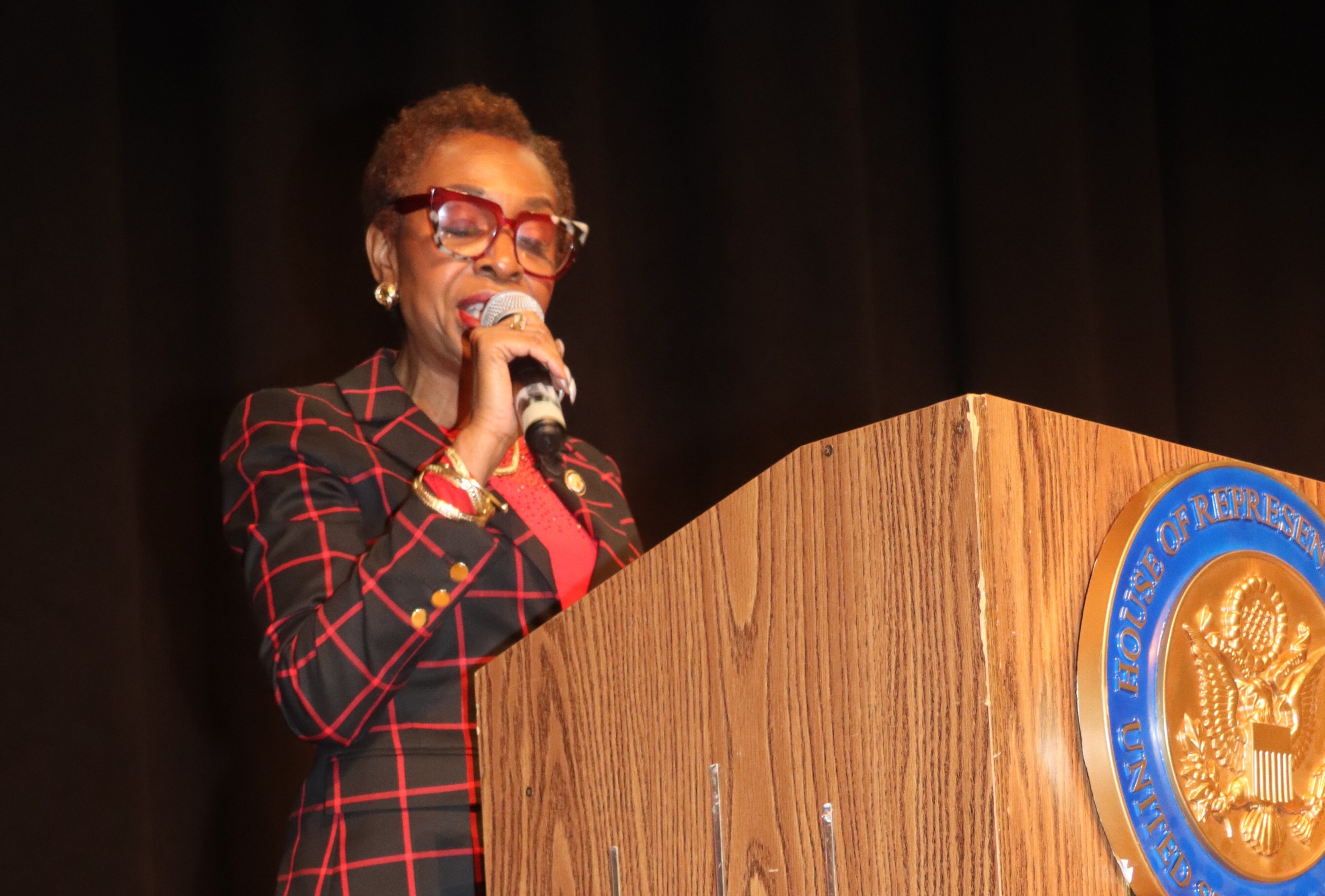
WASHINGTON, September 20, 2026, CMC – Caribbean-American Democratic Congresswoman Yvette D. Clarke has condemned a proposal by the Trump administration that could remove the federal tax-exempt status of private educational institutions found to discriminate on the basis of race, colour, or national or ethnic origin.
The US Department of the Treasury and the Internal Revenue Service (IRS) issued the proposed regulations earlier this month, saying they are intended to end tax-exempt status for private schools that engage in racial discrimination.
The Treasury and IRS estimate that the proposal could affect as many as 18,000 private educational institutions, including primary and secondary schools, colleges, universities, professional schools and trade schools.
Clarke, the daughter of Jamaican immigrants who represents New York’s 9th Congressional District, told the Caribbean Media Corporation (CMC) on Saturday that the proposal would threaten institutions that provide scholarships, financial assistance or other educational benefits based on race.
“Instead of expanding opportunity and access to higher education, the Trump administration is proposing to use the federal tax code to threaten the tax-exempt status of private schools and colleges that provide scholarships, financial assistance, or other educational benefits based on race,” she said.
“This discriminatory abuse of federal power cannot stand, and it must be challenged in court,” added Clarke, chair of the Congressional Black Caucus.
She also linked the issue to the November mid-term elections, saying: “This latest effort to use the power of the federal government to restrict opportunity and target programs serving our communities is exactly why this election (Mid-Term election in November) is so critical.”
“When House Democrats take back the majority, we will work to hold this administration accountable, push back against abuses of federal power, and protect access to higher education,” Clarke said. “We will fight to ensure that Black students have a fair opportunity to pursue a college education and succeed.”
Under the proposed regulations, a private school would not qualify for federal tax-exempt status if it “adopts, maintains, or enforces a policy or practice that discriminates on the basis of race, colour, or national or ethnic origin.”
The Treasury said the proposed rule would apply to admissions, educational policies, scholarships and loans, athletics, and other school-administered or school-supported programmes.
Treasury Secretary Scott Bessent said the administration was seeking to ensure that racial discrimination has no place in American education.
“Schools rebranding race-based preferences as equitable, inclusive, or diversity-enhancing does not change their discriminatory nature,” he said.
IRS Chief Executive Officer Frank J. Bisignano said private educational institutions that promote discriminatory practices would no longer be afforded the benefits of federal tax-exempt status.
The Treasury and IRS said the proposal would also eliminate provisions of existing IRS guidance that allowed schools to favour certain racial preferences in admissions, facilities, programmes, scholarships and financial assistance.
They said those provisions are inconsistent with a uniform nondiscrimination standard and incompatible with Supreme Court case law.
The proposed regulations would not prevent private schools from maintaining religious missions, curricula or programmes of religious observance, according to the Treasury.
Religious schools would also be able to select students based on genuine religious affiliation or membership, consistent with existing federal law.
The Treasury said schools could continue using race-neutral criteria, including family income, geographic location, first-generation status, individual hardship, military family status or academic achievement, when making admissions or financial-assistance decisions.
The proposed regulations would apply to taxable years beginning on or after May 31, 2027, giving affected institutions time to review and update their policies, the Treasury said.
CMC/ed/26