
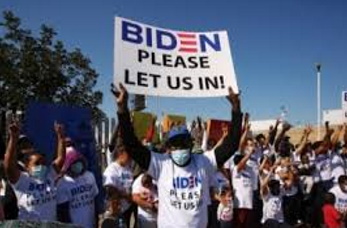
NEW YORK, Mar 20, CMC – Caribbean-American Democratic Congresswoman Yvette D. Clarke has strongly condemned the United States Supreme Court ruling that allows Texas state police to arrest and deport Caribbean and other migrants they claim have entered the United States illegally.
The Supreme Court ruling on Tuesday comes even as federal courts consider the constitutionality of these powers. The Republican-led US Supreme Court ruling therefore allows Texas Senate Bill 4 (SB 4) to go into effect pending a final decision later this year.
Haitians, Cubans, Venezuelans and Nicaraguans are among the influx of migrants crossing the southern border of the United States in seeking asylum and refugee statuses.
“The Supreme Court’s decision to let Texas enforce its abhorrent and unconstitutional law that allows officials to arrest, detain and prosecute any individual or family suspected of entering the country illegally utterly contradicts our nation’s fundamental beliefs,” Clarke, the daughter of Jamaican immigrants, told the Caribbean Media Corporation (CMC).
“I truly believe S.B. 4 will only cause more chaos and confusion, lead to more racial profiling, and bring harmful, unanticipated consequences to Black and Brown communities,” added the representative for the 9th Congressional District in Brooklyn, New York.
“While Congress sits on the sidelines without a plan to fix our broken immigration system, and we are once again forced to bear witness as needless harms fall upon migrant communities, it’s imperative we pass comprehensive immigration reform centered in compassion and our American values – rather than giving way to partisan acts of pure indecency towards others,” Clarke said.
US Human Rights Watch also said that the court’s ruling puts migrants fearing persecution into immediate danger.
The group also said the court’s ruling “gives disproportionate and overreaching immigration enforcement powers to state and local law enforcement officers.”
Texas consultant at Human Rights Watch, Bob Libal, said “national governments are entitled to regulate their borders, so long as they comply with international human rights and refugee law.
“But allowing Texas to run with its draconian system of criminalization and returns of asylum seekers is a recipe for chaos and abuse.”
He said that SB 4, the Texas law the Supreme Court will be reviewing, allows state and local police to arrest Caribbean and other migrants entering Texas between official border crossings and charge them with either improper entry, punishable up to one year in prison, or improper re-entry, punishable by two to 20 years.
Human Rights Watch said the new law is also likely to distract police from other public safety work by requiring them to instead focus on arresting and prosecuting migrants seeking to rejoin family, find protection or make a better life.
Civil rights groups and the US federal government have challenged the measure on constitutional grounds.
The new law builds on Texas Governor Greg Abbott’s high-profile busing of Caribbean and other migrants to cities, such as New York with Democratic leadership, as well as his Operation Lone Star.
“This discriminatory and abusive operation targets perceived migrants and others for arrest, prosecution and incarceration on state misdemeanor and felony offenses, as well as building walls, ‘buoy barriers’, and concertina wire along the border,” Libal said.
CMC/nk/ir/2024