
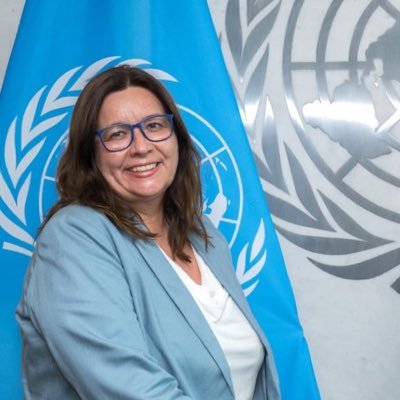
NASSAU, Bahamas, Nov. 28, CMC – United Nations Assistant Secretary-General for Human Rights Claudia Fuentes Julio has concluded her first official visit to Barbados and The Bahamas, reaffirming the UN’s commitment to strengthening human rights protections and addressing some of the Caribbean’s most pressing challenges.
During her visit to The Bahamas, which ended on Friday, Fuentes Julio officially inaugurated the new premises of the UN Human Rights Regional Office for the Caribbean in Sandyport, marking a significant step in expanding the organisation’s presence across the region.
“The Caribbean has an important voice in the global human rights agenda. We are here to listen, strengthen partnerships and work together with governments, civil society and communities to advance human rights for all,” said UN Human Rights Regional Representative Michelle Brathwaite.
Established in 2024 following a UN Human Rights Council resolution, the regional office serves 13 Caribbean countries, providing technical assistance, capacity-building and support for engagement with international human rights mechanisms.
Its priorities include promoting equality and non-discrimination, strengthening national human rights institutions and the rule of law, and advancing climate and reparatory justice.
While in The Bahamas, Fuentes Julio held talks with Prime Minister Philip Davis, Attorney-General Wayne Munroe and other senior government officials. She thanked the Bahamian government for hosting the regional office and reaffirmed the UN’s commitment to working with governments and communities throughout the Caribbean.
Reparatory justice also featured prominently during the visit, with the senior UN official touring Clifton Heritage National Park, a historic site documenting the experiences of the Indigenous Lucayan people and enslaved people, as well as the enduring legacies of slavery and colonialism.
“Places like Clifton Heritage humble us and also compel us to act,” she said. “Reparatory justice demands more than acknowledging the horrors of the past. It requires confronting their lasting consequences, dismantling systemic discrimination and racism, and ensuring that affected communities are at the heart of efforts to achieve justice.”
Fuentes Julio also met with civil society representatives to discuss several regional challenges, including gender-based violence, migration, climate justice, mental health and evidence-based policymaking.
Earlier in the week, she visited Barbados, where she held discussions with Acting Minister of Foreign Affairs Sandra Husbands, Attorney-General Wilfred Abrahams, civil society representatives and members of the diplomatic community.
Among the issues discussed was the establishment of an independent National Human Rights Institution in Barbados, an initiative supported by the UN regional office.
“Human rights must be at the heart of our collective efforts to build societies where everyone can live in dignity, equality and security,” Fuentes Julio said.
“Our commitment is to work with countries and communities across the Caribbean to translate these principles into concrete improvements in people’s lives.”
The regional office serves Antigua and Barbuda, The Bahamas, Barbados, Belize, Dominica, Grenada, Guyana, Jamaica, St. Kitts and Nevis, St. Lucia, St. Vincent and the Grenadines, Suriname, and Trinidad and Tobago.
CMC/un/kb/2026