
by Ivan Cairo
PARAMARIBO, Suriname, Dec 18, CMC – Suriname has launched an emergency relief operation as severe drought in the country’s interior has put over 40,000 people at risk of food shortages.
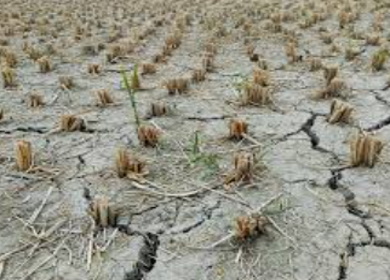
The drought, a consequence of recent climate conditions, has caused rivers and creeks to dry up, leading to failed harvests and a rise in diarrhea cases due to a lack of clean drinking water. In response, the National Coordination Center for Disaster Management (NCCR) has begun distributing water and food packages to over 175 affected villages in the Coeroenie and Boven-Suriname regions.
The NCCR said it aims to deliver the emergency aid programme to all affected villages within two weeks with some villages difficult to reach due to the low water level in the rivers.
Some parts have even dried up and in some places, the border river between Suriname and French Guiana has dried to the extent that people can walk from one bank to the other.
Most affected villages can only be reached by air because low water levels make navigation impossible. The government has released additional resources to provide water and emergency food to drought-affected residents. The drought has destroyed crops on agricultural plots.
A UNICEF ‘Situation Report’ indicated that approximately 40,600 people have been impacted by the drought. The UN agency reported that communities are now relying on contaminated river water, resulting in widespread waterborne illnesses like diarrhea.
Healthcare facilities are reportedly facing shortages of clean water, which is hindering medical services, and schools are experiencing disruptions due to inoperable sanitation facilities, negatively affecting children’s education and health.
According to the UNICEF report, food insecurity has worsened due to consecutive crop failures caused by erratic weather. Transporting food from the capital city, Paramaribo, is increasingly expensive for the communities due to high food prices and transportation costs, leading to food shortages and inadequate nutrition.
In addition the report stated that the scarcity of clean water is causing health care problems in Suriname’s interior. Medical Mission data shows a rise in diarrhea cases among children under five, particularly in Sipaliwini, where health facilities are under-resourced. Clinics report shortages of medical supplies, staff, and clean water, limiting their ability to care for vulnerable populations, including pregnant women and malnourished children.
Addressing the ongoing drought, UNICEF said, it requires resource mobilization focused on both immediate relief and long-term resilience.
Despite current funding limitations, regional mechanisms must be utilized. Collaboration with regional partners and broader Amazon initiatives in countries like Brazil, Peru, and Bolivia can raise awareness and potentially unlock cross-border funding.
Partnerships with private donors, international NGOs, and development agencies should also be pursued to secure financial and logistical aid.
UNICEF believes that demonstrating the impact of interventions, such as improvements to sanitation infrastructure and targeted health responses, will attract donors to invest in both emergency relief and sustainable development.
Based on preliminary assessments, the estimated financial need to address the impact of the drought is approximately US$600,000-US$700,000, according to the UN agency.
In parliament, President Chandrikapersad Santokhi announced that an air bridge has been set up to bring emergency aid to the affected areas and that an amount of SRD 26 million (approximately US$720,000) has been made available for this operation, the head of state said in parliament.
Broken down by region, 52 villages with a total of 24,768 people have been affected in the Upper Suriname area; in the Tapanahony area, 87 villages with 13,380 people have been affected. In Coeroeni, five villages and 2,452 people are suffering from the extreme climate situation.
Based on reports from the NCCR and the Medical Mission, the interior is facing a rapidly escalating humanitarian crisis caused by prolonged and severe drought.
CMC/ic/ir/2024