
KINGSTOWN, St Vincent, Dec 19, CMC – Vincentians will have to wait until about 2025 to find out how the face of poverty has changed in St. Vincent and the Grenadines.
The government has decided to terminate the 2018 poverty assessment because, among other reasons, “incomplete, inaccurate and misleading figures were unofficially and prematurely circulated to the public in late 2020”.
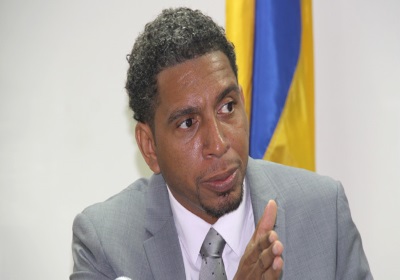
During the 2020 election campaign, MP for West Kingstown, Daniel Cummings claimed that poverty was at 36.1 per cent of the population in 2018, up from 30.2 per cent recorded in 2008, and 0.1 per cent higher than in 1998 which was the last assessment before the Unity Labour Party administration came to office in March 2001.
Cummings noted that the poverty assessment report of 2018 was long overdue and recently asked Minister of Finance, Economic Planning and Information Technology, Camillo Gonsalves to tell Parliament the status of the assessment exercise, the expenditure to date on the exercise, and when would the report would be made public.
Minister Gonsalves said that the 2018 poverty assessment report was incomplete and the decision was made to terminate the process for several reasons.
He said the premature circulation to the public of “incomplete, inaccurate and misleading figures” compromised the integrity of the ongoing assessment and its findings.
“Had the process continued and the published figures differed from those that were previously circulated unofficially, the government may have been accused of tampering with the data and the credibility of the Ministry of Finance and in particular the Statistical Office would have been damaged,” Gonsalves said, adding that there was considerable discrepancy between what was circulated and what was emerging internally in the data being collected.
“The dissemination of incomplete, inaccurate and misleading data for apparently partisan political purposes also led to an analysis of the credibility of the data collected prior to and revisions to the ways in which data are collected, stored and analysed by professionals in the bureaucracy.”
He said the report was also abandoned because the challenges to complete data collection surveys, interviews and analysis during the COVID-19 pandemic and volcanic eruptions were insurmountable and would have presented the problem of merging pre-pandemic, pre-volcano data with information gathered in the immediate aftermath of those cataclysmic events.
The Finance Minister told Parliament that the socio-economic landscape of the country has changed markedly since the bulk of the data collection commenced in 2018.
“As we are aware, the country has experienced the negative impacts of the pandemic and eruptions of the La Soufriere volcano. As such, indicators of poverty and vulnerability would have changed drastically and do not reflect the current realities on the ground,” he said.
Gonsalves said a new assessment is currently being planned.
“Undertaking the poverty assessment is a very important exercise which is critical for evidence based-policies and programmes,” Gonsalves told Parliament.
“Hence, the government remains committed to conducting this assessment. The survey is a cross sectional study that analyses data from a population at a single point in time, it provides rates of poverty and vulnerability, identifies the determinants of poverty and describes features of the population.”
The government signed a financing agreement with the World Bank on June 4, 2022, for US$6 million to strengthen data collection and analysis in SVG. The World Bank agreed to finance a survey of living conditions and has made available US$478,000 for this activity.
Minister Gonsalvs said US$300,521 was spent on the 2018 poverty assessment at the point of its termination.
“While the process was incomplete, some of the information collected still provides useful baseline data that will inform the analysis of trends and patterns in future assessments and surveys,” he said.
He said the government agreed with the World Bank that a new poverty assessment will be conducted following completion of the population and housing census.
He said the methodology of the 2025 poverty assessment will be determined by the Organisation of Eastern Caribbean States (OECS) as part of the OECS Data for Decision Making project.
CMC/kc/ed/2022