
By Kenton X. Chance
KINGSTOWN, St. Vincent, Oct 25, CMC – Two lawyers involved in the lawsuit brought against the Trinidad and Tobago government over the 2009 collapse of British American Insurance Co. Ltd and Colonial Life Insurance Co. Ltd insurance giants, say the decision of the Caribbean Court of Justice (CCJ) to dismiss the claim is “a devastating blow to policyholders across the Eastern Caribbean, a step backwards for CARICOM and a stain on the Caribbean Court of Justice itself.
“The CCJ has failed to deliver to citizens of CARICOM (Caribbean Community) in the smaller islands of the Caribbean the type of fairness among member states that its Original Jurisdiction empowered it to protect,” attorneys Kay Bacchus-Baptiste and Louise Mitchell, who were the case managers in St. Vincent and the Grenadines, said in a joint statement.
On Tuesday, the Trinidad-based CCJ dismissed the lawsuit and ordered the parties to bear their own costs
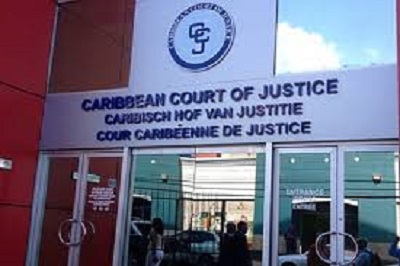 In April, the CCJ had heard the matter of Ellis Richards and others versus Trinidad and Tobago, with the lawyers for the policyholders arguing that the Trinidad and Tobago government breached the Revised Treaty of Chaguaramas (RTC), which established the CARICOM Single Market and Economy (CSME), by bailing out certain local CL Financial (CLF) subsidiaries such as CLICO and British American Trinidad (BAT) and not regional subsidiaries such as BAICO.
The CCJ dismissed the EC$800 million lawsuit brought by the BAICO and CLICO Policyholders Group (BACOL).
BACOL was claiming that after 15 years of perseverance, it has “significantly advanced the pursuit of financial justice” for policyholders in Antigua and Barbuda, Dominica, Grenada, Montserrat, St. Kitts and Nevis, St. Lucia and St. Vincent and the Grenadines who have “suffered extreme financial loss and hardship” after the collapse of BAICO.
However, the two said “the CCJ, led by Vincentian Justice Adrian Saunders, has let down the long-suffering policyholders of St. Vincent and the Grenadines and the wider Caribbean”.
They explained that the essence of the claim was that it was discriminatory for the Trinidad and Tobago government to have, among other things, sequestered assets of CL Financial, some of which were assets owned by BAICO, and used them to make distributions mainly to policyholders resident in Trinidad and Tobago, who held policies with other subsidiaries of CL.
“The Treaty of Chaguaramas contained provisions intended to both protect consumers within CARICOM (Article 184) conferring on them certain consumer rights, and also to protect against discrimination against any member state based on nationality (Article 7).”
In handing down the ruling, Justice Saunders said that the CCJ found that the circumstances of policyholders of CLICO, BAT and CIB were not similar to other policyholders and “this was due to the findings of the court that the defendant’s actions formed part of a governmental bailout of private commercial entities with a view to preventing severe dislocation to its economy.
“The Court noted that if the claimants’ arguments were correct, it would mean that the defendant would have been responsible for bailing out all BAICO policyholders in other Caribbean territories,” Justice Saunders said.
“The Court found that it could not have been within the contemplation of the framers of the RTC that the member states in such circumstances would be obliged to compensate all BAICO policyholders in all CARICOM states for all their loss and damage.”
However, Bacchus-Baptiste and Mitchell said the CCJ’s ruling in effect means that while the Treaty confers certain rights on CARICOM nationals, it does not go further to present effective remedies for the breach of those rights.
“Also, the Court’s extremely narrow interpretation of Article 7 means that nationals cannot look for protection in cross border trade. The ruling that the BAICO policyholders were not discriminated against based only on nationality, is difficult to understand at best.
“The Court stated that the circumstances of BAICO policyholders was different from those of the other CL Financial subsidiaries in Trinidad and Tobago, because those policy holders benefited from a Government bailout.
“The court held that this Government bailout was understandable as being necessary to save the local economy. The Court did not say anything to acknowledge the injustice of the fact that this was done at the expense of policyholders from the OECS,” they argued.
The lawyers further stated that the CCJ did not even acknowledge that the Trinidad and Tobago government admitted that it would have given greater support to the policyholders of BAICO, had it not suffered an economic crisis due to depressed oil prices and COVID-19 pandemic, which they said was “an admission of its responsibility”.
“After this disappointment from the CCJ, policyholders will focus their attention back to the Judicial Managers, and continue to inquire as to when the remaining funds being held by the Judicial Managers will be distributed out, even though it is not expected that this distribution will be substantial,” they said.
The lawyers said the judicial managers successfully sued Lawrence Duprey in the United States and the judgment was recognised in Trinidad and Tobago.
“This may have positive implications for policyholders,” they said, adding “furthermore, questions need to be asked about the status of the case that the Government of St. Vincent and the Grenadines brought against RBTT (RoyalBank of Trinidad and Tobago) for its possible role in failing to honour BAICO’s obligation to hold a security deposit in St. Vincent on behalf of BAICO’s policyholders.
“Questions must be asked as to why the Minister with responsibility for Insurance did not ensure that the statutory deposit was in fact being held on account. To date, the case is languishing in the courts and no fines have been imposed.
“The Government of St. Vincent and the Grenadines, which has supervisory authority over BAICO within this jurisdiction, based on a statutory obligation, must be called on to offer some measure of compensation to the long-suffering citizens, many now elderly, who lost much of their savings.
“Also, the Government of SVG, together with CARICOM, must be asked to speak to the Government of Trinidad and Tobago to come to some resolution on this matter. As citizens of CARICOM we demand no less,” the two lawyers said in theirjoint statement.
CMC/kc/ir/2024