
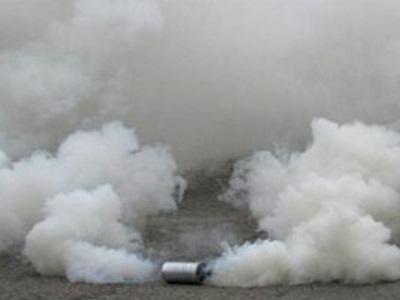
PORT OF SPAIN, Trinidad, Oct 8, CMC – The Court of Appeal has found that the police policy governing the use of tear gas could be improved, but ruled that its shortcomings do not make the policy unlawful.
The court made the finding while dismissing an appeal by Nichole Jordan-Alexis, who had sought permission to bring judicial review proceedings against the Commissioner of Police over the deployment of tear gas at the Queen’s Park Savannah in January 2022.
Justices Prakash Moosai and Charmaine Pemberton said Jordan-Alexis, represented by attorney Michael Rooplal, had failed to establish an arguable case with a realistic prospect of success that the policy was unconstitutional or that police had acted unlawfully, irrationally or unreasonably.
The judges nevertheless said the policy’s treatment of tear gas was less detailed than its provisions governing other forms of less-lethal force.
“The contents of the policy as framed within the document, however, leave a bit to be desired,” the court stated, adding that the deficiencies had “undoubtedly opened the door” to arguments advanced by Jordan-Alexis.
The court noted, for example, that the provisions governing the use of a Conducted Energy Weapon require officers to monitor a person for injury and provide medical treatment where necessary.
“There is no similar provision under that part of the policy where tear gas is specifically mentioned,” the judges noted.
They also agreed that there was “room for improvement and development” of the policy and described as a “legitimate concern” Jordan-Alexis’ contention that there was no express requirement for adequate warnings before tear gas was deployed.
However, the judges said the absence of such a provision did not, by itself, render the policy unlawful.
They found that the Tear Gas Policy, when read together with the TTPS Use of Force Policy, provided sufficient general safeguards, including requirements for officers to assess prevailing circumstances, maintain situational awareness and provide medical assistance following the use of force.
Jordan-Alexis had told the court that she was attending a “prayer and reflect” gathering at the Savannah when police used tear gas. She said the gas caused burning, coughing, difficulty breathing and temporary blindness.
Police, however, gave evidence that about 1,000 people were involved in an unauthorised gathering and that officers had repeatedly instructed the crowd to disperse before resorting to tear gas after other crowd-control measures failed.
The court also rejected Jordan-Alexis’ contention that adequate warnings had not been given, finding that her evidence was insufficient to establish this.
The judges pointed to the absence of medical evidence and supporting witnesses. They also noted that she had moved about 550 metres from the Savannah before experiencing the effects of the gas.
“Evidence wins cases,” the court stated.
CMC/ed/2026