
KINGSTON, Jamaica, Apr 29, CMC -The Andrew Holness government used its majority in the Parliament during the early hours of Wednesday morning to pass the National Reconstruction and Resilience Authority (NaRRA) Act empowering the government to continue with the rebuilding of Jamaica following the passage of Hurricane Melissa last October.
When the vote was taken at 1.30 am (local time), following more than eight hours of debate, the government secured 31 votes as against 15 fo the opposition with 16 lawmakers absent.
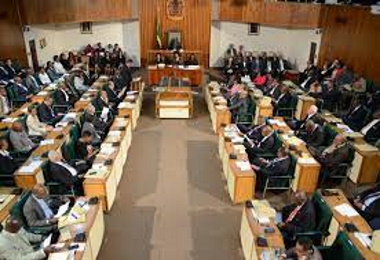 The debate was overshadowed by the removal and subsequent suspension of opposition legislator, Dr Angela Brown-Burke, for “unparliamentary behaviour”.
Opposition legislators had sought to delay the passage by calling for votes, all of which were defeated with the government using its majority to see the legislation through.
The legislation now moves to the Senate for further consideration.
The NaRRA Bill has been the subject of intense public and political scrutiny since its introduction, with the Opposition repeatedly warning that it grants sweeping powers without sufficient checks and balances.
Government, however, have defended the measure as essential to speeding up reconstruction and improving coordination in the wake of Hurricane Melissa that caused an estimated US$9.9 billion in damage when it swept through the country on October 28 as one of the strongest and most destructive hurricanes in the island’s history and blamed for 45 deaths.
More than 28 civil society groups and governance advocates had also called for broader consultation and stronger safeguards prior to the bill being presented in the Parliament for debate, warning that efficiency in recovery efforts must not come at the expense of accountability.
During the debate, Opposition members insisted that the legislation lacked proper oversight and that too much power will be vested in Prime Minister Holness.
Leader of Government Business Floyd Green said that the NaRRA was similar to the model used by New Zealand when it rebuilt in the aftermath of the devastating 2011 earthquake.
But opposition legislator, Omar Newell, argued that issues of corruption are far less prevalent in New Zealand which is also more favourably-ranked on the Corruption Perception Index by Transparency International.
Prime Minister Holness told Parliament that oversight was being sacrificed, reminding legislators that between 2009 and 2015, when the then People’s National Party (PNP) government was pursuing significant monetary reform, the Opposition participated fully.
Despite the opposition’s objections, the government successfully moved a series of its own amendments, which it said were aimed at strengthening accountability and transparency within the proposed authority.
These include provisions requiring NaRRA to conduct periodic consultations with residents and stakeholders directly affected by reconstruction projects, mandating the chief executive officer to submit reports to the responsible minister every six months, and requiring those reports to be tabled in Parliament.
CMc/ah/ir/2026