
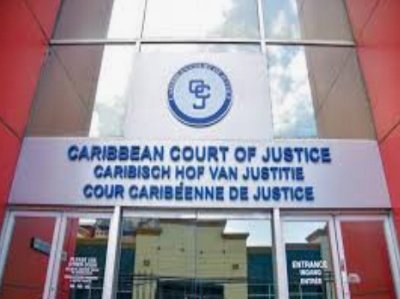
PORT OF SPAIN, Trinidad, May 18, CMC – The Trinidad-based Caribbean Court of Justice (CCJ) has ruled that a reformulated case of unconstitutionality was best left to be argued before the High Court as it remitted an extradition case involving the United States.
The CCJ made the ruling in the matter between Andrew Avelline Bennett and the United States government and the Attorney General of Belize.
 The United States had made a request for the extradition of Mr Bennett, using as evidence against him WhatsApp messages exchanged between himself and a special agent from the Drug Enforcement Administration (DEA).
Within these messages, Bennett allegedly incriminated himself. But he argued that these messages were illegally obtained in breach of the Interception of Communications Act, and violated his rights under the Belize Constitution.
Both the High Court and the Court of Appeal upheld the argument, but the courts decided that there was other untainted evidence which supported the extradition request by the United States.
But in his appeal, Bennett argued that the unlawfully obtained evidence vitiated the entire proceeding, and to proceed with the remaining evidence would amount to an abuse of process.
In his appeal to the CCJ, which is Belize’s highest and final court, it was discovered that the Interception of Communications Act was not in force at the time that the lower courts decided Bennett’s appeals, and thus their decisions could not stand.
Bennett sought to pursue the appeal at the CCJ based on a general principle of unconstitutionality, but the seven member-CCJ panel headed by its President, Justice Winston Anderson, decided that a reformulated case of unconstitutionality was best left to be argued before the High Court.
Accordingly, the case was remitted to the High Court.
CMC/gh/ir/2026