
KINGSTON, Jamaica, Feb 8, CMC – The World Meteorological Organization (WMO) says it is commitment to supporting the improvement of early warning services in countries, while acknowledging the challenges faced by Central America and the Caribbean in that regard.
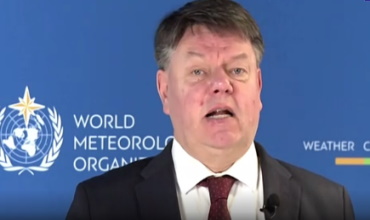
“One of the most important things from our side is, of course, Early Warning Services for All, which is also very relevant for you in Region IV and especially the Caribbean region,” said WMO Secretary General, Professor Petteri Taalas.
“We have already decided to finance 26 countries this year to improve their basic observing systems. We are investing in six countries and LDCs – the Caribbean islands, Pacific Islands and also African countries,” he added.
Addressing the WMO’s Regional Association IV conference, which ends here on Thursday, Minister without Portfolio in the Ministry of Economic Growth and Job Creation, Matthew Samuda, called on the WMO to take steps to ensure that populations across the world are educated about the link between climate change and slow and gradual weather events.
“This body has the credibility and credentials to ensure that the world also understands slow onset events, which [are] often overseen and understated… people don’t necessarily appreciate what is climate change and that climate change is present,” he added.
But Taalas said that the “challenges in the Caribbean islands and Central America are very much on our minds here in Geneva, and we are very much aware of the vulnerability of your countries”.
He told the conference that to this end, the WMO will be financing system improvements in least-developed countries (LDCs) and small island developing states (SIDS), through the Systematic Observations Financing Facility (SOFF).
The WMO Regional Association IV Conference is being held here under the theme ‘Increasing weather, water and climate resilience in North America, Central America and the Caribbean’.
Through the ongoing Climate Risk and Early Warning Systems (CREWS) initiative, the WMO is undertaking manpower capacity-building, investing in information technology infrastructure, so that the weather service capability of member states is improved.
The WMO has also set a target of 100 per cent coverage in early warning service in the next four years.
“We (are to) select 20 countries which we will finance this year, and the plan is that we will finance 20 countries each year so that we would reach this 100 per cent coverage of proper early warning services by the end of 2027,” the WMO Secretary General said.
The WMO said the process will engage the governments of beneficiary countries, key financial institutions such as the World Bank, Green Climate Fund and regional development banks as well as the private sector.
Taalas said the WMO is looking at climate modelling for future weather predictions to improve forecasts, as climate change continues to have effects on weather systems, drought and rainfall.
More than 60 participants from 20 member countries are attending the conference in-person, while others are participating via online platforms.
Several panel discussions are to take place during various sessions over the duration of the conference focusing on, among other things, challenges, opportunities, observations, and building collaborations.
CMC/ag/ir/2023