
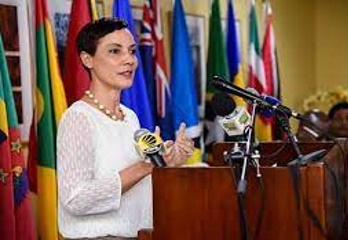
KINGSTON, Jamaica, Mar 18, CMC – The Jamaica government says it is concerned that the United Nations (UN) Sustainable Development Goals (SDGs) implementation has reached a global stalemate.
“With just six years remaining for their implementation by 2030, we are concerned that, having reached and now surpassed the midway point, global progress on the implementation of the Goals has stalled,” said Foreign Affairs and Foreign Trade Minister, Kamina Johnson Smith.
In September 2015, countries adopted 17 SDGs to end poverty, protect the planet and ensure prosperity for all.
The UN said the SDGs remain the world’s roadmap for ending poverty, protecting the planet and tackling inequalities. It said the 17 SDGs offer the most practical and effective pathway to tackle the causes of violent conflict, human rights abuses, climate change and environmental degradation and aim to ensure that no one will be left behind. The SDGs reflect an understanding that sustainable development everywhere must integrate economic growth, social well-being and environmental protection.
Johnson Smith said Jamaica shares the fundamental desire for the peace and prosperity of all nations and citizens globally, and that the SDGs were widely accepted in 2015 as the blue-print to guide the achievement of these “noble objectives”.
She noted that in 2023, the international community marked the mid-point for the attainment of the SDGs during a summit held on the sidelines of the the 78th Session of the UN General Assembly.
Johnson Smith said that the Andrew Holness government has integrated the SDGs into the country’s long-term National Development Plan -Vision 2030 Jamaica, and has utilised the Medium-Term Socioeconomic Policy Framework to strategically prioritise national actions and policies toward achieving the Goals.
She said this “resulted in more than 95 per cent alignment.
“Admittedly, implementation has been characterised by successes and challenges, due in part to the prevailing systemic and structural issues such as climate change vulnerability, fossil fuel dependence and high public debt, which continue to impede development efforts.”
The Foreign Affairs and Foreign Trade Minister said the issues are further compounded by the lingering effects of the COVID-19 pandemic, and the geopolitical conflict in Europe and the Middle East, noting that these have impacted the global supply chain as well as food and energy prices.
Johnson Smith said that this is having a “persistent impact” on Jamaica’s middle-income status, which serves to preclude access to grants and concessionary financing.
She said even as Jamaica strengthens its fundamentals and works towards economic independence, given the global context in which the country operates, attaining the SDGs will continue to require bilateral, regional and multilateral partner support, including access to grants and concessionary financing.
“If we are truly to leave no one behind, it is vital that the partnerships we build serve to encourage fulfillment of international commitments, in particular on SDG financing, in order to revitalise the Partnership for Sustainable Development. Identifying new and innovative ways to bridge the gaps in policy actions and advance approaches toward the development goals are imperatives with which we must contend,” Johnson Smith said.
CMC//2024