
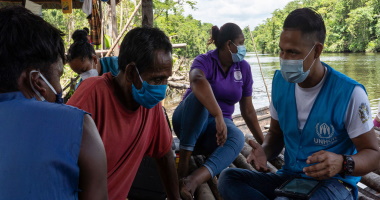
GENEVA, Nov 29, CMC – A senior official of the UN Refugee Agency (UNHCR) says more humanitarian presence and support from the international community is needed as she commented on the plight of indigenous Venezuelan refugees in Guyana.
UNHCR’s Multi-Country Office Representative in Panama, Philippa Candler, speaking to reporters here, noted that an estimated 24,500 refugees and migrants from Venezuela are living in Guyana, including some 2,500 indigenous Warao.
Some have settled in hard-to-reach areas near the Venezuelan border and others in or around the towns of Mabaruma and Port Kaituma. Since early 2020, an estimated 250 Warao also found refuge in Anabisi in northern Guyana. More than half of this group are children.
According to UNHCR, these communities have limited access to services and the delivery of aid is impeded by remoteness, lack of transport infrastructure and distances.
It said assessments conducted in October and November show mounting needs, aggravated by the economic downturn caused by the coronavirus (COVID-19) pandemic.
UNHCR said most Warao people have only one meal a day or less. Without formal job opportunities, many are begging, working odd jobs, often in exchange for food, selling handicrafts or depending on humanitarian assistance.
Moreover, most families do not have access to drinking water, relying instead on rivers for drinking, bathing, and defecation, it said.
Earlier this month, the UNHCR received reports that one Warao child from the Anabisi community died and several others were hospitalized, reportedly due to malnutrition and diseases related to poor sanitation conditions. Some have been discharged since.
Last week, the Guyana government said that Venezuelan migrants can access medical services following media reports showing the migrants, who apparently had entered the country through the Port of Kaituma, east of here, in poor health and in need of food.
Health Minister Dr. Frank Anthony said that the migrants could access services at the Port Kaituma District Hospital. He said people from the community have been identified to liaise with the regional health officers and the hospital to access the services.
“If they have any medical challenges, they will be able to sort them out very quickly. They don’t have to wait on an intervention like this. They now have a systematic way if they have any problems that they can come to the Port Kaituma hospital and get access to medical service.”
In an earlier statement, the government said that it remained mindful of its humanitarian obligations to migrants and has been actively engaged in sustained efforts to deliver food and medical relief across the regions where migration into Guyana is taking place.
“Further, the Government remains committed to the humane management of the migrant situation stemming from the economic and social instability in neighbouring Venezuela, with the active support of local stakeholders and our international partners.”
A government statement said that at least 198 people, representing 25 families have settled in the area, located approximately 15 minutes from Port Kaituma.
Mosquito nets for hammocks will also be distributed to the migrants, so that they may have some protection from vector borne diseases. Additionally, the Civil Defence Commission (CDC) has distributed hampers containing essential items and food.
UNHCR said that since 2019, the agency has worked with partners to distribute material assistance, provide shelter and support access to education services to refugees, migrants and members of the host communities.
It also provides counselling, interpretation services and facilitates their access to government services including health programmes and vaccination against COVID-19.
UNHCR said it is currently delivering food hampers, solar lamps, mosquito nets, water purification tablets provided by the Guyanese Civil Defense Commission, and other basic relief items to some 400 indigenous Warao from Venezuela.
The agency works across 17 countries to respond to the plight of five million Venezuelan refugees and migrants hosted in Latin America and the Caribbean.
The appeal for next year will be launched on December, 9.
CMC/gt/ir/2021