
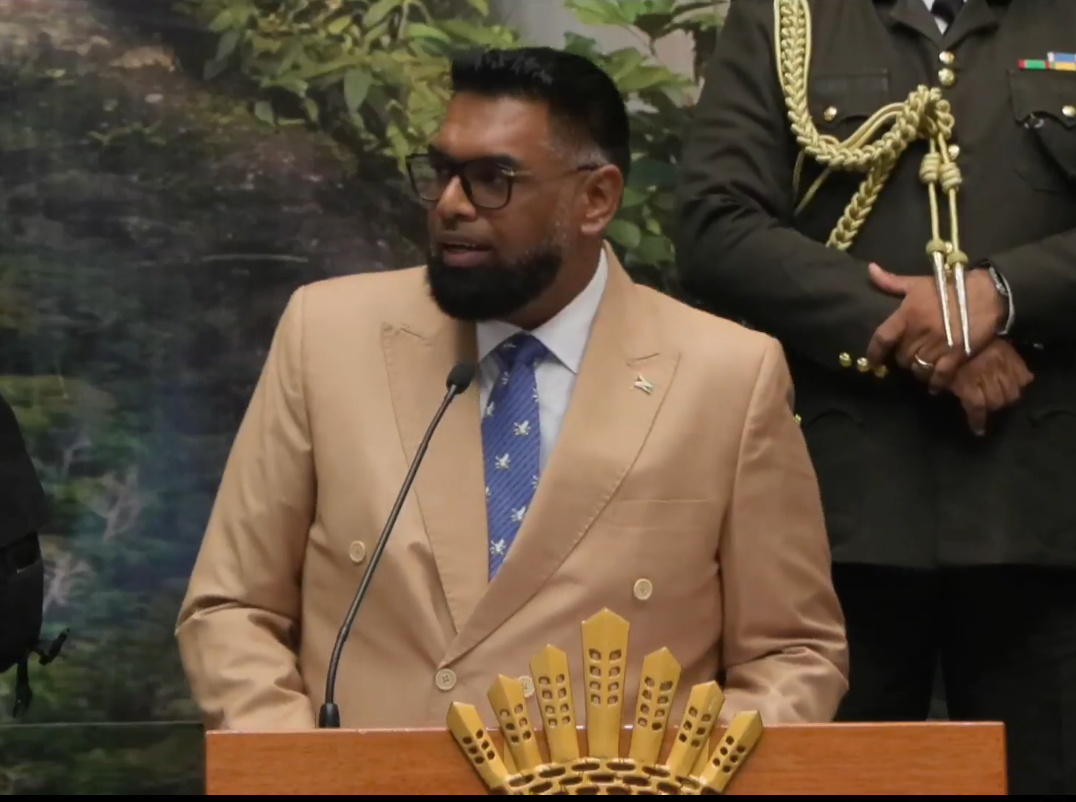
GEORGETOWN. Guyana, Oct 30, CMC – The second Global Biodiversity Alliance Conference got underway here on Friday with Guyana’s President Irfaan Ali expressing the hope that the two-day event will mark the beginning of a new phase for the alliance.
The event is being held under the theme “Investing in Nature: From Global Commitments to Practical Action” with the core focus being to mobilising private and public funding to bridge the estimated US$780 billion annual global biodiversity finance gap
The Global Biodiversity Alliance has expanded from 17 founding members at its July 2025 launch to over 142 members with the key topics for discussions including scaling up biodiversity credits, debt-for-nature swaps, ecosystem services, and watershed management.
Among the delegates attending the conference here are representatives from the World Bank, the Inter-American Development Bank (IDB), the Caribbean Development Bank and the United Nations Development Programme (UNDP).
“Over the next 12 months, I propose that we focus on three priorities. First, let us bring together the world’s best knowledge, science, and innovation to develop new solutions” Sli said, noting that the Global Biodiversity Alliance, working with leading institutions and experts across the world, would have an opportunity to connect the extraordinary knowledge that already exists and the technologies and innovations that are now emerging.
“We should identify where new research, new partnerships, and new technologies can help biodiversity-rich countries protect their nature while creating economic opportunities for the people.”
He said another priority is working together to unlock finance and investment for biodiversity, adding “this must be at the centre of our efforts.
“We need to move beyond identifying financing gaps to develop mechanisms that actually mobilise capital.I challenge all of the countries here, the biodiversity-rich countries, to work with the Secretariat in developing projects that we can put out there to be financed.
“Let us work through the Alliance to develop these projects, bring the expertise together, and get them financed as an investment in the various countries. Let us challenge each of us to do one such project by the time we gather next year.”
Ali said that the private sector of biodiversity-rich countries must be part of the work to design these solutions, working with international investors to connect capital and practical opportunities.
He said he is aware that Ghana’s private sector met this week to start building these international partnerships, to explore new approaches to biodiversity finance.
“I commend our business leaders and their international partners for this initiative. I look forward to hearing the outcomes of your discussion. I want to ask the private sector from all the countries of our Alliance so far, maybe to come together and create an investment vehicle where we can have biodiversity resorts across each one of the destinations.”
Ali said by doing so “we create a marketing model where we market it as one brand, one brand with common values, common regulation, and a common platform.
“This is a massive private sector opportunity that we can explore together, bringing opportunity to the villages, the communities, and to our country at a different scale. We must make it easier for capital to flow into activities that protect biodiversity and generate sustainable economic returns.
“We as countries together, policymakers must agree that any investment that seek to advance the cause of biodiversity or protect biodiversity are granted special tax incentives, special fiscal incentives,” Ali said, adding “we can write that into a common agenda that all of us embrace together so that we have one platform, one agenda, one set of incentives, one set of regulations that we all pursue together”.
Ali said that the third priority would be to demonstrate that a new biodiversity economy can work in practise, saying “we need practical initiatives in different countries and different ecosystems that show how protecting biodiversity can create jobs, support opportunities, attract investment, and strengthen national economies.
“Let us learn from the successes we have already acknowledged,” he said, telling the delegates that ober the next two days there could be a more detailed discussion on these three priority areas.
President Ali said that artificial intelligence is already opening new possibilities for understanding ecosystems and monitoring biodiversity.
“Quantum technologies may offer forward opportunities in scientific discovery and modelling. We must bring leading scientists and technology partners into this work, ensuring biodiversity-rich countries can benefit from these advances.
“I ask this alliance to ask difficult questions, learn from experience, and identify practical solutions. Guyana will continue to play our part,” Ali said, adding that the country is committed to the global ambition of conserving at least 30 per cent of the world’s land and ocean by 2030.
“For us, this is not simply achieving a numerical target. It is about protecting our natural heritage while creating opportunities for our people,” Ali sad, reiterating a statement he made at the United Nations last September when he announced that Guyana is advancing plans for the long-term conservation of over one million hectares of pristine biodiversity-rich forests.
“To give our international guests a sense of the scale, this is an area of forests larger than many countries. It is one of the most intact and ecologically significant landscapes in our part of the world, an important part of the natural heritage not only of Guyana but of humanity.
“This conservation would effectively double the area of Guyana on the permanent protection and make a major contribution to our national 30 by 2030 ambition and it could become one of the largest single blocks of permanent conservation established by a high forest cover, low deforestation country.”
Ali said Guyana is committed to advancing this ambition in a way that respects the interests of communities, is guided by science, and is consistent with the country’s national development priorities.
He said building on the biodiversity inventory already completed, an initial stakeholder process on the way, continued stakeholder engagement, management planning, and biodiversity monitoring will chart the next steps toward the permanent conservation of this important landscape.
CMC/gt/ir/2026