
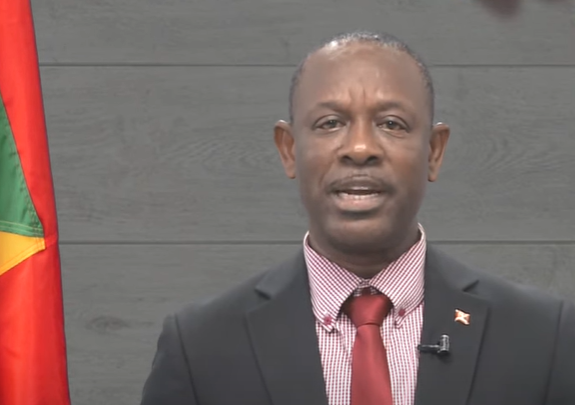
ST GEORGE’S, Grenada, Dec 20, CMC – The Dickon Mitchell administration has announced that it will be approaching international institutions in the new year seeking their input to amend Grenada’s 2015 Fiscal Responsibility Act (FRA).
Leader of Government Business in the Upper House, Senator Adrian Thomas made the announcement as he presented the 2023 Estimates of Revenue and Expenditure for debate in the Senate.
“For the first time since COVID-19, Grenada will return to the FRA, the fiscal responsibility legislation that will guide this budget. This administration is accustomed to law and order so we have no problem with that,” he said.
“We are cognizant of the fact that this government has always sought technical assistance from the IMF [International Monetary Fund] and World Bank to make sound economic decisions. We are quite aware that when the FRA came into existence it was a different ball game, it was COVID, it was different economic issues that we have to deal with.
“…. So we will be seeking the advice of the international institutions to let them know that the FRA has to be tweaked, has to be adjusted and we will need your assistance because this FRA has to be aligned with what we have to say because we want to move forward. We have no problem in collaborating with the relevant institutions to make this happen,” Senator Thomas added.
The specific objectives of the FRA are to establish a transparent and accountable rule-based fiscal responsibility framework in Grenada, to guide and anchor fiscal policy during the budget process, to ensure that Government finances are sustainable over the short, medium, and long term, consistent with a sustainable level of debt, and for related matters, according to the explanatory notes of the legislation.
The Act was one of the new pieces of financial legislation enacted and enforced by the former New National Party administration after it won the 2013 general election.
Among the rules and targets under the FRA are that the rate of growth of the primary expenditure of the Central Government and of every covered public entity, shall not exceed two per cent in real terms in any fiscal year when adjusted by the preceding year’s inflation rate.
The Minister of Finance must also take appropriate measures to ensure that the ratio of expenditure on the wage bill does not exceed nine per cent of GDP, and must also ensure that contingent liabilities arising from, as a result of, or in connection with public-private partnerships shall not exceed five per cent of GDP.
CMC/ls/ed/2022