
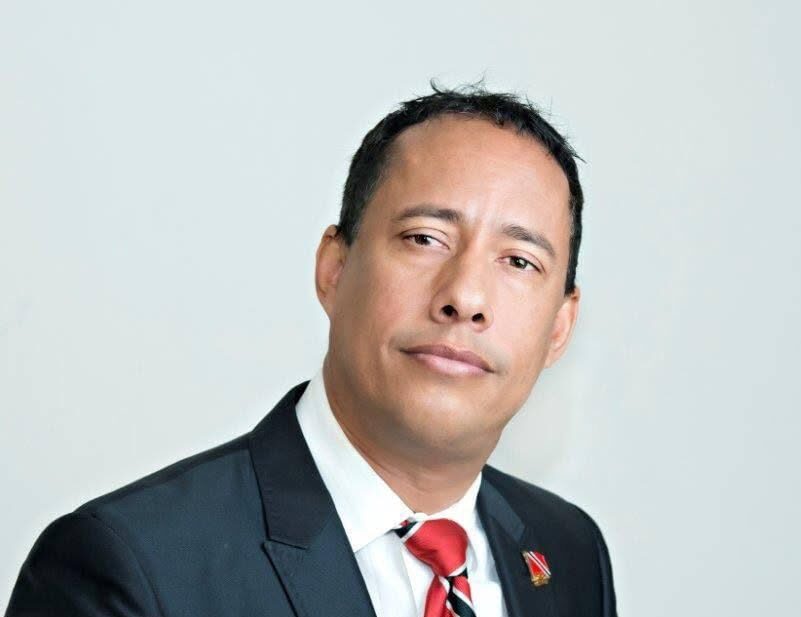
PORT OF SPAIN, Trinidad, Nov 12, CMC – Former Police Commissioner Gary Griffith has supported the Government’s decision to establish a Special Operations Zone in Maloney, arguing that restrictions on movement can be justified when necessary to protect lives and combat violent crime.
In a statement, Griffith accused critics of the operation of political hypocrisy, pointing to movement restrictions imposed under the previous People’s National Movement (PNM) administration during the COVID-19 pandemic.
He said that, while serving as Commissioner of Police, he personally authorised approximately 25,000 permits for essential personnel to move during the public health restrictions.
He argued that the principle behind those measures was no different from the objective of the current operation in Maloney.
“Then, the threat was a virus. Now, the threat is violent crime. In both circumstances, the objective is to save lives,” Griffith said.
However, he acknowledged that constitutional rights must be protected, calling on the authorities to establish clear arrangements to allow law-abiding residents, workers, students and other legitimate persons to move without unnecessary hardship.
His comments come amid concerns from residents and Opposition MP for Trincity/Maloney, Camille Robinson-Regis, about how the restrictions were communicated and uncertainty over arrangements for entering and leaving the affected area.
The Maloney Buildings Housing Development was declared a closed area under the Special Operations Act, 2026, through Legal Notice No. 847, dated November 10. A separate order, Legal Notice No. 848, imposed a nightly curfew from 9.00 p.m. to 5.00 a.m.
Police Commissioner Allister Guevarro has said the decision followed intelligence indicating an escalating threat involving gangs using the housing development as a place of refuge. He also cited concerns that innocent residents could be caught in the crossfire.
Griffith said the selection of areas for Special Operations Zones should be guided by intelligence rather than simply by comparing murder statistics between communities.
“Policing is not a numbers game. It is an intelligence-driven operation,” he said, arguing that an area with fewer recent murders could still present a greater immediate threat if intelligence indicated that serious criminal activity was being planned.
He said the purpose of such operations was to allow police to act on credible intelligence about illegal firearms, drugs and planned criminal activity before suspects had an opportunity to move weapons or other evidence.
However, Griffith cautioned that the powers must not be used to justify arbitrary searches, indiscriminate stop-and-search exercises or abuses of authority.
“They must be exercised professionally, lawfully and on the basis of credible intelligence,” he said.
Griffith also criticised the state of the National Operations Centre, which he said had been established at a cost of approximately US$80 million to facilitate the conversion of intelligence into coordinated operations.
He claimed that its capabilities had effectively been reduced to a 999 dispatch function, arguing that a properly functioning centre should allow intelligence to be received, assessed and translated into immediate operational action.
He said Special Operations Zones should be temporary, targeted and intelligence-led, with appropriate safeguards for law-abiding citizens.
“This is not about supporting the government or the opposition. It is about protecting innocent citizens, preventing murders and ensuring that law enforcement has the tools to confront serious criminal threats,” Griffith said.
CMC/ed/2026