
BRIDGETOWN, Barbados, Nov 2, CMC -The Caribbean Community (CARICOM) Private Sector Organization (CPSO) Monday said it is seeking a further suspension of the Section 301 maritime fees imposed by the Office of the United States Trade Representative (USTR).
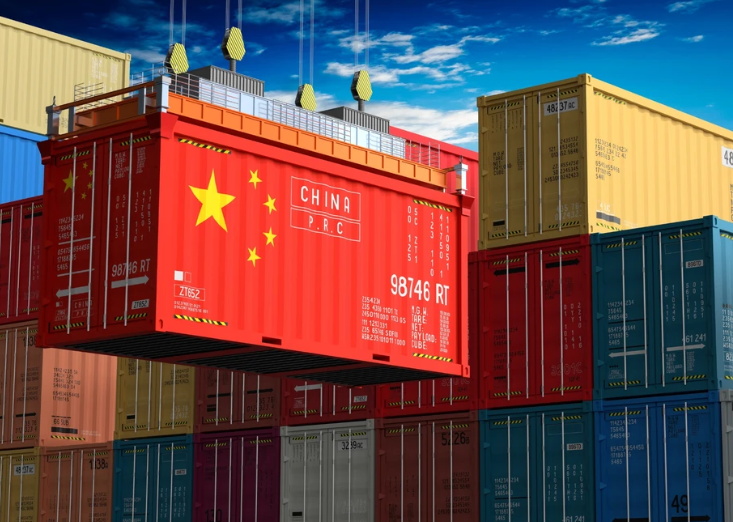
The USTR had imposed Section 301 maritime and port fees targeting China’s dominance in the shipbuilding, maritime, and logistics sectors, though enforcement is currently under a proposed temporary suspension.
In a statement, the CPSO said it had joined with the CPSO-US Business Council (CPSO-USBC) in filing joint comments with the USTR supporting the proposed further suspension of the Section 301 maritime fees.
The fees, which took effect on 14 October 2025, were suspended for one year from November 10 last year. The suspension for Caribbean short-sea shipping expires November 9 this year.
The USTR is proposing to extend the suspension for a further two months until January 9, 2027.
“The exemptions have kept Caribbean shelves stocked, kept US goods competitive in their nearest export market, and spared hurricane-struck islands an added cost in their hour of need,” said CPSO chief executive officer and technical director, Dr. Patrick Antoine.
“We are requesting that the USTR preserve the exemptions, which have been mutually beneficial to CARICOM and the US, and in due course make them permanent, so that the Caribbean’s trade no longer depends on the renewal of a suspension or on negotiations to which it is not a party,” he added.
The submission, made on behalf of the Caribbean private sector, also requests that the USTR confirm the Caribbean exemptions set out in Annex II of the Notice of Action in any resumption of the action, and that those exemptions be made permanent.
Under Annex II, the service fees on Chinese-built vessels do not apply to vessels entering a United States port in the continental United States from a voyage of less than 2,000 nautical miles from a foreign port or point; to fully cellular container vessels with a capacity of 4,000 TEU or less; to any other vessel with a capacity of 55,000 deadweight tons or less; to bulk carriers of 80,000 deadweight tons or less; or to vessels arriving empty or in ballast.
The CPSO said that taken together, these provisions cover the short-sea liner services on which the Caribbean’s trade with the United States depends. The CPSO had advocated for each of these in the 2025 proceedings.
The CPSO notes that CARICOM comprises 15 member states, most of them islands or low-lying coastal states. Over 90 per cent of the region’s goods trade moves by sea, with no road, rail or pipeline alternative.
It said that for the more than 6,250 firms across CARICOM that the CPSO represents, these shipping routes are not optional, but are the only way goods reach the region, and several member states are served by only two or three liner companies.
Under the original fee proposal, freight costs on Caribbean routes could have risen by 50 to 60 per cent, resulting in higher prices for consumers and market losses for US and CARICOM producers alike.
Since the exemptions were adopted in April 2025, no liner service to a CARICOM port has been withdrawn, and no surcharge has been levied on Caribbean trades.
In 2025, two-way goods trade between the United States and CARICOM reached US$30.1 billion. US exports reached US$18.6 billion, up 6.6 per cent on 2024, against US imports of US$11.6 billion, giving the United States a trade surplus of seven billion US dollars.
The CPSO notes that exemptions also safeguard disaster relief. Following the devastation caused by Hurricane Melissa, Jamaica received food, relief supplies and building materials from Florida on the same short-sea vessels that the Caribbean exemptions protect.
“Making the exemptions permanent is crucial for CARICOM member states, whose seaborne goods trade, thin liner coverage, and food, input, energy and tourism sectors would all be directly affected by any lapse. A two-month extension of the suspension gives welcome continuity; it does not give carriers, importers and exporters the certainty they need to plan beyond 9 January 2027,” the CPSO noted.
It said that the submission builds on the CPSO’s leadership of the regional private sector in the 2025 proceedings, undertaken with the support of the CARICOM leaders and in coordination with the Guyana-based CARICOM Secretariat, the CARICOM Ambassadors in Washington, the carriers serving the region, port and tourism bodies, and regional shipping.
CMC/jh/ir/2026