
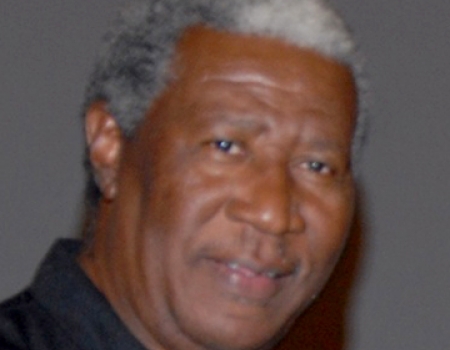
Hamilton Lashley MP, outspoken representative of an urban constituency for the ruling Democratic Labour Party (DLP), boycotted a visit late last month by Princess Edward and his wife, Princess Sophie, who were here to represent Queen Elizabeth for the 60th anniversary celebration of her reign over Barbados and 14 other Commonwealth realms.
Lashley claimed the protest was in response to London’s controversial Air Passenger Duty – or APD – already blamed for a slump in visitor arrivals from London of about one fifth.
“I am very angry at the position that they’re taking against us and other small island states, as well as other African countries,” Lashley told the Daily Nation newspaper.
“Rather than just sitting down and being a recipient of the threats and the impositions by the British Prime Minister, I’ve decided that Hamilton Lashley is going to take a stand,” he said.
That stand opposes a tax that is expected to jump by nearly ten per cent on April 1, further topping up the price of airline tickets at a time when Britain continues to slog through the economic downturn that has gripped the world.
British airlines argue that the ten per cent hike should be contrasted to the British Treasury’s own forecast for economic growth which was cut to just 0.7 per cent.
What works against the Caribbean is its distance from the world’s Prime Meridian – the tax appears to punish long-haul flights, with the third-highest tax band reserved for trips of between 4,000 to 6,000 miles, or between eight to 12 hours’ flying time, from London.
“That strange tax banding decision means you now pay less tax if you fly to Hawaii than the Caribbean,” according to Hugh Riley, secretary general of the Caribbean Tourism Organisation (CTO), based here.
Come April, the tax on the cheapest, economy-class, ticket from London will be 130 US dollars, up another 11 dollars.
The APD on a first-class ticket will jump to 257 dollars – up another 12 dollars from the current tax of 238 dollars.
As tourism has long replaced primary agricultural products like sugar and bananas as the gateway to growth, officials view the APD almost as death knocking at the door, predicting that cheaper destinations in southern Europe will knock the shine off the sunnier ex-colonies.
The Caribbean Hotel and Tourism Association (CHTA) estimates that 1.103 million tourists arrived in its member countries from the UK in 2010 – down 19 per cent from the 1.37 million British visitors recorded four years ago.
Conversely, said the tourism umbrella group, the APD is being blamed for West Indian immigrants in Britain cutting back on their trips home to family and friends by a similar margin.
The findings are backed up by data that shows the Caribbean has lost 270,000 British tourists in the three years since the APD was introduced – a decline on the order of 16 per cent to 19 per cent.
But in spite of a full-court press on the diplomatic court by Caribbean leaders and strong criticisms levelled at what they call an unfair, discriminatory and illogical tax the current banding of the tax and its increase is set to go ahead in April.
The appeals of the former British colonies to their former colonial master continue unheeded, even as the same countries moved swiftly last year, at London’s behest, to change the law of primogeniture to allow a woman to become heir to the throne of Britain and nine Commonwealth Caribbean realms should she be a monarch’s first-born child.
Riley claims that up to 2010, the APD had raked in two billion pounds (three billion dollars) in revenue to London, far in excess of jet travel’s toll on the environment, thereby nullifying its intended role as a carbon tax.
The tax has done little to protect British jobs, either, say British airline leaders.
They claim that the United Kingdom has the highest such tax in the world and has already cost 25,000 British travel industry jobs.
In an act of solidarity unheard of in the often cutthroat world of British aviation, the giant British Airways, rival Virgin Atlantic and discount carriers easyJet and Ryanair warned the coming spring increase will threaten British jobs in a soft economy.
“APD has no international parallel and has already cost 25,000 jobs,” said airline executives Willie Walsh of British Airways’ parent IAG, Steve Ridgway of Virgin Atlantic, easyJet’s Carolyn McCall and Ryanair’s Michael O’Leary last November as they launched an ‘Axe the Tax’ campaign.
The campaign calls for “an independent study of APD’s economic value”.
“In the cause of UK economic recovery, APD is an own goal – and (Chancellor George Osborne) has just scored another one. By increasing this tax by double the rate of inflation, he is further deterring inbound tourism and foreign investment, and choking off yet more job opportunities for young people,” the airline chiefs said.
In January, London agreed to re-open APD talks with Caribbean countries in a spirit of cooperation and in the context of the importance of tourism to the region’s economic development.
It was a modest victory claimed by the Caribbean as it emerged from two days of dialogue with the British Foreign Office in the seventh UK-Caribbean Forum in Grenada.
But with All Fool’s Day looming, despite Lashley’s personal boycott, and with no further word on the state of those talks, the Caribbean is not fooling itself in its view that Brits facing an extra per cent to enjoy the mid-day sun, will opt instead for a closer destination. It’s cheaper.
CMC jg/2012