
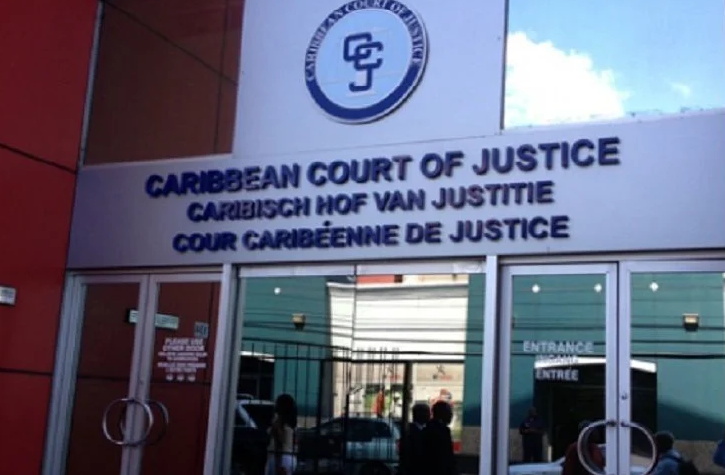
PORT OF SPAIN, Trinidad, Nov 4, CMC – The Trinidad-based Caribbean Court of Justice (CCJ) Wednesday delivered a ruling in an appeal concerning the ownership and the right to possess land in Guyana.
The CCCJ, which is Guyana’s highest and final court, had examined whether a signed receipt constituted a binding agreement for the sale of land in the case of Janet Hassan and Romanie Gouveia. [
Ultimately, the CCJ allowed the appeal in favour of Hassan and restored the trial judge’s order dismissing Gouveia’s claim for possession.
The courtt heard that n 1990, Eric Sue signed a receipt recording payment of GUY$2,235 (One Guyana dollar=US$0.004 cents) by Hassan’s husband, Abdool Hassan, ‘for the use of’ the land”.
The receipt recorded ‘Full Payment’ and contemplated the construction of houses. It also stated that the land was reserved for road straightening and that ‘no transport can be issued’. In Guyana, a ‘transport’ is a legal document that records ownership of land or immovable property, similar to a title deed.
Gouveia, the executrix of Eric Sue’s estate and the transported owner of the land, brought an action for possession in the High Court. But the trial judge dismissed her claim, finding that the receipt was authentic and was evidence of a binding agreement for the sale of the land from Eric Sue to Abdool Hassan.
However, the Court of Appeal reversed that decision, treating the receipt as a mere licence or permission to occupy only, and ordered that Hassan give up possession on or before December 1, 2025, and pay costs in the sum of GUY$175,000.
Hassan appealed to the CCJ, and it held that the receipt, read objectively and as a whole, evidenced an agreement to sell the land.
The CCJ was satisfied that the factual matrix, the contractual context, and the textual context, when taken together, all led to the conclusion that the Court of Appeal had fallen into error in construing the receipt as a mere licence.
The CCJ ruled that the Court of Appeal had placed undue weight on particular words without sufficiently considering the wider factual and contractual contexts in which the receipt was created.
In particular, the CCJ noted that the reservation for straightening of the Essequibo Road, and the undisputed fact that Eric Sue was not the transported owner, provided a compelling explanation as to why no transport could be issued.
The CCJ therefore, allowed the appeal and restored the trial judge’s order dismissing Gouveia’s claim for possession.
In addition, although the Court of Appeal had, in a separate application before it, granted permission to Hassan to appeal to the CCJ, it had refused to grant a stay of the order that Hassan give up possession on or before December 1, 2025. It also made an award of costs of GUY$300,000 against Hassan.
The CCJ reversed that costs award, observing that the Court of Appeal had given no reasons for an award exceeding the costs of the main appeal, although the application was routine and partly successful.
The CCJ further noted that the award appeared excessive and disproportionate, stressing that arbitrary or significantly disproportionate costs orders could undermine access to justice and procedural fairness. Gouveia was ordered to repay the sum of GUY300,000 by December 3, 2026, and to pay Hassan’s standard costs before the CCJ and costs in the High Court and Court of Appeal.
CMC/ght/or/2026