
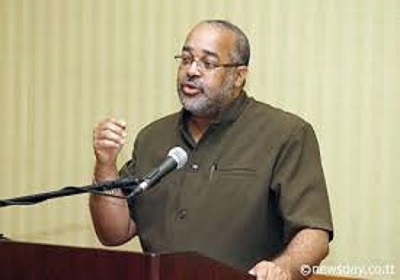
CASTRIES, St. Lucia, Mar 8, CMC – The St. Lucia-based Organisation of Eastern Caribbean States (OECS) Commission Tuesday said it would continue to advocate for the development of relevant policies, plans and programmes to address existing gender deficits in political, economic, social and cultural life.
In a message marking International Women’s Day, OECS Director General, Dr. Didacus Jules said this would remain a “priority” for the OECS Commission, and has been actioned through the inclusion of gender as a cross cutting theme in the Organisation’s new strategic plan, and the institution of the Commission’s Gender Policy.
“We further advocate for the adoption of the OECS Toolkit on Building Resilience with Nature and Gender by Governments, Organisations and other partners,” he said In reference to the initiative that was launched in 2020.
“This Toolkit was developed under an AdaptAtion-funded project and is intended to support climate change practitioners and decision-makers in mainstreaming Ecosystem-based adaptation (EbA) and gender equality and social inclusion (GESI) considerations into climate change adaptation-related policies, plans, and on-the-ground activities.”
Jules said it provides detailed guidance on how the GESI aspects should be considered as part of the process of mainstreaming EbA and formulating concept notes for funding.
“In line with this toolkit, the OECS Commission supports women’s increased participation in climate change governance, and this involves their meaningful participation in programmes and decision-making meant to address climate change and mitigate its impact on our societies.”
International Women’s Day is being observed under the theme “Gender Equality for a Sustainable Tomorrow,” and Jules said that the theme is apt, as it seeks to recognize and celebrate the invaluable contribution of women around the globe, whose impact continues to inspire change and action in the quest for sustainability and climate resilience.
“The impact of climate change on our region continues to be severe, and sadly, women remain among the most vulnerable and most affected. While gender alone does not shape one’s vulnerabilities to climate change, it often interacts with other factors such as economic and social status, ethnicity, age, and disability. “
Jules said that these vulnerabilities are undeniable, yet women have positioned themselves as critical agents of change and have a key role to play in adapting our societies to climate change.
He said women are investing in climate-smart agriculture and sustainable energy solutions to increase climate resilience and improve their families’ livelihoods and well-being.
“As knowledgeable small-scale farmers and leaders of climate change adaptation and mitigation projects, both women and men make major contributions to combating climate change; and Women and men are seeking solutions and financing for adaptation and mitigation,” Jules said, adding that “climate change is a topical challenge that can be turned into an opportunity to address inequalities in our societies through a gender transformative approach”.
The OECS Director General said that the OECS Commission aspires to lead by example through the promotion of the integration of gender equality into climate change adaptation, mitigation and response.
He said this is being done with a view to strengthening the resilience of the populations of the OECS member states at large, thus contributing to the building a sustainable future for all.
“More specifically, the OECS Commission and our partners are promoting a shift towards a greater gender-responsive approach to climate change. This involves the identification and acknowledgement of the existing differences between men and women, and articulating actions and policies that address the gaps that exist. “
The OECS groups the islands of Antigua and Barbuda, Dominica, Grenada, St. Lucia, St. Vincent and the Grenadines, St. Kitts-Nevis, Montserrat, Anguilla and the British Virgin Islands.
CMC/ad/ir/2022