
SANTIAGO, Chile, Feb 3, CMC – Latin America and Caribbean countries (LAC) have been urged to promote investment in water services to improve the population’s well-being and quality of life and to reactivate the region’s economy.
The Economic Commission for Latin America and the Caribbean (ECLAC) estimates in order to carry forward a fair and sustainable water transition, universalizing the coverage of safely managed water and sanitation, a public and private investment push equivalent to 1.3 per cent of regional gross domestic product (GDP) is needed over a 10-year period.
 “This would generate 3.6 million green jobs and the corresponding new income for families, thereby constituting a pillar of transformative recovery for countries’ economies, reducing pollutants and increasing resilience to climate change and to health threats such as the pandemic. It is a significant effort, but not impossible,” said the Executive Secretary of the Economic Commission for Latin America and the Caribbean (ECLAC), José Manuel Salazar-Xirinachs.
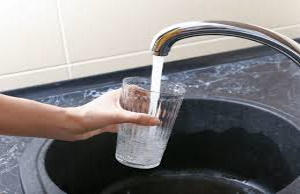
Addressing the third edition of the Regional Water Dialogues in Latin America and the Caribbean, which ends later on Friday, the ECLAC’s Executive Secretary warned that even though water has been recognized as a human right since 2010, in Latin America and the Caribbean, a large part of the population still lacks safely managed water and sanitation services.
He said that 25 per cent of people have no access to drinking water, estimated at 161 million people, while 66 per cent of the region’s population – 431 million people – have no access to safely managed sanitation services.
“The most vulnerable quintile endures this situation the most, with 25% less access to these services. In addition, and due to the regressivity in water pricing systems, this quintile with the greatest needs can pay up to twice as much, proportionally, as the wealthiest quintile,” he warned.
The high-level ministerial event – which is being held using a hybrid format and in preparation for the United Nations 2023 Water Conference, due to take place in New York in March – aims to assess progress related to Sustainable Development Goal 6 to ensure availability and sustainable management of water and sanitation for all in the framework of the “Midterm Comprehensive Review of the Implementation of the Objectives of the International Decade for Action, ‘Water for Sustainable Development,’ 2018-2028.”
During the meeting countries will draw up, for the first time ever, a Regional Water Action Agenda, which will allow Latin America and the Caribbean to arrive at the March meeting at UN central headquarters with one voice.
In his address, the ECLAC senior official noted that in the last three decades, water-related disasters represented 88% of all the events occurring in the region, with very high impact: they amounted to 77 per cent of the reported economic cost and 89% of the total number of people affected by all disasters.
He said that both human life, as well as the dynamics and ecosystem integrity that nourish many of the economic activities critical to sustainable development, depend on the natural water cycle, on its flows in sufficient quantity and quality.
“it is essential to recognize that water is key and cross-cutting for practically all economic activities, agriculture, industry and mining, and very especially for the main sectors identified by ECLAC as transformative drivers, which include the bioeconomy, renewable energy, biodiversity, the circular economy and sustainable tourism.”
The ECLAC’s Executive Secretary said the meeting constitutes a great opportunity to move forward on a shared vision and collective commitment to universal access to water and its integrated management, leaving no one behind and emphasizing this resource’s central and indispensable role for life, health and sustainable development.
CMC/fg/ir/2023