
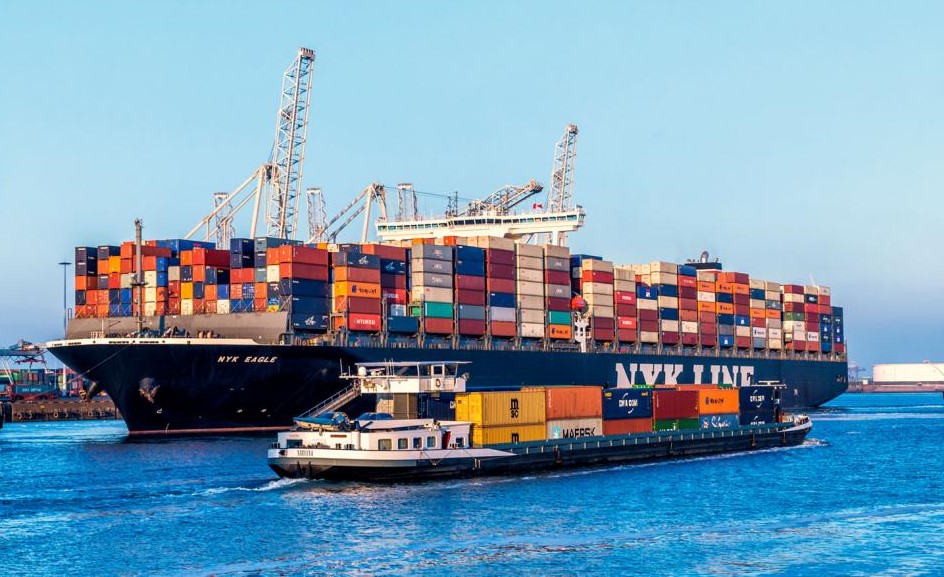
WASHINGTON, Sep 29, CMC – Vibrant trade and investment ties between Korea and Latin America and the Caribbean have the potential to create more robust bilateral and global value chains that help solve some of the major global challenges in food, energy and climate, according to a new report by the Inter-American Development Bank (IDB).
Since 1990, bilateral trade has expanded at an 11.5 per cent annual rate to an all-time high of US$57 billion in 2021. Korean firms have invested US$26 billion in the region, underscoring the deepening economic ties between the Asian powerhouse and the region.
The report was issued on the side of the 6th Korea-LAC Business Summit in Seoul, where more than 600 business leaders from Korea and Latin America and the Caribbean gathered to discuss investment and trade opportunities.
The study examines trade and investment trends by country and sector, logistical challenges, as well as opportunities in agriculture, the digital economy and energy, among others, by presenting new data and case studies.
“A vast ocean physically separates us, but we are united in our commitment to democratic values and removing barriers to more trade and investments,” said IDB Vice President for Sector and Knowledge, Benigno López.
“Latin America is a renewable energy and food powerhouse, while Korea has shown how a digital and open economy can bring prosperity to its people. Count the IDB to be an enduring partner in the journey to explore more opportunities for inclusive and sustainable growth,” he added.
With 15 per cent of the world’s exports, Latin America and the Caribbean is the world’s largest net exporter of food and agricultural goods. It is also one of its most productive, with the potential to stabilize and lower international food prices, thereby benefiting consumers in Korea and elsewhere.
The report underscores that closing the “food gap” cannot occur at the expense of the planet. It will have to come mostly from innovation rather than land use and deforestation, which already account for 18 per cent of the region’s carbon emissions. The partnership can make a significant contribution by leveraging Korea’s world-renowned innovation system to boost the region’s already considerable effort to harness new digital and microbiology technologies to increase agricultural yields.
Latin America and the Caribbean has one of the cleanest energy matrices in the world, with nearly 30 per cent of its energy coming from renewable sources– a share significantly higher than those of the world (14 per cent) and Korea (4 per cent). The region is also well positioned in the supply of minerals that are critical in this transition—it has some of the highest world reserves of copper, lithium, nickel, silicon, and rare earth metals.
Latin America and the Caribbean has a better chance of abating carbon emissions from energy-intensive industries such as steel, aluminum, and cement. It can be more cost-effective to produce zero-emission fuels such as hydrogen. Korea, in turn, has a strong foothold in value chain segments that can shift energy demand toward renewables, such as the production of solar panels, lithium batteries and electric vehicles.
As a major supplier of information technology, Korea can be a critical partner as Latin America and the Caribbean embrace the digital economy more deeply.
Since 2008, Korea’s development assistance to the region has totalled US$1.6 billion in grants and loans. A significant share of this assistance was financed and leveraged through the IDB — US$550.6 million since 2012 — in areas such as innovation, poverty reduction, private sector development, and public capacity building, which will be critical for the relationship to meet the economic, social and environmental challenges of a fast-changing global economy.
The Korea-LAC Business Summit has been held every two to three years, bringing together high-level public and private sector speakers from both regions and a significant group of companies from Korea and the region.
The event is organized jointly by the IDB and the Ministry of Economy and Finance of Korea, the Export-Import Bank of Korea (KEXIM), and the Korea Trade Promotion Corporation (KOTRA).
CMC/ed/2022