
BRIDGETOWN, Barbados, Dec 21, CMC – The Caribbean Community (CARICOM) Reparations Commission (CRC) has welcomed the apology issued by Dutch Prime Minister Mark Rutte for the Netherlands’ involvement in the slave trade in Suriname.
However, it has indicated that more is required.
In a statement, the CRC, which since 2013, has been actively pursuing reparations for Native Genocide and African Enslavement, from the former colonizing nations of Europe, said it “welcomes this statement which it views as long overdue to the victims of the trans-Atlantic trade in enslaved Africans, chattel slavery in the Caribbean and their descendants.
“However, the Prime Minister did not commit nor signal his government’s intention to enter into reparations negotiations with CARICOM, Africa and the Indigenous Caribbean communities, who suffered genocide and enslavement at the hands of the Dutch state and its agents for over 300 years,” it added.
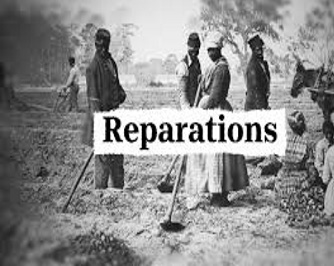 Rutte on Monday formally apologized on behalf of the Netherlands for his country’s slavery past. However, he said the apologies to the descendants of slaves in Suriname and the Netherlands Antilles was only “a comma, not a full stop,” in acknowledging the horrendous suffering inflicted on generations of enslaved people.
During his speech at the National Archives in The Hague, Rutte also paid tribute to a number of freedom fighters in the former colonies..
“For centuries, the Dutch state and its representatives have enabled, encouraged, maintained and benefited from slavery. For centuries, people have been made commodities, exploited and abused in the name of the Dutch state.
“For centuries, under Dutch state authority, human dignity has been trampled in the most horrible way. And too few successive Dutch governments after 1863 have seen and recognized that the slavery past had and still has a negative impact. For this, I apologize on behalf of the Dutch government. Today, I apologize. Awe mi ta pidi diskulpa. Tide mi wani taki excuse me,” Rutte added.
Meanwhile, Surinamese historian and author, Cynthia McLeod, also welcomed Prime Minister Rutte’s apology.
“I was very critical at first, because I thought ‘why December 19?!’ But later I understood why. December 19 is actually the proclamation of apologies. When slavery was abolished in 1863, there was also the proclamation nine months in advance,” she told the online Suriname-based publication, StarNieuws.
McLeod, who also witnessed the live broadcast of Rutte’s apology, said she satisfied that the Netherlands had recognised this past of its history.
“It’s not that people just worked on a plantation. No, slavery is a crime against humanity because people’s humanity was taken away from them. Black people (to the slave traders) weren’t people. They were seen as animals. They are also described as the crucian cattle or ‘the cargo.’ At abolition, the slaves got nothing. Nothing. Who got? The slave owners were compensated.”
“All of this has now been recognized. ‘Finally, finally,’ I thought. After slavery, people weren’t allowed to talk about it anymore. So, for me it was an emotional moment; my God, I’m going through this. That people acknowledged that this was there. That the Prime Minister of The Netherlands recognizes this. I can tell you that I am satisfied. Especially how he said that this is the beginning. The entire year of 2023 will be all about recognition and awareness. That people know that this has happened. Consultation. I would advise Suriname to seize this opportunity,” she added.
StarNieuws reported that in the run-up to Rutte’s speech, several protests had been held in Suriname and the Netherlands and McLeod said “that was because the communication of the Dutch Cabinet has been bad”.
CMC/gh/ir/2022