
BRIDGETOWN, Barbados, Mar 28, CMC – The Pan American Health Organization (PAHO) says15 Caribbean countries are coming together under a project aimed at eliminating mother-to-child transmission of diseases like HIV, Syphilis, Hepatitis B, and Chagas disease.
PAHO said the project is being funded under the India-United Nations Development Partnership Fund and is focused on strengthening the Elimination of Mother to Child Transmission (EMTCT) Plus Framework within maternal and child health services.
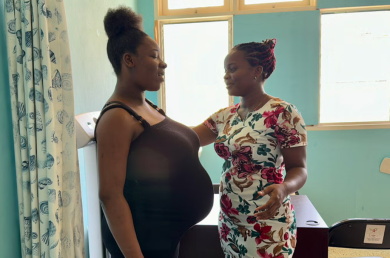 It is also aimed at eliminating mother-to-child transmission of infectious diseases in Caribbean member states.
“Despite the significant progress made in eliminating the mother-to-child transmission of HIV and syphilis, challenges remain,” PAHO said, adding that regarding HIV, the global goal is to reduce the mother-to-child transmission rate to two percent or less.
But it said in some regions of the world, the rates continue to surpass this target, indicating a need for intensified efforts.
PAHO said similarly, in the Caribbean, strides towards eliminating congenital syphilis are evident, “yet in some countries the reported rates are as high as 1.8 cases per 1,000 live births, significantly above the global elimination target of less than or equal to 0.5 new cases of mother-to- child transmission of syphilis per 1,000 live births.”
PAHO assistant director, Dr. Rhonda Sealey-Thomas, said the Caribbean has “a history of sharing and learning from each other.
“Through south-south cooperation, we hope that CARICOM member states that have achieved disease elimination certification and those working toward the attainment, will share their experiences and lessons learned as part of our efforts to strengthen the EMTCT strategy and support other countries to achieve this important goal,” she added.
PAHO said at the heart of the project’s strategy is a commitment to enhancing maternal and child health services.
By focusing on strengthening leadership within these services, improving diagnostic capabilities and upgrading surveillance systems, PAHO said the initiative aims to address the gaps that have hindered progress toward disease elimination.
It said knowledge sharing stands out as a key component, creating a comprehensive community of practice for Caribbean countries to discuss successes, challenges, and innovations through peer-to-peer country support.
“The project will enhance elimination efforts among 15 Caribbean countries, supporting them in moving as one, while ensuring the right of every child to be born and remain free of HIV and syphilis and other perinatal transmitted infections,” said Dr. Julio Sabido, chief executive officer, Ministry of Health and Wellness Belize, which successfully submitted the project on behalf of CARICOM member states.
“Together, as Caribbean nations we acquire knowledge, share experiences and enhance the competencies of health care providers for an efficient and sustainable EMTCT Plus programme.
“This approach accelerates the adoption of effective health strategies across the region and fosters a sense of solidarity and collective responsibility. Infectious diseases do not know national boundaries, so only collective action will be truly effective,” he added.
PAHO said this project will place emphasis on technical systems, particularly in enhancing laboratory services and data collection systems and that reliable diagnostics and effective surveillance are foundational to achievements of the project objectives.
Aiming to leverage the collective experience and resources of the region to ensure future generations are born free from these transmissible diseases, PAHO said the project seeks to ensure the availability of quality diagnostics, primary prevention, treatment services, and a robust health information system to monitor cases, demonstrating a comprehensive and sustainable approach to achieving EMTCT Plus certification.
The project which commenced in 2025 is expected to emphasize the sharing of good practices, experiences and lessons learned from the EMTCT of HIV and syphilis.
PAHO said its Disease Elimination Initiative seeks to end more than 30 communicable diseases and related conditions by 2030 in the Region of the Americas, including the mother-to-child transmission of HIV and syphilis.
PAHO Director Dr. Jarbas Barbosa welcomed the initiative and its impact on improving the health of women and children in the Caribbean.
“Ensuring high-quality, integrated health services is a crucial part of PAHO’s Disease Elimination Initiative, which seeks to eliminate 30 diseases and related conditions from the Region of the Americas by 2030,” he said.
CMC/nk/ir/2025