
SANTIAGO, Aug. 28, CMC – Delegates attending a subregional seminar here say the complexity of the climate crisis in the Caribbean necessitates a data-based response on global, regional, national and local levels.
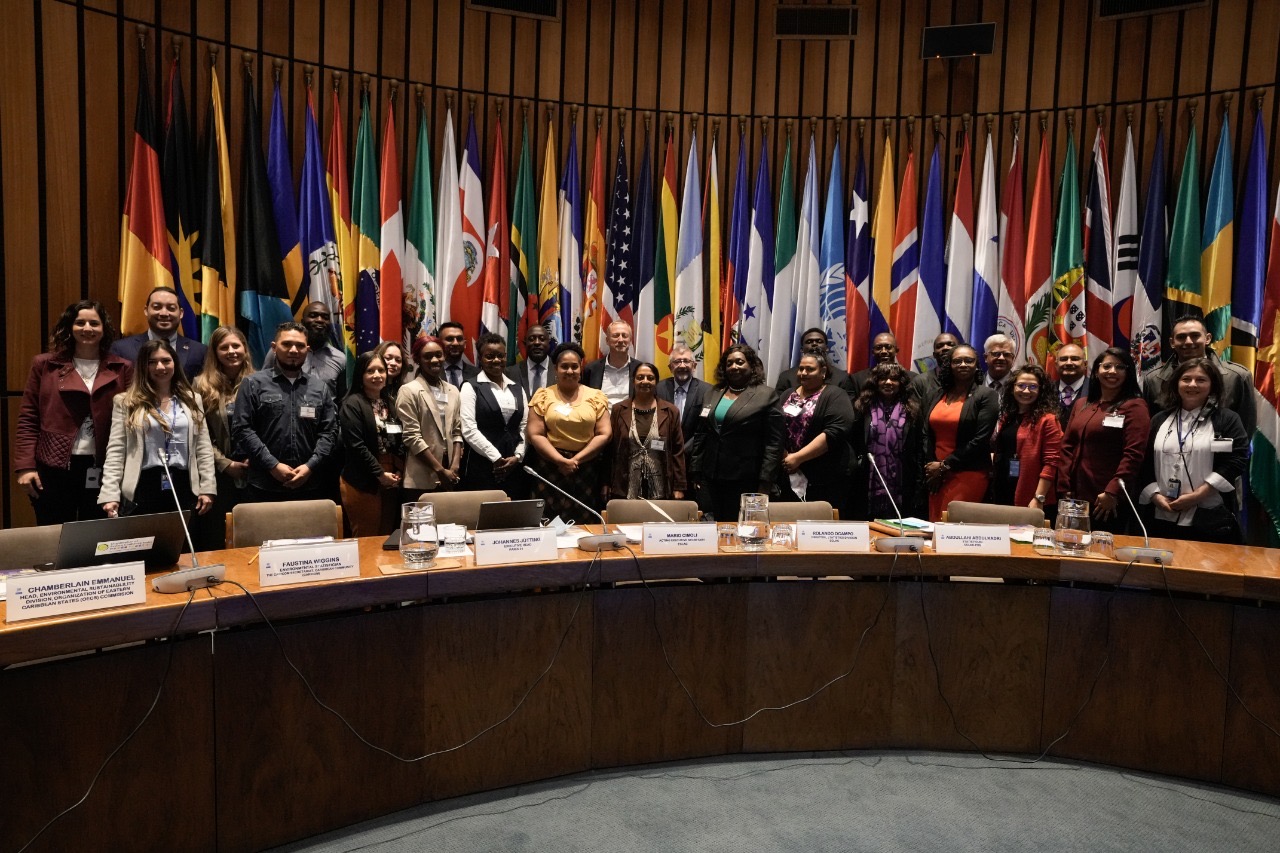 During the event, organized by the Economic Commission for Latin America and the Caribbean (ECLAC), in collaboration with PARIS21, representatives of national statistics offices and the Environment Ministries of Caribbean countries, as well as international specialists, stressed the urgency of taking concrete actions that would enable the Caribbean region to steadily advance towards climate change mitigation and adaptation.
ECLAC said participants emphasized that Caribbean countries not only need high-quality data to monitor, report and analyze changes in the climate, but they also need data to “inform and accelerate mitigation and adaptation actions.”
“In response to this need, the experts highlighted that several countries in the region are already working to strengthen the production and use of quality data on climate change to inform decision-making through the development of statistical compendiums on the environment and climate change and the implementation of data platforms,” ECLAC said.
“Despite these efforts, they warned, this development is sporadic and uneven, and critical challenges continue to exist for maintaining and developing current initiatives,” it added.
ECLAC said the experts specified that some of the region’s most pressing problems are the lack of coordination within national statistical systems and with the broader data ecosystem, which includes civil society, the academic world and the private sector; the protocols established for exchanging data; and the resources sustained and the development of strategic capacities for data on climate change.
Mario Cimoli, ECLAC’s acting executive secretary, stressed the urgency of putting the situation of Caribbean countries at the center of the regional and global agenda.
“Caribbean countries are suffering the effects of climate change, but they also face difficulties in obtaining support instruments to mitigate and confront this problem, along with difficult access to financing for development,” he said. “They face a huge asymmetry.”
Johannes Jütting, executive head of PARIS21, warned that the urgency of taking action in this climate crisis is “truly critical,” calling for promoting partnerships to “free up data on climate change.”
In addition, he called for ensuring better financing for climate change data.
Faustina Wiggins, environmental statistics specialist at the Secretariat of the Caribbean Community (CARICOM), meanwhile, emphasized that CARICOM will continue supporting the efforts of Caribbean countries to produce statistics on the environment, climate change and disasters, “with the aim of mitigating the impact of these problems and creating resilience.”
She said that, at the center of all these efforts is CARICOM’s Regional Strategy for the Development of Statistics, “which is the strategic road map for statistical development by 2030.”
Chamberlain Emmanuel, head of the Environmental Sustainability Cluster of the sub-regional Organization of Eastern Caribbean States (OECS), said that “environmental management and sustainable development planning require an understanding of the complex island ecosystems and territorial systems in order to ensure that the decisions and strategies adopted have the desired effect in the short, medium and long term.
“This understanding must be based on solid, objective, data-based models, which, in turn, serve as the basis for decision-making,” he said. “The availability of sets of reliable, updated and exhaustive data is, therefore, fundamental for planning and environmental management and for resilience.”
Muhammad Anwar Baksh, Planning and Development Officer at the Caribbean Disaster Emergency Management Agency (CDEMA), agreed on the need to better equip Caribbean countries, “so they can have more effective information that would enable them to take evidence-based climate action.
“We recommend that solutions be developed within a global framework that examines the challenges and good practices related to these systems in the context of compiling and exchanging other data on dangers and risks,” he said.
CMC/nk/kb/2022