
BRIDGETOWN, Barbados, Feb 3, CMC – Two Caribbean Community (CARICOM) leaders, will address the regional launch of the United Nations Early Warnings for All Initiative (EW4ALL) for the Caribbean in Barbados on Monday next week.
Host Prime Minister Mia Mottley, will be joined by her St. Lucian counterpart, Phillip J. Pierre at the launch of the event that is intended to drive coordinated political action towards strengthening multi-hazard early warning systems for hazards such as hurricanes, tropical storms, tsunamis, volcanoes, floods, landslides, and epidemics, among others.
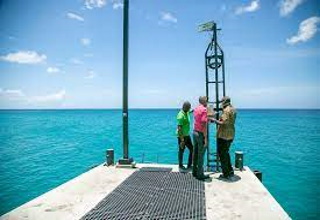 The EW4ALL is also aimed at ensuring that every person on earth is covered by an early warning system by the year 2027.
Apart from the two Caribbean leaders, Monday’s opening will also be attended by the Deputy Secretary-General of the United Nations, Amina J. Mohammed, the Head of the United Nations Office for Disaster Risk Reduction (UNDRR), Mami Mizutori, the Secretary-General of the World Meteorological Organization (WMO), Professor Petteri Taalas, and the UN Resident Coordinator for Barbados and the Eastern Caribbean, Didier Trebucq.
In addition, CARICOM Secretary-General, Dr. Carla Barnett, and the executive director of the Barbados-based Caribbean Disaster Emergency Management Agency (CDEMA), Elizabeth Riley, will also attend.
The leaders are expected to emphasize the importance of strengthening and coordinating early warning initiatives in the region as well as the need for joint leadership in the Caribbean to achieve coverage for all, especially for the most vulnerable.
They will also outline practical measures to ensure that EW4ALL is incorporated in disaster risk management strategies and to highlight the impact of various endeavours in the region, including the Climate Risk Early Warning Systems (CREWS) Caribbean Initiative and the Regional Early Warning System Consortium which is chaired by CDEMA.
“We are incredibly proud to be leading the world on the Secretary-General’s call for Early Warnings for All. As a Small Island Developing State, we stand on the frontlines of multiple hazards, including those caused by the climate crisis. Developing early warning systems that can be received and acted on by everyone is critical to protecting our lives and livelihoods,” said Mottley.
Riley said enhancing early warning systems in the Caribbean is a long-standing priority for CDEMA and much progress has been made.
“However, in the context of the complex hazards faced by the region and the growing impact of climate change, much more is needed. The Early Warnings for All initiative offers us an opportunity to strengthen cooperation around investment in multi-hazard early warning systems to ensure the safety of the people of the Caribbean,” she added.
In November last year, at the COP27 Climate Change Conference in Egypt, the United Nations Secretary-General, António Guterres, launched the Executive Action Plan for the implementation of the EW4ALL initiative. He asked WMO and UNDRR to co-lead its implementation.
“The number of weather-related disasters around the world has risen fivefold over the past 50 years, yet not all countries in the Caribbean have end-to-end early warning systems. The Early Warnings for All Initiative aims to ensure everyone receives such protection by 2027,” said Professor Taalas.
Mizutori said launching Early Warnings for All in the Caribbean is a critical first step toward coalescing the national, regional, and global cooperation needed to ensure everyone on Earth, especially the most vulnerable populations, are protected by multi-hazard early warning systems.
According to a report released by the UNDRR and the WMO last year, less than half of the countries around the world are not protected by multi-hazard early warning systems. Less than half of the least developed countries and only one-third of Small Island Developing States have a multi-hazard early warning system. This, despite the role of early warning systems in reducing disaster mortality by a factor of eight.
Early warning systems are among the most proven, cost-effective climate adaptation measures that not only save lives but can also reduce economic losses in the wake of climate disasters. The Global Commission on Adaptation reported in 2019 that just 24 hours’ notice of an impending hazardous event can cut the ensuing damage by 30 per cent.
2021 was the Caribbean’s fourth costliest hurricane season on record, with 21 named storms, including seven hurricanes. Moreover, only 30 per cent of the 19 participating states and territories of CDEMA have established road maps for multi-hazard early warning systems.
CMC/gf/ir/2023