
By Kenton X. Chance
BRIDGETOWN, Barbados, Nov. 3, CMC – A senior official of the International Monetary Fund (IMF), is calling for greater action to mitigate the impact of climate change, which are being felt in the Caribbean and other small island developing states.
“The world needs to do more to avert a climate catastrophe,” Bo Li, the IMF’s Deputy Managing Director told the Caribbean Media Corporation (CMC).
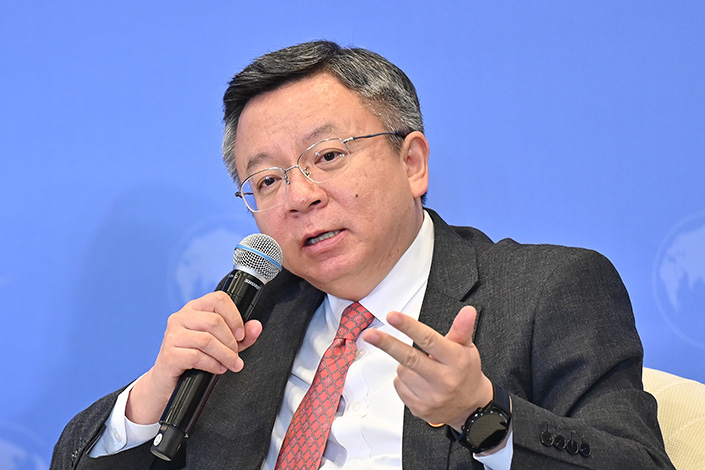 “Even if fully implemented, current country pledges would only cut global emissions by 11 percent compared to the 25-50 percent needed be on track to contain global warming to 1.5-2°C. Thus, it is critical that the world steps up climate mitigation efforts to prevent further damage and avoid a more costly transition later on.”
Li is visiting the Caribbean as the region prepares for its participation in the United Nations Climate Conference (COP 27), which takes place November 6 to 18 in Egypt.
He said that at the national level, meeting the climate change targets will require a mix of incentives to push investors, firms, and households to prioritize low-carbon goods, services, and opportunities in all their decisions.
“At the international level, an agreement should be reached to accelerate emissions reductions in a way that is aligned with temperature goals.”
Li suggested that countries could commit to achieving a cut in emissions or emissions intensity depending on their income level or their Nationally Determined Contribution (NDC).
“Additionally, a price floor or a similar agreement among large economies would help galvanize global decarbonization, helping to cut the costs of low-carbon technologies for everyone.”
He said the urgency of boosting resilience is already clear in the Caribbean.
“Upfront investment in adaptation is critical, and much less costly than frequent disaster relief. We urge Advanced Economies to meet or exceed the pledge of $100 billion in climate finance for emerging markets and developing economies—especially grants—and ensure a fair share of funds for adaptation,” Li told CMC.
He emphasised that the IMF is committed to the global push on climate change.
“We are adding climate change to our surveillance work, including coverage of mitigation policies of large emitters. In addition, the rollout of the RST (Resilience and Sustainability Trust), … our first long-term instrument, with financing for countries undergoing economic transformation, including from climate change, the RST will aim to introduce reforms that reduce barriers to private financing, and promote good climate policies.”
Li is slated to wrap up on Friday a three-day visit to the Bahamas, during which he is slated to meet with Prime Minister Philip Davis to discuss climate change, visit Grand Bahama to view the effects of Hurricane Dorian and reconstruction efforts as well as participate in the 59th Bi-Annual Caribbean Community (CARICOM) Central Bank Governors meeting, hosted by the Central Bank of The Bahamas.
During his three-day visit of Dominica, which ended on Wednesday, Li met with Prime Minister Roosevelt Skerrit and his Cabinet, visited the geothermal plant, resilient housing projects, and met with local stakeholders, including academia, private sector, and youth and women representatives
Li is focusing on discussion on climate change, climate financing, and how the Washington-based financial institution can help in the run up to the climate talks in Egypt.
CMC/kc/kb/2022