
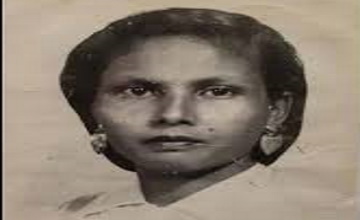
BELMOPAN, Belize, Mar 9, CMC – The Belize government says it is moving towards granting a posthumous pardon for Nora Parham, the only women ever to have been executed in the Caribbean Community (CARICOM) country.
A statement issued following the weekly cabinet meeting on Tuesday, which coincided with International Women’s Day, Cabinet said it “gave its full support| to the proposal that had been tabled by the Minister of Human Development Dolores Balderamos Garcia for Parham to be “granted a posthumous pardon so as to correct a historic wrong in 1963.
“Cabinet is of the view that this will go a long way to focus attention on the issue of domestic violence. The Governor General will be kindly requested to ask the Belize Advisory Council to so recommend,” the statement noted.
Parham, who was born on January 1, 1927, was executed on 5 June 1963 after she was found guilty in the death of Ketchell Raymond Trapp, a constable in the British Honduras Police Force and the father of four of her children.
Trapp had a reputation for drunkenness and domestic violence, and Parham had frequently complained to police about his behaviour. On February 6, 1963 a fire in the outhouse of their home led to him suffering third-degree burns to 90 per cent of his body, with only his neck and head unharmed. He died in the Belize City Hospital the following day.
The police said that Parham intentionally set Trapp on fire by throwing gasoline on him and then lighting a match. Parham admitted that she had thrown the gasoline, in the context of a domestic dispute, but denied lighting him on fire. Instead, she said Trapp had accidentally set himself on fire when he lit a cigarette
Parham pleaded not guilty during her trial but on April30, 1963 an all-male jury delivered a guilty verdict after four hours’ deliberation.
The jury simultaneously issued a request for mercy, as was allowed, but Parham was nonetheless sentenced to death; there was no appeals process available and a petition for clemency containing 2,461 signatures was delivered to the Governor Peter Stallard, but was rejected on the advice of the then government.
“First of all, even if Ms. Parham had been guilty of the crime she was accused of, still the judge at the time, as well as jury members at the time who were all men; they recommended what you would call clemency,” said Balderamos-Garcia.
The Minister said that an examination of the facts of the case as reported “and please none of us were there in the court room back in 1963… I don’t believe that right thinking members of society today would have wished for Ms. Parham to have been convicted.
“And, we know as a matter of history that thousands of people wished for her to be given clemency at the time. Unfortunately, it was a colonial government administration under the Governor Sir Peter Stallard and despite all the pleas for clemency, those pleas were turned down and Ms. Parham was sent to hang.
“So, the wrong I think was that when we look at the horrible domestic violence that Ms. Parham suffered, when we look at all of that, I believe that today a decision could have been different. We cannot bring back Ms. Parham, but what we can do is write a wrong in the best way we can at this time,” Balderamos-Garcia said.
CMC/af/ir/2022