
BELMOPAN, Belize, Apr 28, CMC -Agriculture, Food Security and Enterprise Minister, Jose Abelardo Mai, is in San Salvador, chairing a regional meeting of ministers of agriculture from Central America, Mexico, and the Dominican Republic discussing the new world screwworm (NWS) disease.
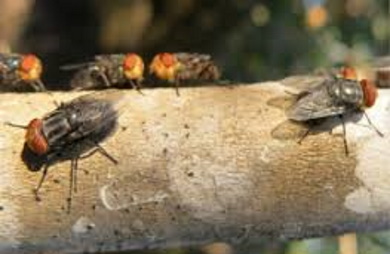
The NWS is an infestation with the larvae of the NWS fly that lives off the flesh of living mammals and, less commonly, birds.
The meeting is organized by the International Regional Committee of Ministers of Agriculture (CIRSA) and the International Regional Organization for Plant and Animal Health (OIRSA).
The organisers said that the main purpose of the meeting is for regional ministers to share their experiences and the current status of each country’s screwworm management and control programme, highlighting both the strengths and the challenges faced during implementation.
Each of the nine OIRSA member countries is making a country presentation, as well as discussing a regional plan and budget for the eradication of the NWS, and this will be presented to the United States Department of Agriculture (USDA)/Animal and Plant Health Inspection Service (APHIS) and other agencies for consideration.
During Belize’s presentation, Mai said that in the four months following the discovery of the first NWS case in Belize on December 26, 2024, a cumulative total of 63 cases has been detected, despite no sterile flies having been released in Belize.
Mai also noted that the north remains relatively free, with no cases reported in the Corozal District and only two cases in the Orange Walk District. In addition, there has been no human case confirmed in Belize, unlike some Central American neighbours, particularly Nicaragua, where 94 human cases have been reported.
While Belize has reported 63 cases so far, Nicaragua leads the region with 121,177 cumulative cases, followed by Panama, Costa Rica, and Honduras. El Salvador has reported 1,171 cases and Mexico 1,015 cases, one of which was in a human.
Mai credited Belize’s success to the advanced planning and the very effective on-the-ground programmes put in place by the Belize Agricultural Health Authority (BAHA) with major support from the Ministry of Agriculture, the Belize Livestock Producers Association (BLPA) and cattle farmers, OIRSA, USDA/APHIS, and IICA.
He said that this collaborative effort will continue, and the same approach will be applied if funding is secured for a regional eradication programme.
CMC/ag/ir/2025