
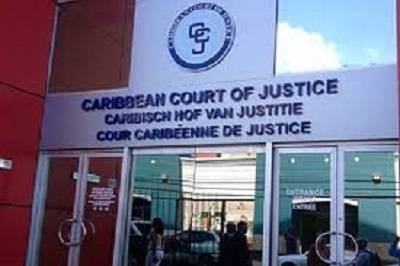
PORT OF SPAIN, Trinidad, Oct 18, CMC – The Trinidad-based Caribbean Court of Justice (CCJ) has dismissed an appeal filed by Shawn Andre Weekes against his conviction and sentence for the murder of Leo Callender in October 2001.
Shortly after the incident, Weekes left Barbados, travelling first to St. Lucia, then to Canada, and finally to the United States, where he remained until his return 11 years later on October, 20, 2011.
 Weekes was charged for murder two days after his return. Weekes was indicted on July 21, 2016 and convicted on October16, 2020. On 28 May 2021, Weekes was sentenced to life imprisonment with no eligibility for release until he has served 19 years.
However, in August last year, the Court of Appeal of Barbados substituted the conviction of murder with manslaughter on the basis that the trial judge should have left the issue of provocation with the jury. The Court of Appeal also resentenced Weekes to nine years imprisonment to run from 28 May 2021.
Weekes was granted special leave to appeal to the CCJ arguing that in the circumstances of his case, and in the light of the unreasonable delay in bringing the case to trial and the failure of the trial judge to embark on an inquiry to ascertain the impact of the delay on the defendant’s ability to present his defence and to receive a fair trial, he had an unfair trial
His attorneys further rgued that the trial judge should have embarked on an enquiry to determine whether any prejudice was caused to Weekes by the delay.
But, Justice Rajnauth-Lee, delivering the ruling of the CCJ, noted that even though the Barbados Constitution entitles a person to the right to a fair hearing within a reasonable time, it also clearly suggested that breaches do not necessarily prevent a valid trial being held. Whilst the CCJ acknowledged the serious delay experienced by Weekes, it balanced this delay against the fact that he was found guilty of an extremely serious crime committed in a most callous manner.
In addition, the CCJ found that the approaches of the Court of Appeal and the trial judge could not be faulted. At no stage of the trial did defence counsel apply for a stay of the proceedings owing to delay, nor make any representation that Weekes had been prejudiced by the delay. As such, the CCJ did not agree that the trial judge ought to have embarked upon the enquiry as asserted by counsel for Weekes.
Furthermore, the CCJ agreed with the Court of Appeal that the trial judge’s direction on circumstantial evidence was adequate, citing that the persuasiveness of evidence was based on the cumulative strength of the evidence.
On the issue of sentencing, the CCJ did not consider the mitigating factors submitted by counsel for Weekes to be of such weight as to require revisiting the sentence.
The CCJ noted that the Court of Appeal considered the issue of provocation and substituted the conviction of murder with manslaughter. Therefore, the CCJ decided the Court of Appeal did not apply any wrong principles of law nor impose a sentence that was manifestly excessive.
CMC/df/or/2024