
By Sir Ronald Sanders*
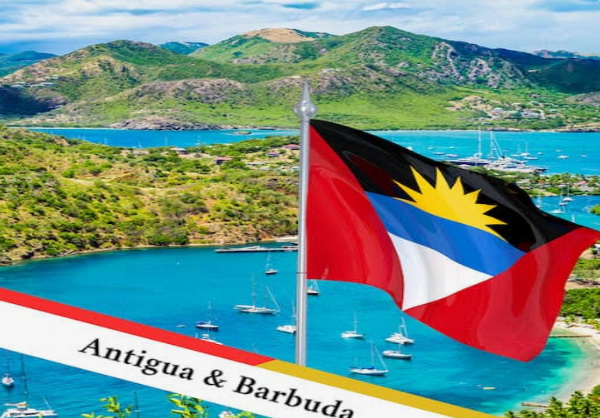
ST. JOHN’S, Antigua, Oct 30, CMC – On November 1, 1981, when the Union Jack was lowered for the last time in Antigua and Barbuda, a small Caribbean nation assumed responsibility for its own destiny.
Forty-five years later, the anniversary invites both celebration and reflection on what independence has achieved, the difficulties overcome, and the challenges that remain.
Independence was neither inevitable nor universally supported when first proposed. There were genuine concerns about whether a small country, with limited resources and an econo-
my heavily dependent on tourism and external markets, could sustain itself without Britain’s protection.
Associated Statehood in 1967 brought substantial internal self-government, but Britain retained responsibility for foreign affairs and defence. Full sovereignty remained the unfinished task.
When the Antigua Labour Party returned to office in 1976, the question acquired renewed urgency. The Government argued that independence would remove obstacles to economic
development, particularly access to international financial institutions and assistance from countries reluctant to provide support while Britain retained responsibility for Antigua’s external affairs.
Lester Bird, then Minister responsible for Economic Development, became a leading advocate. At the ALP Convention in September 1978, he argued that independence would open opportunities for membership of the Inter-American Development Bank and direct access to development financing.
Yet the path was contested. The opposition Progressive Labour Movement (PLM) questioned the country’s economic readiness. Barbuda’s representatives raised concerns about their island’s constitutional position. These were substantial matters requiring negotiation.
The Government established an Independence Committee and undertook public consultations. Lester Bird led an education programme explaining the implications of independence and addressing concerns, including fears arising from the political upheaval in
Grenada in 1979.
By the April 1980 general election, all three principal political parties supported independence, although differences remained about its terms. The ALP secured 13 of the 17 parliamentary seats. Constitutional negotiations followed at Lancaster House, with Government, opposition and Barbuda representatives participating.
The disagreements had been real, but they did not prevent the achievement of a national objective. On independence night, the nation’s first Prime Minister Vere Cornwall Bird Snr declared: “My people, we are free this night. But freedom cannot exist without responsibility. The full burden of our freedom now rests squarelyupon our shoulders.”
He warned that the ultimate safeguard of independence was productivity. Without the willingness to work and develop the country’s resources, political freedom could give way to
renewed dependence. That warning remains relevant.
The country that emerged in 1981 had a tiny domestic market, a narrow productive base and heavy dependence on imported goods, external investment and tourism. It was vulnerable to hurricanes, international economic fluctuations and decisions made far beyond its shores.
Yet Antigua and Barbuda has accomplished much.
Tourism has become a major international industry, supporting employment, investment and services. Airports, seaports, roads, telecommunications and public facilities have expanded. Educational opportunities have broadened, while the establishment of the University of the West Indies Five Islands Campus represents a significant investment in the country’s
intellectual and professional capacity.
Antigua and Barbuda has also preserved constitutional democracy. Governments have changed through elections, political differences have been contested within constitutional institutions, and citizens have retained the right to determine who governs them.
These achievements should not be taken for granted. There have been serious setbacks.
Economic downturns, fiscal pressures and financial-sector failures have imposed substantial costs. The COVID-19 pandemic exposed the danger of excessive dependence on tourism when international travel virtually ceased.
Natural disasters have been even more unforgiving. In September 2017, Hurricane Irma devastated Barbuda, damaging or destroying most buildings and forcing the evacuation of its
population.
That disaster demonstrated how quickly decades of investment and accumulated wealth could be placed at risk. Climate change now presents one of the gravest threats to national development. Rising sea levels, stronger hurricanes, coastal erosion and prolonged droughts endanger homes, infrastructure, tourism and livelihoods.
Antigua and Barbuda has contributed negligibly to the greenhouse gas emissions responsible for global warming, yet must find substantial resources to protect itself against their consequences.
This injustice is compounded by an international financial system that frequently measures development needs by income per person rather than vulnerability. A relatively high income classification conceals the country’s exposure to disasters, narrow economic base and limited capacity to absorb repeated shocks.
Consequently, affordable financing remains difficult to obtain, even when resources are urgently needed for reconstruction and climate adaptation. The country must therefore strengthen its own economic resilience while continuing to demand reform of international arrangements that disadvantage small and vulnerable states.
National discipline and international justice are equally necessary. Despite its size, Antigua and Barbuda has established a recognised place in the global community.Through CARICOM, the United Nations, the Commonwealth, the Organisation of American States (OAS) and
other institutions, it has defended international law, advocated the interests of small states and insisted that sovereignty must be respected regardless of military or economic power.
Now, on the 45th anniversary of independence, Antigua and Barbuda hosts Commonwealth leaders, with Prime Minister Gaston Browne assuming the Commonwealth Chair-in-Office for
the next two years.
For a country once uncertain whether it could sustain independence, this is a remarkable measure of progress. But international recognition cannot substitute for national development.
Dependence on imported food, fuel and manufactured goods leaves house-holds and businesses exposed to external shocks. Tourism cannot indefinitely carry the full burden of economic development. Greater diversification, stronger domestic enterprise, invesment in skills and technology, and opportunities for young people remain essential. That task is in full swing even though the obstacles remain.
Equitable development between Antigua and Barbuda also requires continuing attention, consultation and mutual respect. Economic development and major infrastructural development have taken place on Barbuda, but National unity remains elusive. This remains work in progress.
The lesson of 1981 is instructive. Political leaders disagreed about the route to independence but ultimately accepted the objective of a sovereign nation.
Political competition remains necessary in a democracy. But national interests must transcend party allegiance and personal ambition. Climate resilience, economic security, education,public safety and the preservation of sovereignty should unite us.
Unity of purpose does not require unanimity. Constructive criticism, transparency and accountability strengthen the nation. The international environment has become more uncertain. Economic power is increasingly concentrated, global rules are not always applied
equally, and small countries face pressures that constrain their choices without formally diminishing their sovereignty.
Independence must therefore be defended through diplomacy, economic strength, social cohesion and public confidence in national institutions.
Forty-five years ago, V. C. Bird warned that freedom without responsibility could lead to another form of dependence. That remains the nation’s challenge.
Antigua and Barbuda has overcome difficulties that once caused some to question whether it could succeed as an independent state. Its achievements deserve celebration. But the true measure of independence will be whether future generations inherit a country that is more resilient, productive, equitable and capable of making its own choices.
Independence was won through determination. It has endured through resilience. Its preservation will depend on unity of purpose by all its people and all sectors of society.
That is the enduring meaning of the national motto: “Each Endeavouring, All Achieving.”
*Sir Ronald Sanders is one of only two surviving members of the Antigua and Barbuda delegations to the Independence Constitutional Conference in London.
CMC/rs/ir2026