
By Nelson A. King
WASHINGTON, Jun 30, CMC – Caribbean-American legislators and immigration advocates have condemned the United States Supreme Court’s ruling on affirmative action at colleges and universities, saying it will have serious repercussions for black and brown students.
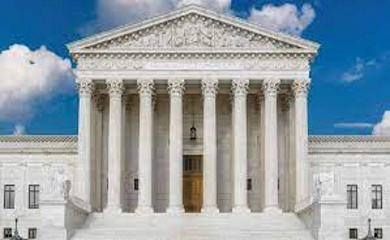
In a 6-3 vote, the highest court in America dismissed affirmative action at colleges and universities, ruling that race-conscious admissions programmes at the illustrious Harvard University in Massachusetts and the University of North Carolina (UNC) were unconstitutional.
“For decades, affirmative action stood as a policy that promoted diversity and a chance at equal education to remedy the lingering impacts of slavery, Jim Crow, and the history of segregation that has threatened to keep the American Dream out of reach for so many people of color,” Caribbean-American Democratic Congresswoman, Yvette D. Clarke, the daughter of Jamaican immigrants.
She told the Caribbean Media Corporation (CMC) the Supreme Court’s ruling to dismantle affirmative action in college admissions will have serious consequences for black and brown students across the nation and for generations to come.
“Our nation was founded on the basic principle that we all deserve the same opportunity to achieve our highest aspirations, said Clarke, ,” warned the representative for the largely Caribbean 9th Congressional District in Brooklyn, New York..
“The Supreme Court’s decision is a reminder of how far we still have to go to ensure all Americans are treated equally. It’s clear that the American people continue to see this court faces a legitimacy crisis, and we cannot falter in our fight for racial justice and equal opportunity for every single student.”
New York City Public Advocate, Jumaane Williams, the son of Grenadian immigrants, said that, “with this ruling, the Supreme Court has chosen to ignore our nation’s history and jeopardize our youth’s future.
“The decision was entirely expected from this conservative court, but still extremely hard to hear, and to reckon with its implications on the fight for racial equity, diversity and justice,” he told CMC.
“The march forward on these issues has been painfully slow, but largely forward– now the court is pulling us back, creating the conditions for young people of more color today to have less opportunities than the generation before them.
“Students with a legacy of systemic privilege or power may see its benefits, students confronting a legacy of systemic racism and discrimination will see only barriers,” added Williams, noting that in her dissent, Justice Sonia Sotomayor wrote that “Ignoring race will not equalize a society that is racially unequal. Equality requires acknowledgment of inequality.”
“It’s clear that conservatives want to ignore race when it is convenient to do so, and ignore reality when it is inconvenient to their philosophy and policy goals. While Republican lawmakers attempt to remove our history of racial injustice from the classroom, conservative justices are trying to remove racial equity from classrooms altogether, Williams said.
New York State Assemblywoman Rodneyse Bichotte Hermelyn, the daughter of Haitian immigrants, who chairs the Brooklyn Democratic Party, said that the court’s “devastating decision to gut affirmative action in higher education is destroying equitable education for all.
“We’re undoing decades of progress towards evening the scales for racial equality. The Court considered affirmative action programs at Harvard and UNC (University of North Carolina) to be unconstitutional. Let’s not forget that, in the 1950s, UNC didn’t even admit Black students to participate in what is now the charge of all leaders, educational inclusion.
“This ruling could have overarching consequences, including undermining workplace diversity and sets a dangerous precedent unraveling the equal protection clause of the 14th Amendment (to the US Constitution),” Bichotte Hermelyn said.
“We cannot pretend to be colorblind when your race still matters in decision making “And systemic racial barriers should be considered in admissions concerning access to education,”she added.
The executive director of the New York Immigration Coalition (NYIC), Murad Awawdeh, said that the US Supreme Court made clear on Thursday that “they either don’t fully comprehend the appalling impact that systemic racism has on our society, or they do know and just don’t care.
“Their decision to terminate the usage of affirmative action policies in college admissions halts what little progress had been made thus far on campuses and throughout the nation to begin to level the playing field for all Americans, regardless of race,” said Awawdeh, whose organisation represents over 200 immigrant and refugee rights groups throughout New York,
“The Supreme Court’s decision means that higher education closes the door for many students of color while, simultaneously, allowing universities to grandfather in the racist policies of previous generations through the legacy admissions system.”
In writing for the majority, US Supreme Court Chief Justice John C. Roberts, said that “the Harvard and UNC admissions programs cannot be reconciled with the guarantees of the equal protection clause.
“Both programmes lack sufficiently focused and measurable objectives warranting the use of race, unavoidably employ race in a negative manner, involve racial stereotyping and lack meaningful end points,” he wrote.
But he said “nothing in this opinion should be construed as prohibiting universities from considering an applicant’s discussion of how race affected his or her life, be it through discrimination, inspiration or otherwise
“In other words, the student must be treated based on his or her experiences as an individual — not on the basis of race.”
But in a blistering dissent, Justice Sotomayor wrote that “the court subverts the constitutional guarantee of equal protection by further entrenching racial inequality in education, the very foundation of our democratic government and pluralistic society.
“At bottom, the six unelected members of today’s majority upend the status quo based on their policy preferences about what race in America should be like, but is not, and their preferences for a veneer of colorblindness in a society where race has always mattered and continues to matter in fact and in law,” she said.
CMC/nk/ir/2023