
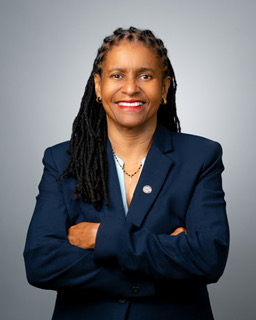
PORT-OF-SPAIN, Trinidad, Jul 9, CMC – Executive Director of the Caribbean Financial Action Task Force (CFATF), Dawne Spicer, is calling for greater collaboration between the Caribbean Community (CARICOM) and Mexico to tackle the trade of illicit firearms in the region, which a recent CARICOM IMPACS (Implementation Agency for Crime and Security) case study says comes mainly from the Unites States, via commercial airlines, postal maritime shipping companies and fast parcel services.
Spicer was a panelist at a recent webinar, hosted by the University of the West Indies (UWI) on “Taking the profit out of illicit trafficking of firearms in Latin America and the Caribbean”.
In her presentation, she referenced the case study that showed that the rate of violent deaths in CARICOM member states is almost three time the global average and that the majority of illicit firearms in circulation in the region are handguns.
“Case study research in the Bahamas, Barbados and Jamaica reveals that firearm-related violence imposes significant public health and economic burdens on Caribbean communities and societies,” Spicer said.
She said the report praised the regional regulations imposed on ownership of legal firearms, calling it “a good thing” as it makes its “a bit easier to understand what is illicit in the region because the legitimate firearms are so closely monitored through legislation.”
The CFATF Director said there is evidence which suggests that privately made firearms currently represent only a small percentage of the illicit firearms in the region and that “the true extent of their proliferation is unknown due to under-reporting and other data limitations”.
“So, again, it’s important to make sure that the details are kept so that there’s marking and tracing of firearms, both legitimate firearms and illicit firearms,” Spicer said, adding that “there may be new markets for them, or traffic is paramount, but it’s important to make sure that everyone can trace where the firearms are going.”
Spicer said human and technological collaboration between national, regional and international entities are crucial to the implementation of the goals of the CARICOM firearms roadmap.
“The creation of joint mechanisms, such as task forces and specialised training, increasing ballistics, other types of forensics and the types of investigations that would allow law enforcement to target elicits, trafficking and firearms,” Spicer said.
Spice believes that the appointment of a co-ordinator for Caribbean firearms prosecutions by the United States, can help address the problem, but adds that more must be done.
CMC/nhb/2023