
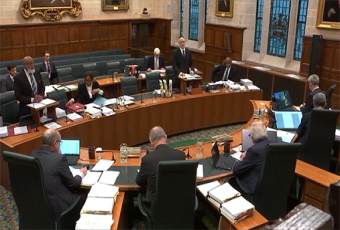
LONDON, Oct 11, CMC – The London-based Privy Council Monday dismissed an application by nine men serving life sentences for the murder of Thackoor Boodram, the brother of drug kingpin and convicted murderer, Dole Chadee, who was hanged by the state on June 4, 1999.
Chadee and eight others were hanged the after murdering the Baboolal family over an apparent drug dispute five years earlier. Chadee never was convicted on drug charges. He was, however, found guilty of ordering murders that shocked Trinidad and Tobago’s collective consciousness.
Boodram was kidnapped and beheaded in 1997 and the men were jailed in 2001, based on the evidence of one witness, Junior Grandison.
In their appeal to the Privy Council, the convicted men asked Trinidad and Tobago’s highest court to determine whether the Court of Appeal erred by refusing to admit fresh evidence that the main prosecution witness had lied during the trial and, if so whether the convictions of the appellants should be quashed in light of the fresh evidence.
But in their 25 page ruling the five-member panel of the Privy Council said the Court of Appeal did not apply too high a test of credibility when deciding whether to admit the fresh evidence.
“The Court’s analysis was comprehensive and necessarily robust. The Court was inevitably required to determine what weight should be given to the fresh evidence. The manner in which the fresh evidence was found to have been obtained characterised it as unreliable.”
The Privy Council said that it found “no basis for legitimate complaint as to the assessment of the witnesses or the findings that were made as to the weight that could be afforded to their evidence. “The Court of Appeal were right not to adopt the “jury impact test” to determine whether the fresh evidence is capable of belief. The Court of Appeal has not been demonstrated to have misunderstood or mischaracterised the telephone conversations transcribed from the audio recordings.
“The Court rightly analysed the conversations as a whole with regard to the other evidence before it. The focus on selected dialogue lacks perspective. The findings were neither perverse nor irrational,” the Privy Council ruled.
It said further that the Court of Appeal did not ignore the impeachment value of Grandison’s retraction, adding that the Court found that the retraction originated from the intervention of the appellants and was designed to undermine the case against them.
“It was not in the interests of justice to admit the evidence. The Board (Privy Council) does not accept that the Court of Appeal ignored this aspect of the appeal before them.
“The Court of Appeal were entitled to find some limited support for Grandison’s evidence from Amoroso and Sumai. The extent and nature of the independent support is irrelevant in the light of the Court of Appeal’s definite views upon the other issues in the appeal,” the Privy Council ruled in dismissing the appeals against the conviction.
The nine men had been convicted of the murder of Boodram in 2001, with the State’s case in relation to the appellants being based on the evidence of Grandison.
The appellants’ appeal to the Court of Appeal was dismissed and they were refused permission to appeal against the convictions to the Privy Council that quashed their sentences of death and substituted those with sentences of life imprisonment.
Grandison, considered then as the country’s ‘most wanted man, did not testify at the appeal, although summonses were issued for him to do so. But in 2011, he swore a statutory declaration in which he stated that the evidence he had given at the trial was not true. The charges against Grandison were dropped in exchange for his testimony against the group.
The matter was referred to the Court of Appeal for reconsideration in light of that statutory declaration. At the hearing, the appellants sought to rely on the statutory declaration as well as other fresh evidence to suggest that Grandison had given false evidence at the trial.
The state had also wished to adduce fresh evidence to suggest that Grandison’s retraction of his evidence was false. The Court of Appeal refused to admit the appellants’ fresh evidence as they did not find it to be credible, and therefore dismissed the appeals in 2018.
CMC/fd/ir/2021.