
By Ivan Cairo
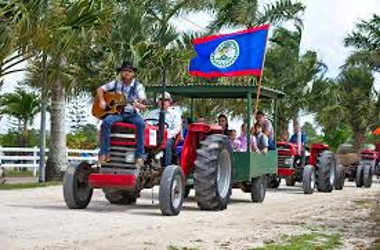
PARAMARIBO, Suriname, Jun 14, CMC – The Suriname government has confirmed that it has authorized the settlement of a group of Mennonites, a strongly religious group of white people, who live in isolated closed communities like the Amish in the United States of America to resettle here.
Mennonite, member of a Protestant church that arose out of the Anabaptists, a radical reform movement of the 16th-century Reformation. It was named for Menno Simons, a Dutch priest who consolidated and institutionalized the work initiated by moderate Anabaptist leaders.
Over the past two and a half years, there have been several contacts between the local authorities and Mennonites from Central and South America who have been expressing a desire to settle in Suriname.
President Chandrikapersad “Chan” Santokhi told Parliament the government has authorized the re-settlement of 50 families as a pilot project after concerns had been raised here about the presence of the Mennonite.
He told legislators that the government had received a request from a local entrepreneur to allow the Mennonites to enter Suriname and that the group wants to be involved in the agricultural sector.
He said after several discussions, the government has decided to facilitate the group. However, they must meet all requirements that normally apply to foreign nationals and that the government will not be making any land available to the group.
He said they would have to purchase their own land and are not eligible for land that is part of the habitat of tribal groups.
The group has in the meantime made presentations to the government even as legislators ans civil society groups accuse the government of conducting business with the Mennonites in secret.
However, Foreign Affairs, International Business and International Cooperation Minister, Albert Ramdin, said that the Mennonites can not only contribute to the promotion of food security in Suriname based on their interest in the agricultural sector.
“It has been shown that this group has been able to engage in large-scale agriculture in other countries, guaranteeing food security, but also the export of food,” said Ramdin.
But Ruud Souverein of Terra Invest Suriname & Guyana, the local company that is preparing for the arrival of the Mennonites, said it is not yet certain members of the group will come to the Dutch-speaking Caribbean Community (CARICOM) country.
“The Mennonites only come when they are welcome,” he said, adding that they should also feel welcome by not only the government, but also from members the communities where they want to settle and Surinamese as a whole.
Souverein said that there are many misconceptions about the Mennonites, adding this group, although deeply Christian, is not a sect and that they are people “with whom you can laugh and also drink a beer.
“They want to come here to live and work, they have money, manpower, are hard workers and don’t bother people with their religion,” said Souverein denying that land has already been purchased near Apoera at the border with Guyana
“They don’t want anything for free, not even from the government. They don’t want community forest either.”
CMC/ic/ir/2023